

Why Carp Are Swimming Across Japan’s Sky
Life in Japan – Issue 023

This Saturday article is part of the “Life in Japan” series.
Unlike the in-depth essays published on Tuesdays, this series focuses on everyday life in Japan, sharing seasonal changes and daily scenes from a more personal and familiar perspective.
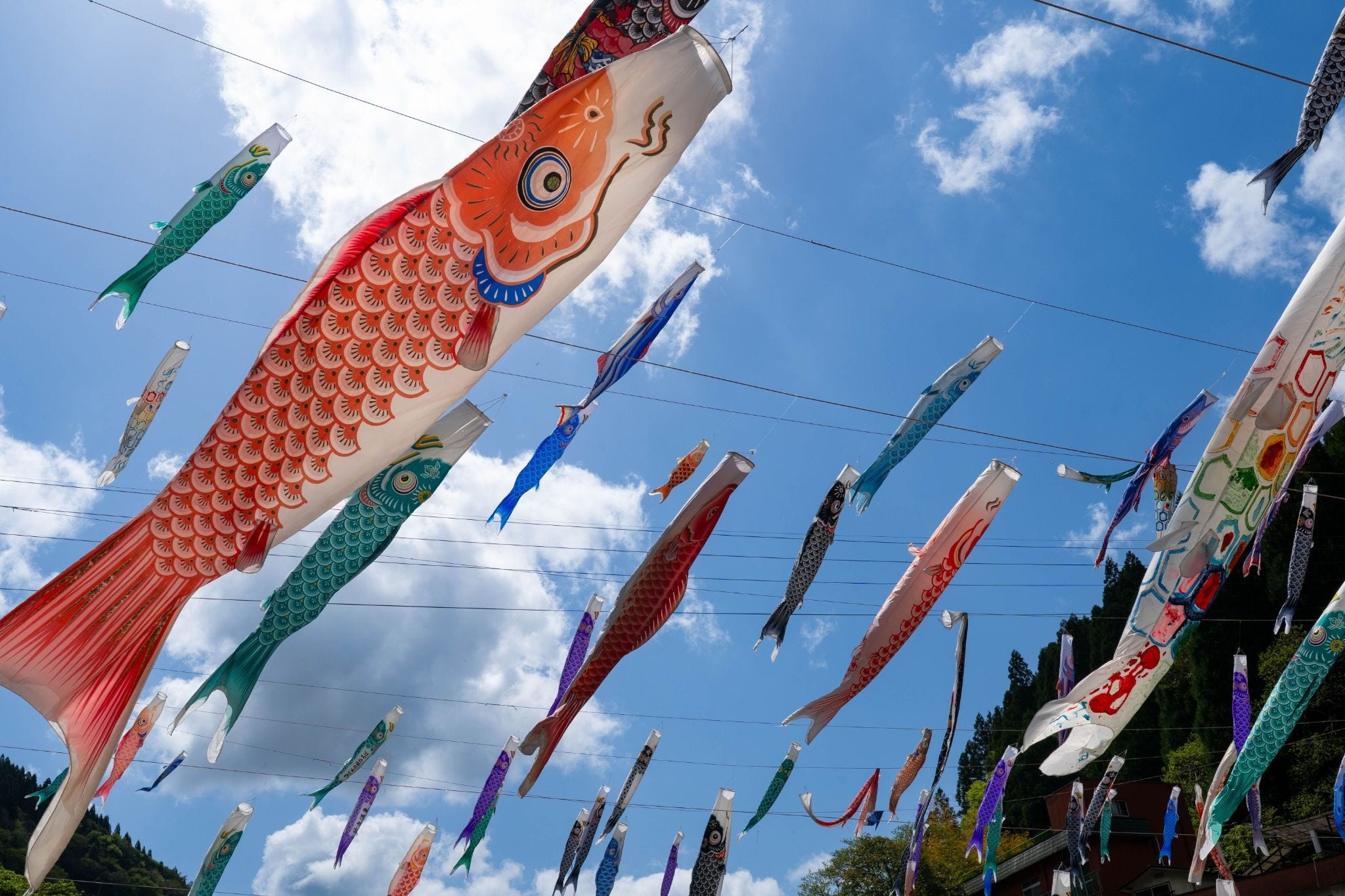
Did you know that at this time of year in Japan, fish can be seen swimming through the sky? In home gardens, at schools and kindergartens, in parks and shopping malls, fish of all sizes sway in the wind.
Their name is Koinobori(鯉のぼり), carp streamers.
In a previous article, I introduced Hinamatsuri(ひな祭り).

It is a familiar scene of spring in Japan, where hina dolls are displayed and prayers are offered for the healthy growth of girls.
If there is a day associated with wishing for the growth of girls, then of course there is also a day associated with wishing for the growth of boys. That is the approaching Tango no Sekku(端午の節句). During this season, koinobori are displayed, and homes are decorated with kabuto helmets and Gogatsu Ningyō(五月人形), May dolls.
May 5, the day of Tango no Sekku, is now a national holiday known as Children’s Day(こどもの日). By law, it is defined as a day to respect the character of children, promote their happiness, and express gratitude to mothers.
However, this day was originally celebrated as Tango no Sekku, a day to pray for the healthy growth of boys. For that reason, even now, many people still hold the impression that Hinamatsuri is for girls, while May 5 is for boys.
At this time of year, koinobori begin to appear across the Japanese sky. Black, red, blue. The carp are arranged like members of a family, swelling in the wind, and they seem as if they are truly swimming overhead.
When speaking of the meaning of koinobori, the best-known reference is the Chinese tale of Tōryūmon(登竜門). It tells of a carp that climbs a rushing waterfall and becomes a dragon. From this story, the carp came to symbolize overcoming hardship, growing stronger, and achieving success. People place that wish into the form of these fish, hoping children too will grow strong and resilient.
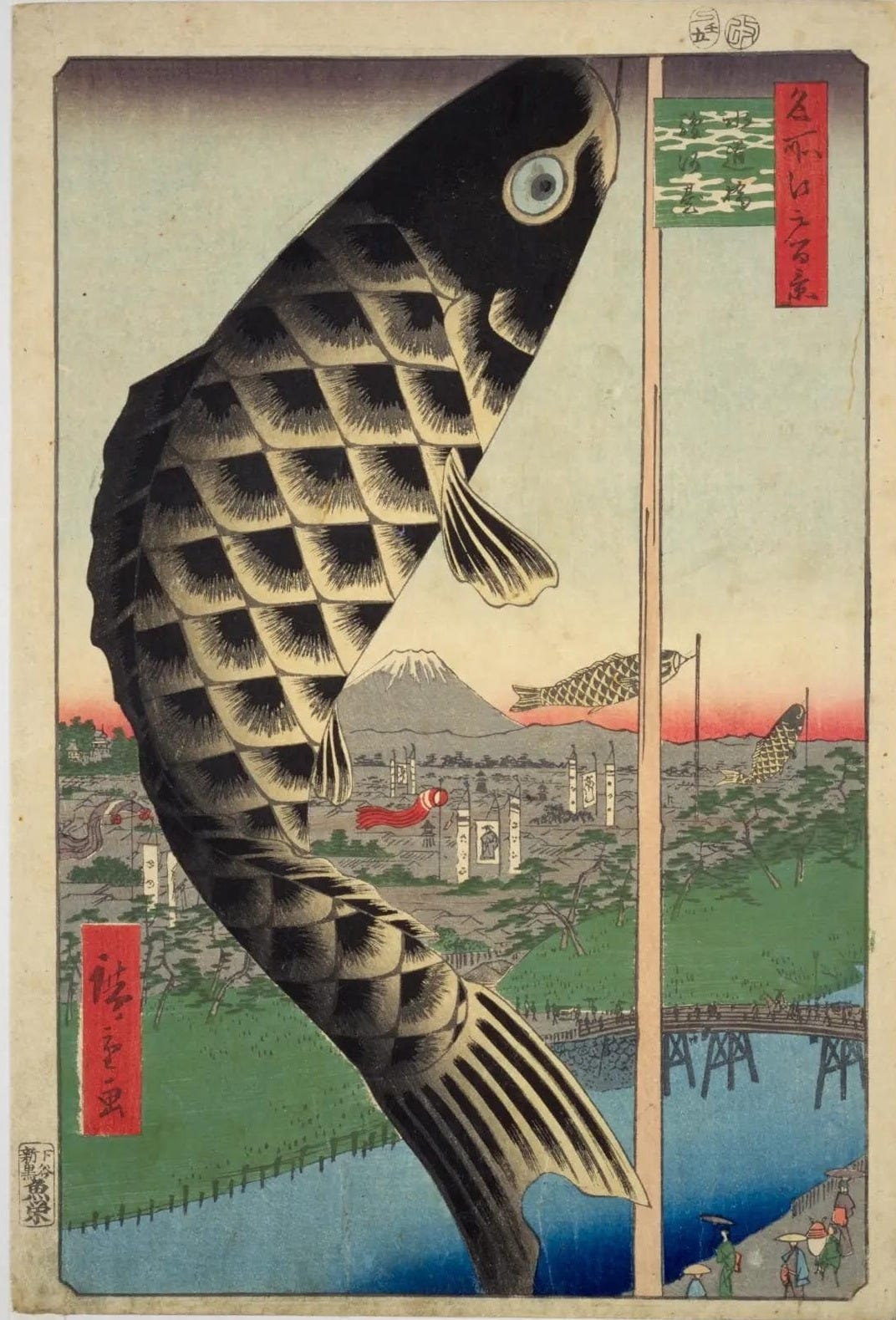
Yet the origin of koinobori is not explained by this tale alone. In Edo-period Japan, society was divided by class, with different roles and ways of life. The warrior class governed politics and military affairs, while townspeople lived in cities as merchants and artisans. Where people lived, what they wore, and what they could own also differed greatly. Even within the same town, daily life could look very different.
Tango no Sekku was originally an especially important occasion in warrior households. When a boy was born, banners and streamers were raised in front of the home to celebrate the birth of an heir and pray for his healthy growth. For warrior families, the growth of a son carried great importance, as it meant continuing the household line and protecting the family name.
As Edo cities prospered and merchants and artisans built lives of increasing comfort, townspeople also came to wish to celebrate the growth of their own children. However, displaying crested military banners or armor in the manner of the warrior class was not realistic for them. Instead, they turned to the carp, a creature associated with good fortune and familiar to ordinary people, and began raising decorations shaped like carp.
In that sense, koinobori were born when the seasonal customs of warrior society were transformed into a new form within the townspeople culture of Edo. What began as a celebratory scene in samurai households gradually spread into the sky as the wishes of ordinary townspeople.
For that reason, the koinobori that swim above Japan today carry not only the hopes of families wishing for the growth of their children, but also the layered history of a changing society.
Inside homes, some families also display kabuto helmets and Gogatsu Ningyō. They are especially common in households with boys, and the helmet carries the meaning of protecting a child from misfortune. In the past, many families displayed large, elaborate sets, but today smaller pieces that fit on a shelf, along with simpler designs suited to modern homes, have become more common.


Walking through the city, one can also sense changes in the form of koinobori themselves. In earlier years, it was common to see large carp streamers raised in home gardens. In urban areas today, smaller versions for balconies have become more common. Some still swim across wide open skies, while others move gently beside apartment windows. In both forms, the wishes of each family seem to remain.
At the same time, there are places where this tradition continues to be preserved by the whole community.
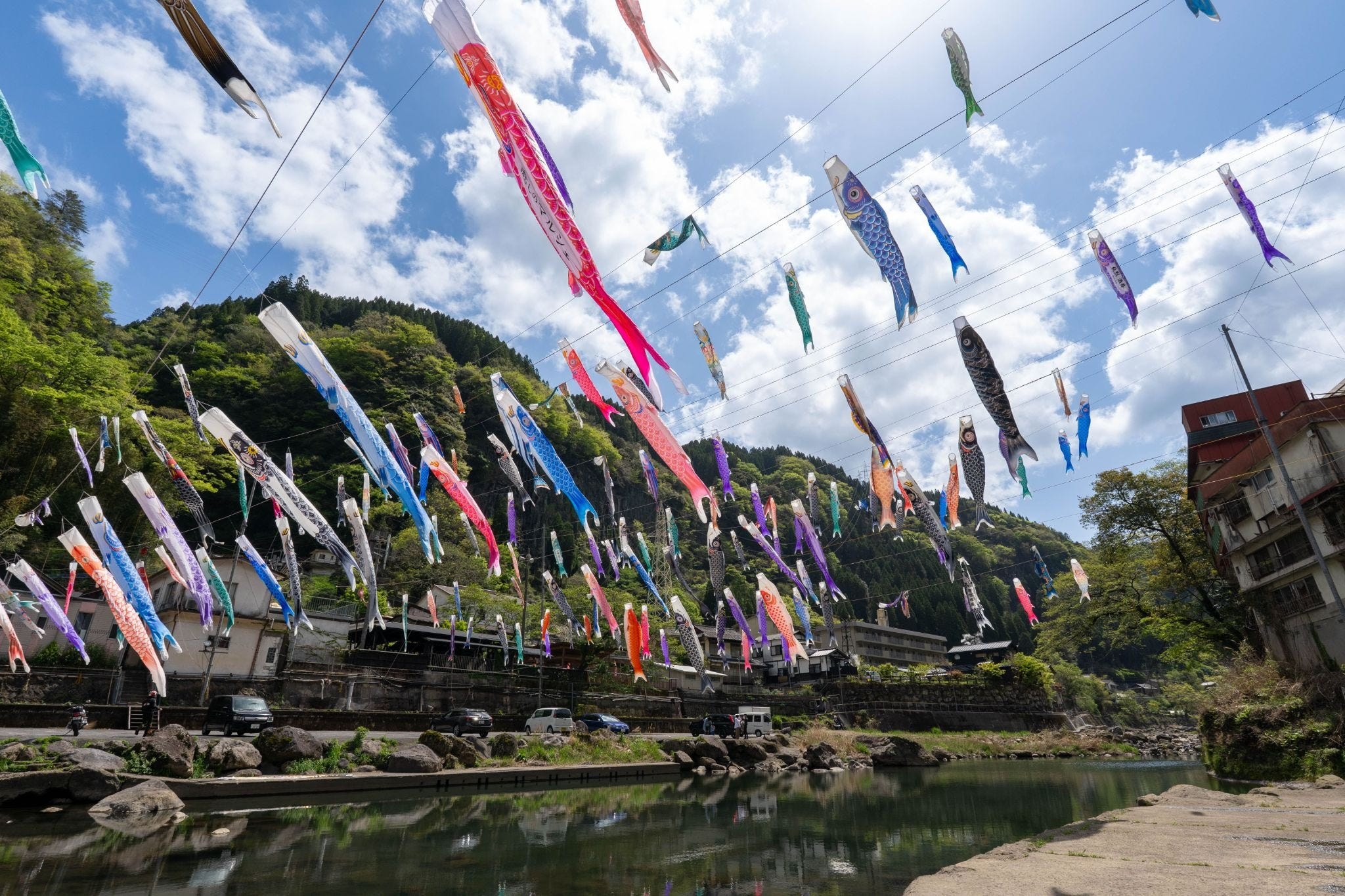
Last year, I visited Tsuetate Onsen(杖立温泉)in Kumamoto Prefecture. This area is loved for the quality of its hot spring waters, the steam rising from the ground, and the nostalgic atmosphere of its old-fashioned hot spring town. It is also known for the scale of its spring koinobori display. Around 3,500 carp streamers are raised above the Tsuetate River that runs through the town.
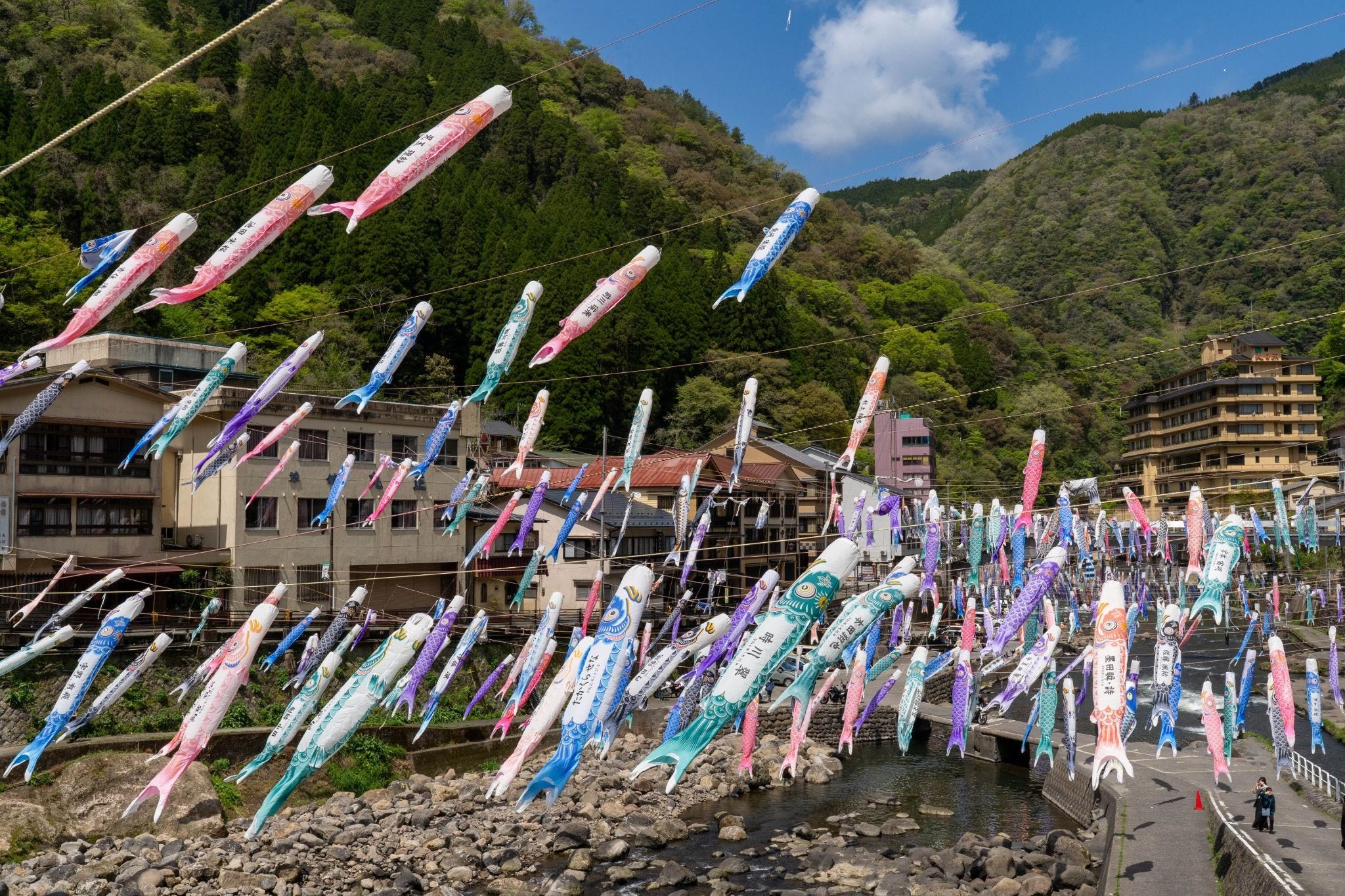
I remember watching the carp swim as though weaving through the pure white steam rising from the riverside inns. The scent of sulfur mixed with the sound of the streamers snapping in the wind, and the sheer power of the scene was unforgettable.
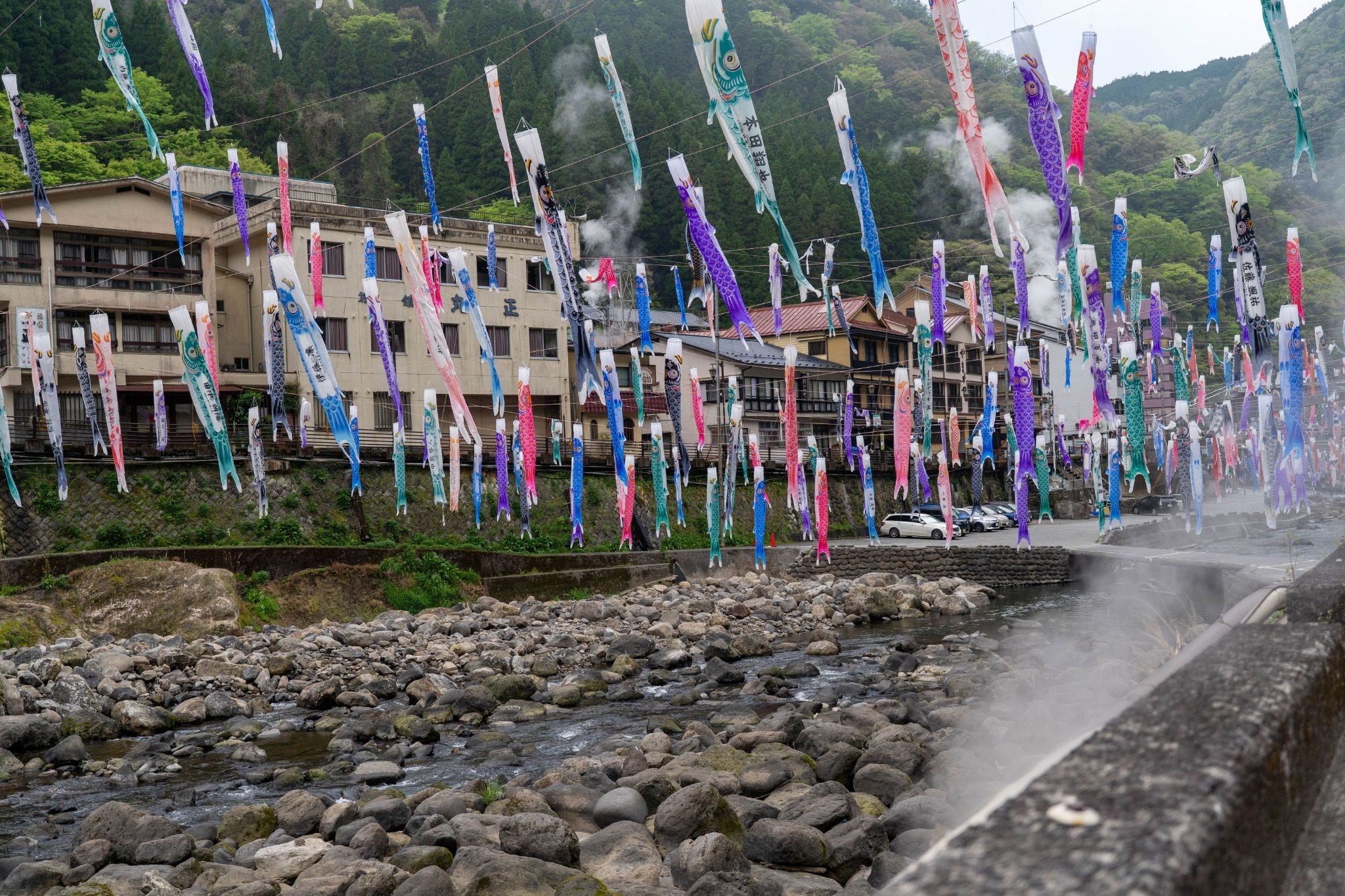
Koinobori displayed at home carry the wishes of a family. The koinobori of Tsuetate Onsen carried the joy of an entire community welcoming the season. It felt like a place where tradition was being preserved while also nurtured into a new landscape. I introduced it in more detail in last year’s article as well.

Scenes like these remind me that Japanese seasonal traditions are not simply preserved unchanged from the past. They adapt to changing homes, gain new charm through local creativity, and settle naturally into modern life.
In March, hina dolls are displayed. In April, new lives begin. In May, carp streamers swim through the sky. Spring in Japan is a season in which scenes wishing for the growth of children continue one after another.
Looking up at the koinobori overhead, I find myself hoping that children will grow up healthy, and that the families watching over them may live peaceful days. Even as times change, perhaps the wish for children’s happiness continues to be passed on unchanged.
Are there seasonal traditions where you live that wish for the growth of children or the happiness of families? If so, I would love to hear about the spring scenes of your own country.
—Written by Sumire
You may also enjoy these stories
A Small Gift of Spring from Japan: Cherry Blossoms in Full Bloom

This Saturday article is part of the “Life in Japan” series.
The Aesthetics of Resilience: How Ishikawa Protects Beauty and Rebuilds the Future

On New Year’s Day in 2024, a major earthquake struck Japan, centered on the Noto region of Ishikawa Prefecture. It was the 2024 Noto Peninsula Earthquake. Occurring on the first day of the new year, the disaster damaged many homes and roads, suddenly changing countless ordinary lives.
I really enoyed reading and learning about this beautiful tradition! Thank you for sharing.
I love reading your posts, and today’s is particularly poignant for me. My father, who passed away 15 years ago now, brought back 2 carp streamers from his travels in Japan. I now have them. They are beautiful. I haven’t flown them , they are quite big, but you have reminded me I should get them out some time, maybe for a Spring gathering. I also have a carp tattoo (my only tattoo) to remind me of my Dad. So anyway, thank you for your post, keep writing, I love to hear your stories. ❤️