On New Year’s Day in 2024, a major earthquake struck Japan, centered on the Noto region of Ishikawa Prefecture. It was the 2024 Noto Peninsula Earthquake. Occurring on the first day of the new year, the disaster damaged many homes and roads, suddenly changing countless ordinary lives.
At that time, I was far away from Ishikawa.
I was not directly affected myself. Yet I still remember the repeated images from the disaster area shown amid what should have been a celebratory New Year atmosphere: collapsed buildings, severed roads, and people spending anxious hours in evacuation shelters. At a time when words of celebration should have filled the air, many people were facing hardship.
I felt helpless being so far away, and it deeply pained me.
Time passed, and this year, I visited Ishikawa.
The first thing that made me happy on this journey was seeing so many international travelers at the airport and at Kanazawa Station. I heard English spoken in many different accents, from the United States, the United Kingdom, Australia, Canada, and beyond. A bright sense of travel had returned to the city.
Of course, it would be wrong to say that Noto, the region most affected, has fully recovered. There are still areas where lives are being rebuilt and infrastructure restored. The earthquake has not become a thing of the past.
Even so, when people visit Ishikawa, dine here, stay here, experience its culture, and carry home memories of its charm, that surely becomes a source of strength for the region. Tourism is not only leisure. It is also a practical cycle that supports local communities.
What I saw on this journey was not only Ishikawa as a tourist destination.
I saw a place that continues to protect beauty.
A place that rebuilds what has been lost.
A place that cultivates new value for the future.
Through three places—兼六園(Kenrokuen)Kenrokuen Garden, 金沢城公園(Kanazawa-jō Kōen)Kanazawa Castle Park, and 石川県立図書館(Ishikawa Kenritsu Toshokan)Ishikawa Prefectural Library—I would like to share what I felt there with all of you.
兼六園(Kenrokuen)Kenrokuen Garden
Japanese gardens are a cultural form developed to express natural scenery within a limited space, to feel the changing seasons, and to calm the mind while walking through them. Samurai families, court nobles, and temples created gardens not only to receive guests, but also to engage with nature and seek spiritual richness.
That aesthetic vision did not remain within Japan. It spread widely overseas as well. Japanese gardens have been created in countries such as Canada, Australia, the United Kingdom, and Germany, often in places with deep ties to Japan or Japanese communities. Many of these gardens are cherished both as symbols of friendship between nations and as places where local people can experience Japanese culture.
Kenrokuen Garden is one of the finest examples. It is known as one of Japan’s Three Great Gardens, alongside Kairakuen in Mito and Korakuen in Okayama, and it was developed over many years by successive lords of the Kaga Domain.
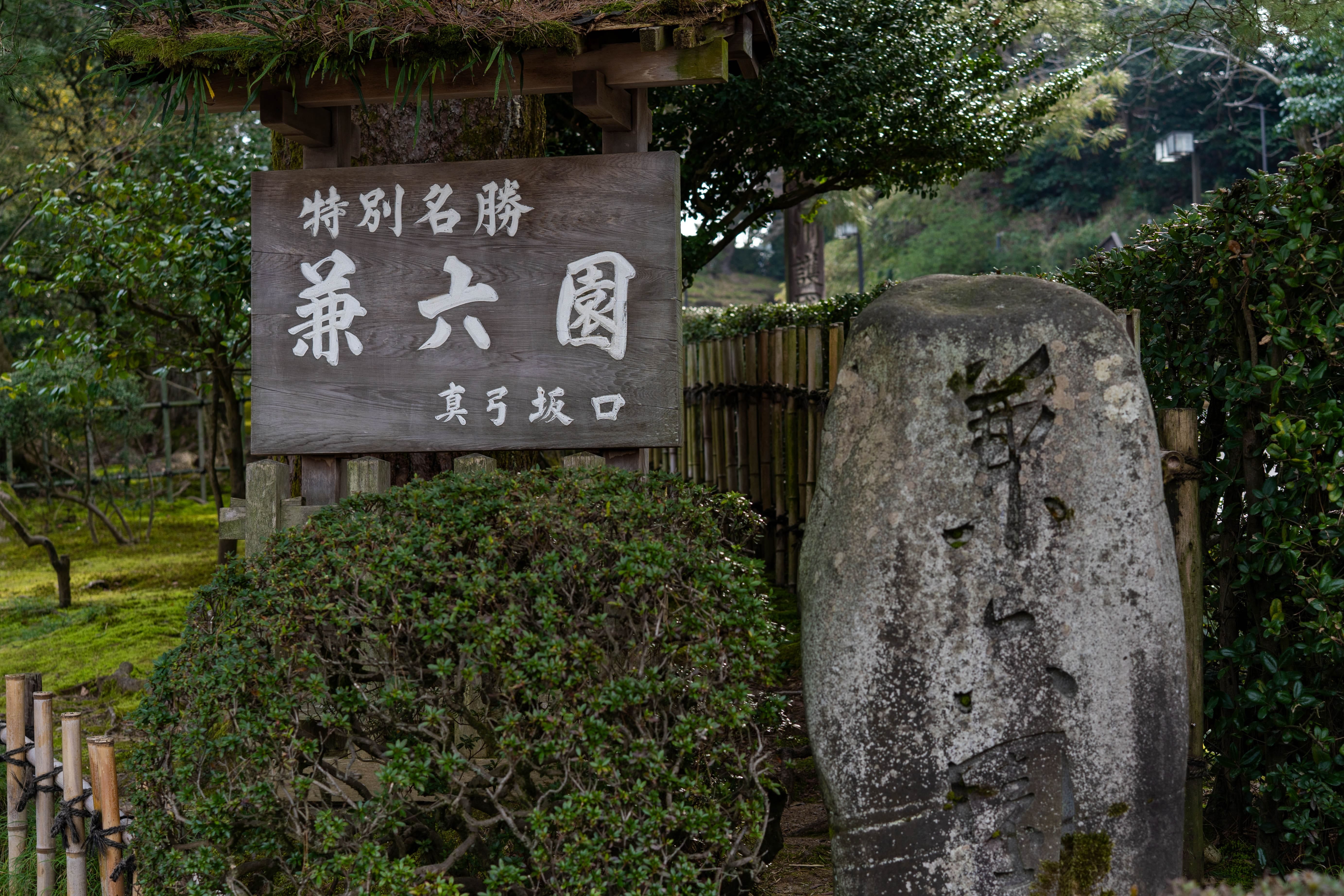
The name “Kenrokuen” comes from the Chinese classic Luoyang Mingyuan Ji and refers to six qualities considered essential to an ideal garden: spaciousness, seclusion, human care, antiquity, abundant water, and fine views. The name itself contains the ideals this garden sought to embody.
Because of our filming schedule, we entered the grounds early in the morning. With few people around, Kenrokuen had a calmness different from the daytime hours.
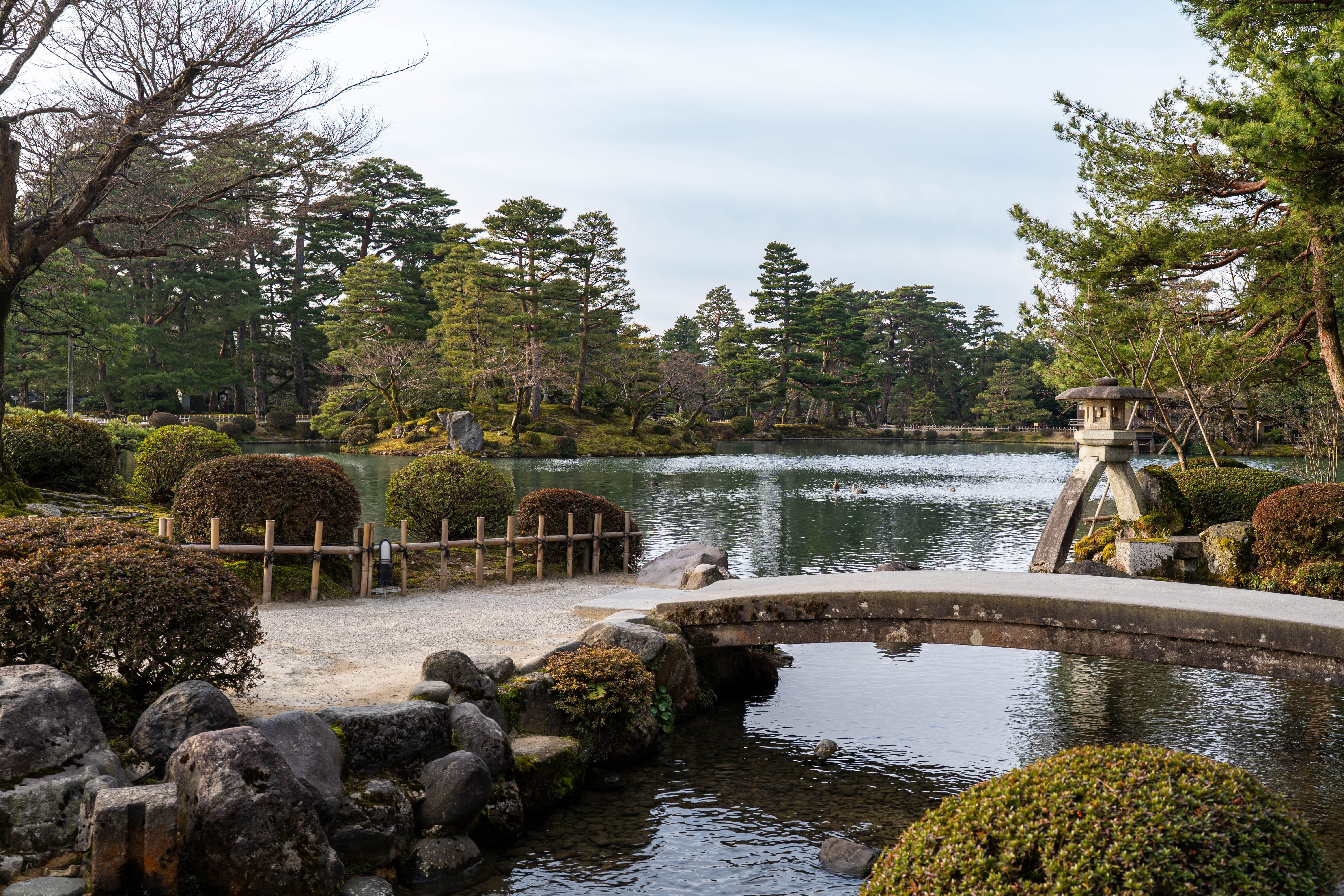
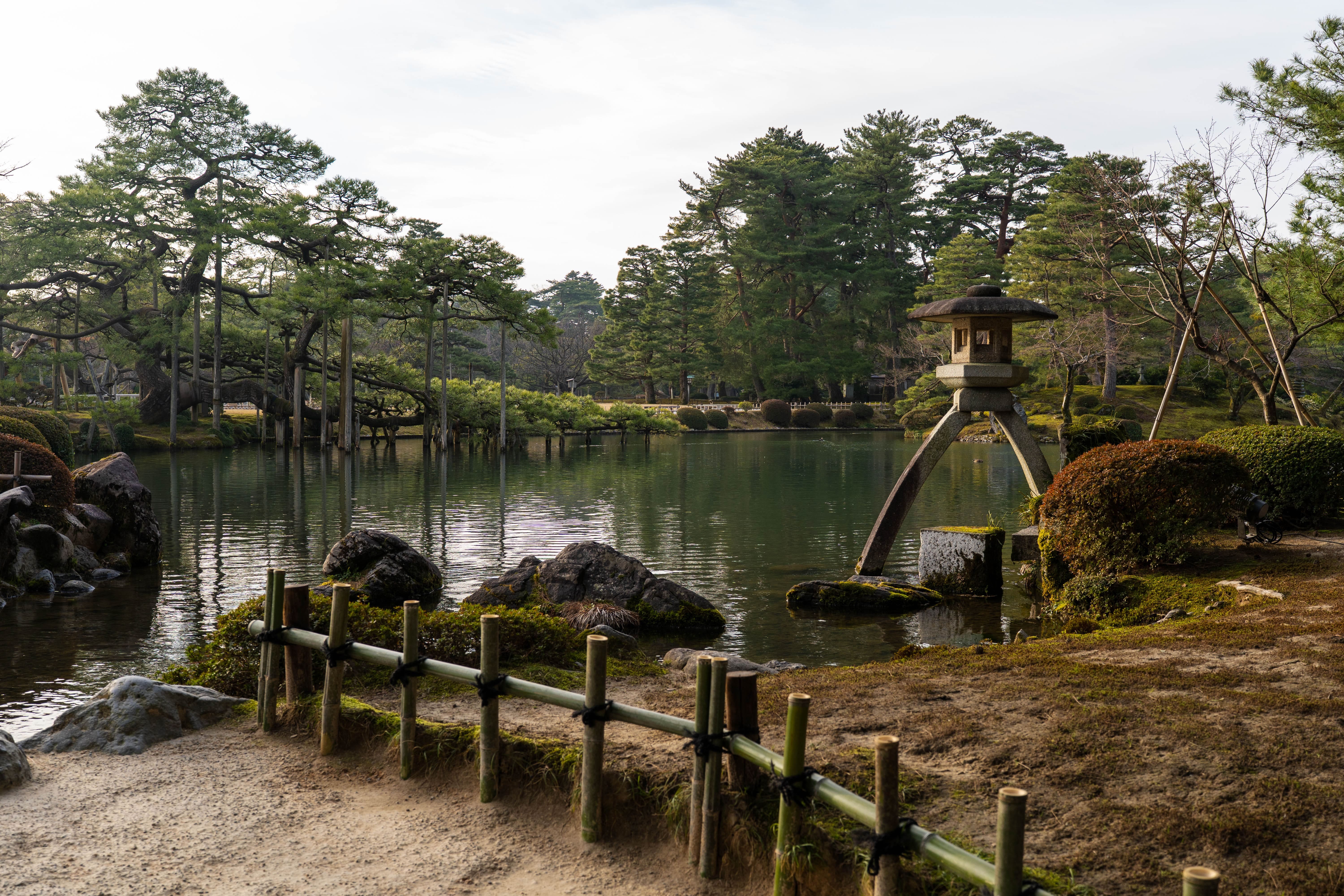
Sunlight filtered through the trees, light shimmered across the pond, and we walked through the clear morning air. That time itself felt like an experience.
What I noticed again and again while walking was that every direction formed a complete scene.
The placement of bridges, the breadth of the pond, the height of the trees, the curve of the paths, the arrangement of stones. Much of what appears accidental was in fact shaped through human design. Yet it never felt artificial. Wind moved through it, light entered it, trees grew, and moss spread. Nature had added its own force.


The beauty shaped by human hands and the beauty added slowly by time and nature came together to create the landscapes of Kenrokuen.
One of the garden’s most famous sights is 徽軫灯籠(Kotoji Tōrō), standing beside Kasumigaike Pond. This stone lantern has a distinctive two-legged form and is said to be named after its resemblance to the bridges of a koto, the traditional Japanese zither. It has become one of the most recognizable symbols of Kenrokuen.