


This Saturday article is part of the “Life in Japan” series.
Unlike the in-depth essays published on Tuesdays, this series focuses on everyday life in Japan, sharing seasonal changes and daily scenes from a more personal and familiar perspective.
Half of 2026 has passed, and July has begun. Spiritual Japan Journal has also reached its first anniversary. Thank you so much to everyone who has been reading. I feel truly happy to be able to share Japan’s seasons, customs, shrines, and the small pieces of culture found in everyday life with you every week.
When July arrives, it feels as if summer has finally begun in Japan. The temperature rises from the morning, the sunlight grows stronger, and supermarkets begin to fill with summer vegetables and cold noodles. On the news, I start hearing about 海開き(umi-biraki, the opening of the sea-bathing season)and 山開き(yama-biraki, the opening of the mountain-climbing season), and that makes me feel that summer has truly started. In many Japanese schools, summer vacation begins in the latter half of July, and for children, one of the most special times of the year is approaching. Some families go sea bathing, go camping in the mountains or by rivers, or visit their grandparents’ homes. Even as adults, when summer comes, memories such as the smell of the sea, the sound of insects, wet sandals, and cold barley tea sometimes come back to us.
One of the things that makes me feel the beginning of summer is the opening of the sea-bathing season. Japan is an island country surrounded by the sea. When you look at a map, the sea may seem very close and familiar. In reality, however, places where people can swim in the sea are limited. Some coasts are rocky, some have fast currents, some are used as ports or fishing areas, and some are not suitable for swimming. Even in regions near the sea, beaches with sand, where people can swim safely under proper management, are limited.
Many sea-bathing beaches in Japan have an official opening period. Safety staff and lifeguards are stationed there, first-aid stations are set up, and the areas and times where people are allowed to swim are decided. Beach houses open, and showers, changing rooms, and restrooms become available. Japan has relatively distinct seasons, so the time when people can comfortably enter the sea is mostly limited to summer. However, it is not simply a matter of whether the weather is warm enough. There is a period when a beach is prepared as a sea-bathing area, and the opening of the sea-bathing season marks the beginning of that period.
The opening date is not the same across the country. Some regions, such as Okinawa, open their beaches earlier, while in many parts of Honshu, beaches open on July 1 or in early July. This year as well, many popular sea-bathing beaches opened on July 1. When I hear this kind of news, I feel that summer has truly begun.
At some beaches, a Shinto ritual is held to pray for safety at the opening of the season. An altar is set up on the sand, a Shinto priest recites norito prayers, and people connected with the beach, as well as local officials, attend the ceremony. It is a prayer that no accidents will happen at the sea, that visitors will spend the summer safely, and that people will give thanks for the blessings of the sea. I feel something very Japanese in the fact that before the lively events begin, there is first a moment of prayer facing the sea.
I found a short video showing the 海開き(umi-biraki, the opening of the sea-bathing season)ritual, so I would like to share the link here.
Popular sea-bathing beaches in Japan have a slightly different atmosphere from the kind of beach resort people may imagine overseas, where visitors lie back on beach chairs and spend time slowly. Of course, there are also quiet beaches, but at famous sea-bathing beaches, an astonishing number of people gather. Parasols line the sand, children walk around holding swim rings, and the smell of food and drinks comes from the beach houses. Yakisoba, shaved ice, ramen, beer, soft drinks. In some places, music is playing, and rather than being quiet and relaxed, the atmosphere is lively and full of summer energy.
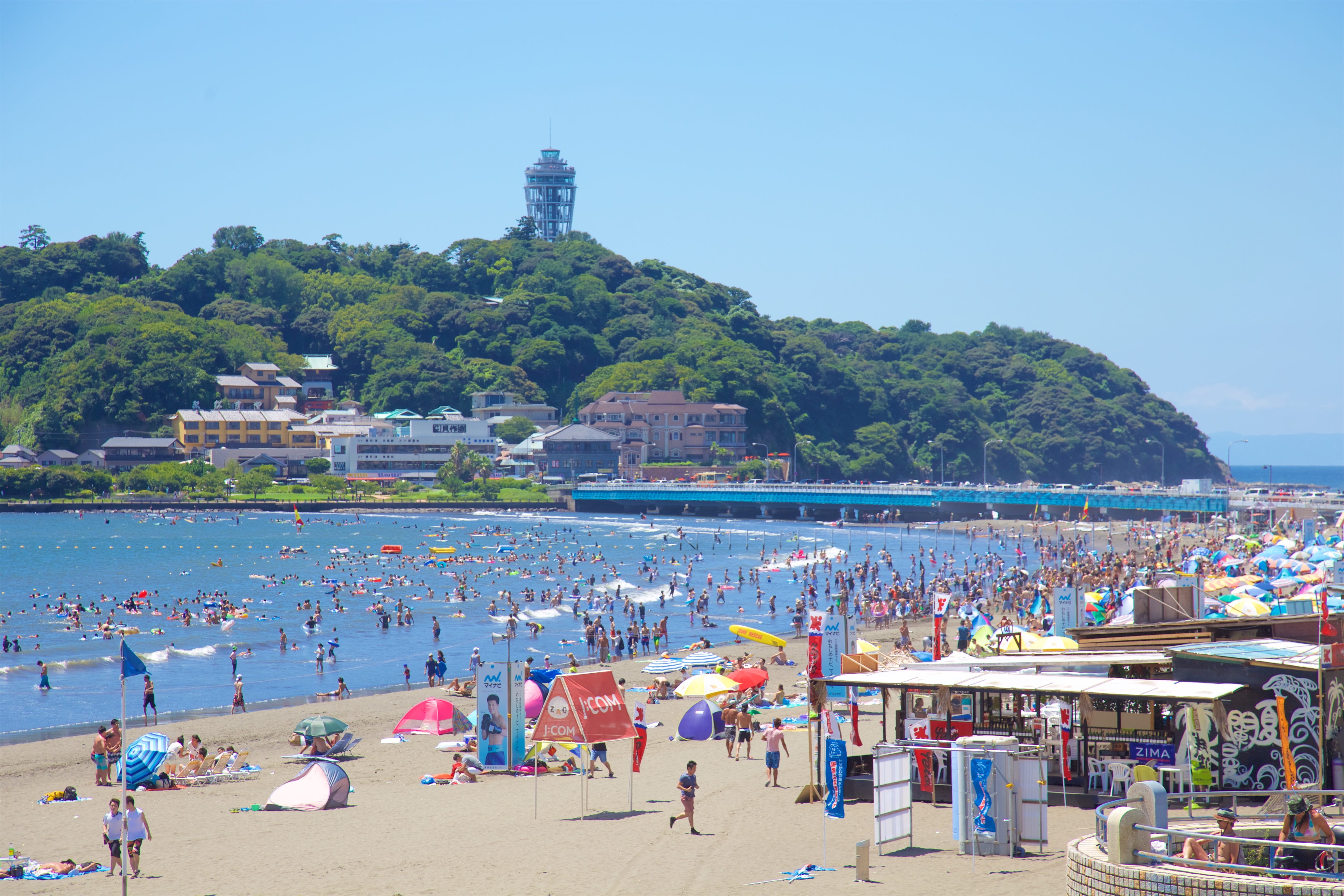
Personally, I am not very good with places that are too crowded, so I have hardly gone to famous sea-bathing beaches since I was a child. Even so, I think the sight of many people gathering, children playing in the sea, and beach houses lining the shore is one of Japan’s summer traditions. It is very important and wonderful that sea-bathing beaches are prepared with proper facilities, supervision, and first-aid systems so that families and friends can enjoy the sea safely.
To me, Japanese sea-bathing beaches seem not only like places to spend time in nature, but also like temporary towns that appear only for a short period in summer. Beach houses line the shore, people gather, food is sold, children play, and in the evening, sunburned visitors head back toward the station. There is a brightness there that feels very much like summer in Japan.
On the other hand, if you want to enjoy cool, beautiful waterside scenery that feels very Japanese, I would definitely recommend rivers. Clear water flowing near the mountains, the coolness of the shade beneath the trees, and the feeling of walking over stones all have a different kind of summer pleasure from the sea. I will save that story for another time.


Still, every year, lives are lost at the sea. In Japan, more than 100 people die in water accidents at the sea during summer alone. Sea bathing, fishing, playing in the water. Danger exists very close to enjoyable moments. Even when the sea looks calm, there may be places where the water suddenly becomes deep or where the current pulls people offshore. Even people who are used to swimming cannot overcome waves and currents by force.
That is why I think the Shinto ritual at the opening of the sea-bathing season still has meaning today. Before enjoying the sea, people pray for safety. They wish for the season ahead to pass without accidents. Within this long-standing custom, there is not only the feeling of looking forward to the sea, but also the caution of people who know the power of the sea.
Japan also has many sayings and folk beliefs connected to waterside places. For example, many people have heard that it is better not to enter the sea after お盆(Obon, the season when people welcome the spirits of their ancestors), or that if you swim in the sea, something may pull your legs. The wording differs depending on the region or family, but the feeling that people should avoid the sea in the latter half of summer has long been passed down. Obon is the season when people welcome the spirits of their ancestors. Perhaps the sea and rivers were felt to be places close to the boundary between this world and the other world. At the same time, the latter half of summer also brings typhoons, high waves, rip currents, and jellyfish. I think some of these folk beliefs also contained wisdom for keeping children away from dangerous waters.
In folklore records, there is also a tradition from 愛媛県(Ehime Prefecture)saying that if someone swims after July 7, the day called 七夕(Tanabata, a summer festival held on July 7), an “Enko” will appear and pull their legs. Enko is a being spoken of as a waterside yokai. For children, the waterside is a fun place to play. Yet if adults take their eyes off them even briefly, it can also become a dangerous place. Stories about waterside yokai probably contained both the fascination of a frightening tale and a warning meant to protect life.
July is also the season of mountains. In Japan, there is a term called the opening of the mountain-climbing season. It refers to the beginning of the mountain-climbing season for that year. The timing differs depending on the mountain, but July 1 is known as a day for this opening, and many mountains have held rituals to pray for the safety of summer climbers.
Behind the opening of the mountain-climbing season is Japan’s mountain worship. In the past, mountains in Japan were seen as places close to Shinto and Buddhist deities, places of spiritual training, and places with special power. They were not places ordinary people could freely enter. Usually, ordinary people were forbidden from entering, and only during a certain period in summer were they allowed to go into the mountains. This custom is said to be one of the origins of the opening of the mountain-climbing season. It was both a day to celebrate entering the mountain and a day to pray before being allowed to do so.
I myself enjoy mountain climbing, so I understand the joy of entering the mountains. The scenery that changes with each season, the time spent gradually climbing with my own feet, and the sense of achievement when reaching the summit. Mountains offer a kind of joy that can only be felt in a place slightly removed from everyday life.
At the same time, the opening of Mount Fuji became major news again this year. In 2025, the total number of climbers on all Mount Fuji routes was about 205,000. This year, some routes opened on July 1, and many foreign tourists have already arrived, hoping to see the sunrise.
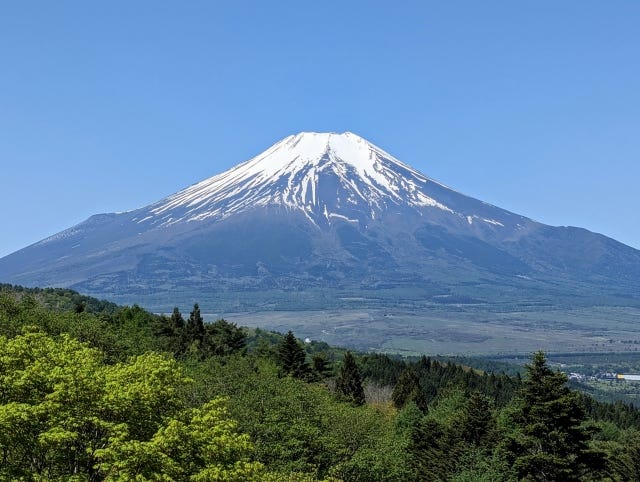


富士山(Fujisan, Mount Fuji)is Japan’s most iconic mountain, and for people visiting from overseas, I think it is also a special place they want to climb at least once. In recent years, however, more people have begun approaching Mount Fuji as an extension of sightseeing, and problems such as climbing in light clothing or attempting a bullet climb to the summit overnight without staying at a mountain hut have become social issues. This year as well, reports showed people trying to climb in short sleeves or without warm clothing.
From 2026, both the 山梨県(Yamanashi Prefecture)side and the 静岡県(Shizuoka Prefecture)side require a 4,000-yen entrance fee per person for climbing Mount Fuji. Time restrictions, advance registration, advance learning, and equipment checks are also being carried out. On the Shizuoka Prefecture side of Mount Fuji, more than 40 people were involved in mountain accidents in 2025, including accidents outside the official climbing season. There are also discussions about charging rescue fees and restricting entry for climbing during the closed season.
When I hear about these issues, I feel that the beauty and danger of mountains always exist side by side. If people come to visit Japan’s mountains, I hope that their time there will be safe and become a beautiful memory. I hope that everyone who enjoys the sea and mountains this summer will be able to return home safely.
Both the opening of the sea-bathing season and the opening of the mountain-climbing season are words that announce the beginning of summer pleasures. Yet before those pleasures, there is prayer, a set period, and rules to be respected. Old folk beliefs and modern regulations take different forms, but I think both are boundaries that help people relate to nature.
Japan’s summer has only just begun. I hope to continue sharing summer in Japan with you.
Once again, I am grateful that SJJ has reached its first anniversary. I will continue choosing my words carefully so that I can share the beauty of Japan with you.
To celebrate the first anniversary, I am offering a discount on paid subscriptions. If you subscribe by August 2, you can receive 20 percent off for 12 months. Paid subscribers can read all SJJ content, including past articles.
Paid subscriptions support the work of SJJ. I would be very happy if you joined us as a fellow traveler on this SJJ journey, looking at Japan together.
—Written by Sumire
You can also support my work by buying me a coffee through buy me a coffee.
You may also enjoy these stories
Why Japan Purifies Itself and Eats Minazuki at the End of June

This Saturday article is part of the “Life in Japan” series.
What Is Washi? Discovering Handmade Japanese Paper in Yame

In Japan, 和紙(washi, Japanese paper)has been made in many regions since ancient times.
This was a fascinating article, I wasn't aware about the rituals around opening the beaches and mountains. Thanks for sharing :)
I was struck by your description of Japanese beaches as temporary towns that appear for one season. The connection between prayer, safety infrastructure, folk warnings, and modern climbing rules makes the openings feel less ceremonial and more like a boundary for living with nature. That was a much richer picture of summer than a simple seasonal guide.