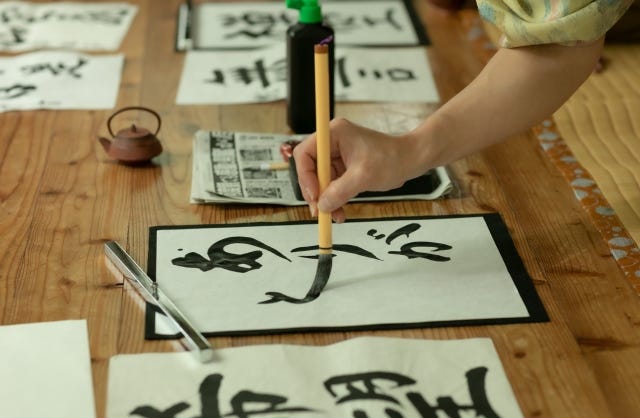
In Japan, 和紙(washi, Japanese paper)has been made in many regions since ancient times.
Washi is traditional paper that developed in Japan. In English, it is sometimes translated as “Japanese paper,” but its materials, production methods, and uses are different from those of modern copy paper or notebook paper.
Washi is made by loosening plant fibers such as 楮(kōzo, paper mulberry), 三椏(mitsumata), and 雁皮(ganpi)in water, scooping them up, and drying them. Depending on the region, the materials, thickness, texture, strength, and uses differ. Those differences have long been connected to the climate, water, plants, and daily life of each place.
In Japanese life, washi has been used in many different settings.
It was used as paper for writing, and for keeping letters and records. For 障子(shōji, sliding screens), washi was pasted onto wooden frames, allowing light from outside to enter a room softly. Washi was also used for 掛軸(kakejiku, hanging scrolls), 屏風(byōbu, folding screens), 襖(fusuma, sliding doors), and 表装(hyōsō, mounting). It has also been connected to decorations for festivals and annual events, as well as to tools related to light, such as 提灯(chōchin, lanterns).
Japanese schools still have 習字(shūji, calligraphy)classes today. In these classes, students use brushes and ink to write characters. The 半紙(hanshi, calligraphy paper)used there is also a type of washi.