

The Scents and Tastes of Early Summer in Japan
Life in Japan – Issue 030

I have written several times in my articles and Notes about incense in Japan. I have introduced incense for enjoying fragrance, scents used to change one’s mood or the atmosphere of a space, and the story of how fragrant wood first drifted ashore on Awaji Island.
In Japan, there are incense sticks made for enjoying scent. There are also incense sticks offered at butsudan, Buddhist altars kept in the home. And when summer comes, another kind of incense stick with a distinctive shape appears in daily life.
It is the spiral-shaped katori senkō, a mosquito coil used to keep mosquitoes away.
When it is lit, it burns little by little from one end. A thin line of smoke rises, and its distinctive smell spreads through the air. It is not made to enjoy as a fragrance. It is a practical tool used in summer to deal with insects.
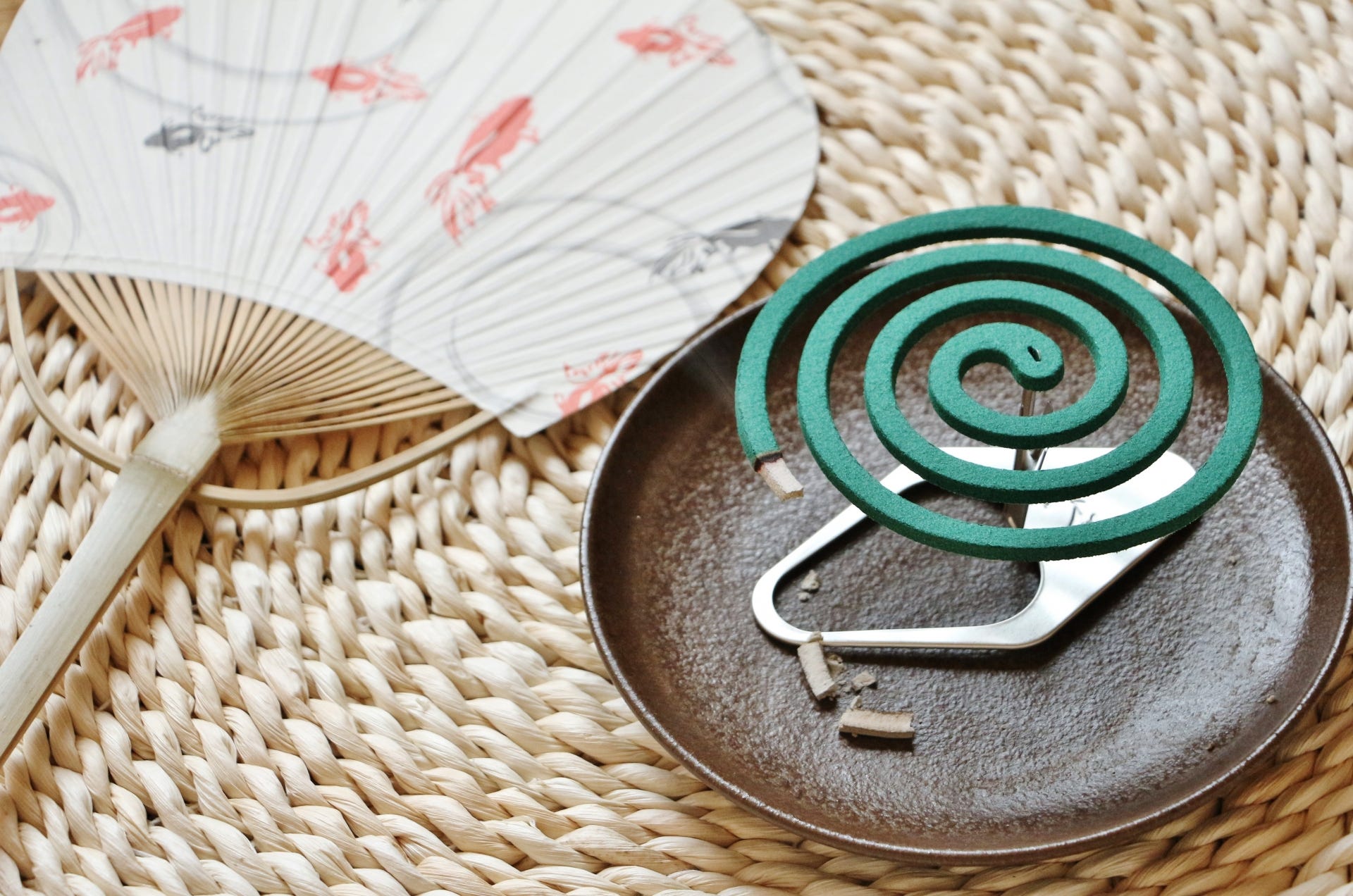
By mid-June, insect repellent products begin to fill the shelves of supermarkets and drugstores. There are sprays, hanging insect repellents, battery-operated devices, and the old-fashioned spiral-shaped mosquito coils. When I see these products in the damp air of the rainy season, I feel that preparations for summer have begun again.
The history of katori senkō goes back to the Meiji period. Ueyama Eiichirō, the founder of Dainihon Jochugiku, now known as KINCHO, worked on developing mosquito coils using pyrethrum. Pyrethrum is known as a plant that contains insecticidal compounds. The first mosquito coils were stick-shaped, but they are said to have changed into a spiral shape so that they could be used for a longer time.
The spiral form allows a long incense stick to fit into a limited space. If stretched out straight, it measures about 75 centimeters and is said to burn for about seven hours. This shape, which could be used while people were sleeping, spread through Japanese daily life.
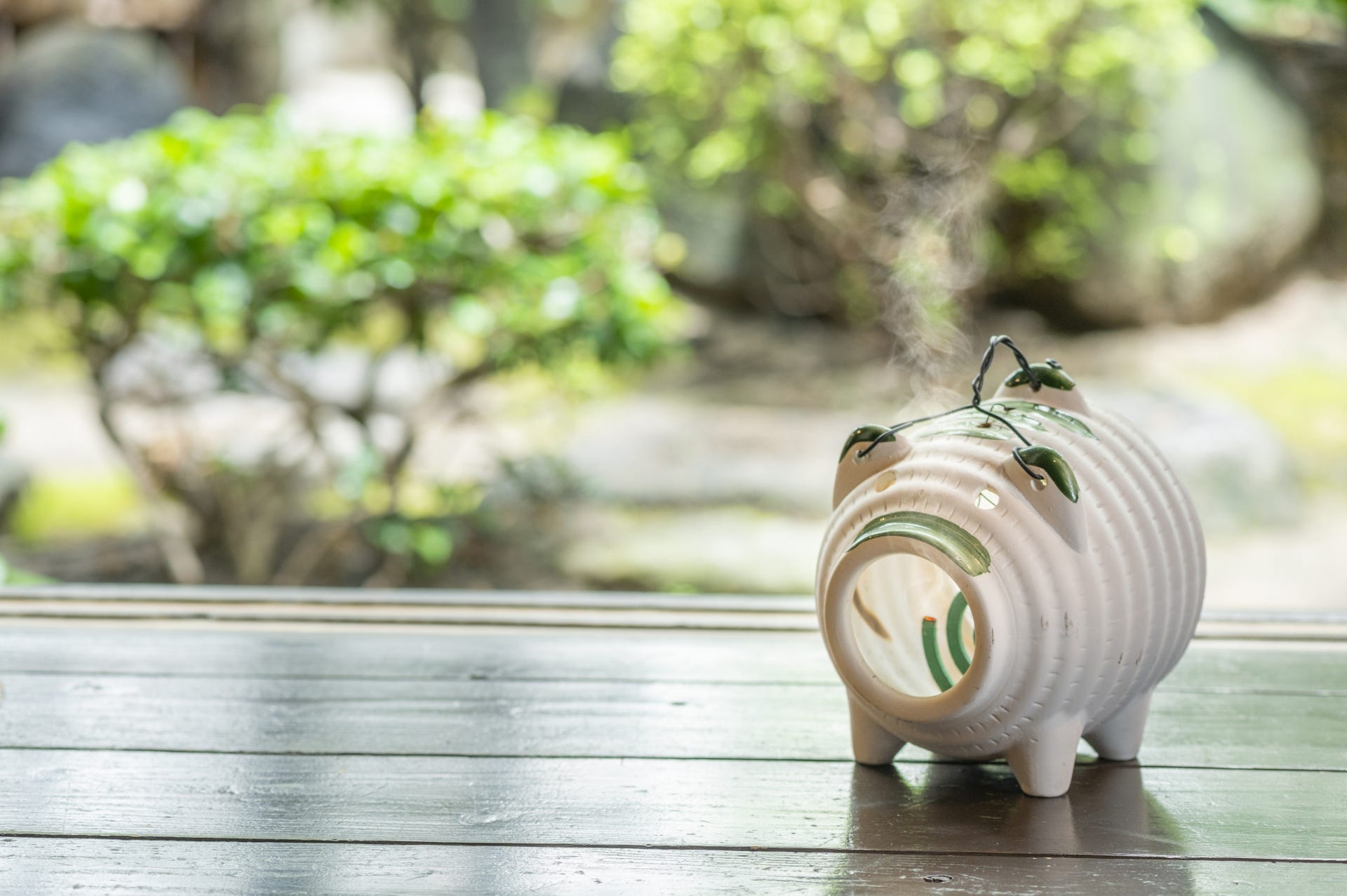
Readers who like Studio Ghibli films may have seen mosquito coils before. Katori senkō appears in My Neighbor Totoro and When Marnie Was There. In Japanese anime and television dramas, it is often used as a small prop to show a summer scene. Many people may have seen it placed inside a pig-shaped incense holder.
Alongside wind chimes, the sound of cicadas, mugicha barley tea, engawa verandas, and sudare bamboo screens, katori senkō has become one of the symbols of summer in Japan.
Katori senkō is used not only at the entrance of homes and in gardens, but also outdoors. Japan is famous for onsen hot springs, and when you visit facilities with rotenburo open-air baths, you may find mosquito coils or insect repellent products placed in outdoor rest areas or along walkways. At hot spring inns in the mountains, by rivers, or surrounded by forest, nature is close, and so are insects.
Some people who work in gardens or fields, go camping, or go fishing carry mosquito coils in special cases. There are types that can be attached to the waist, hung from a bag, or used with a string. To people from overseas, the sight of someone walking around while carrying a smoking mosquito coil may look a little amusing.
Of course, delicious seasonal foods are also an important part of what tells us summer is coming. Around this time of year, river fish begin to come into season.
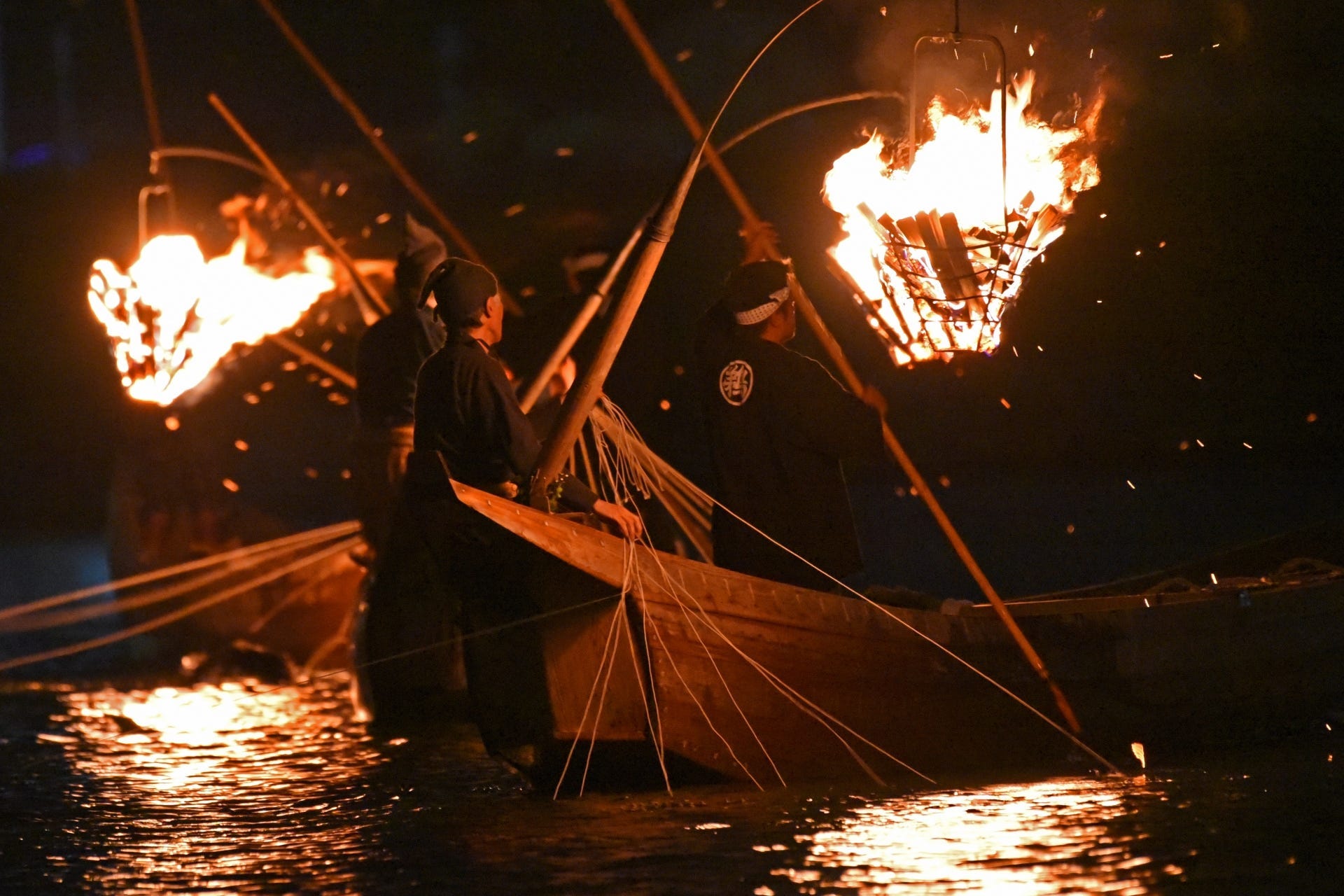
I once posted a photograph of ukai on Substack Notes. Ukai is a traditional fishing method that uses cormorants to catch river fish. Along Japanese rivers, there are scenes where fishing techniques, food culture, and the seasonality of the riverside come together.
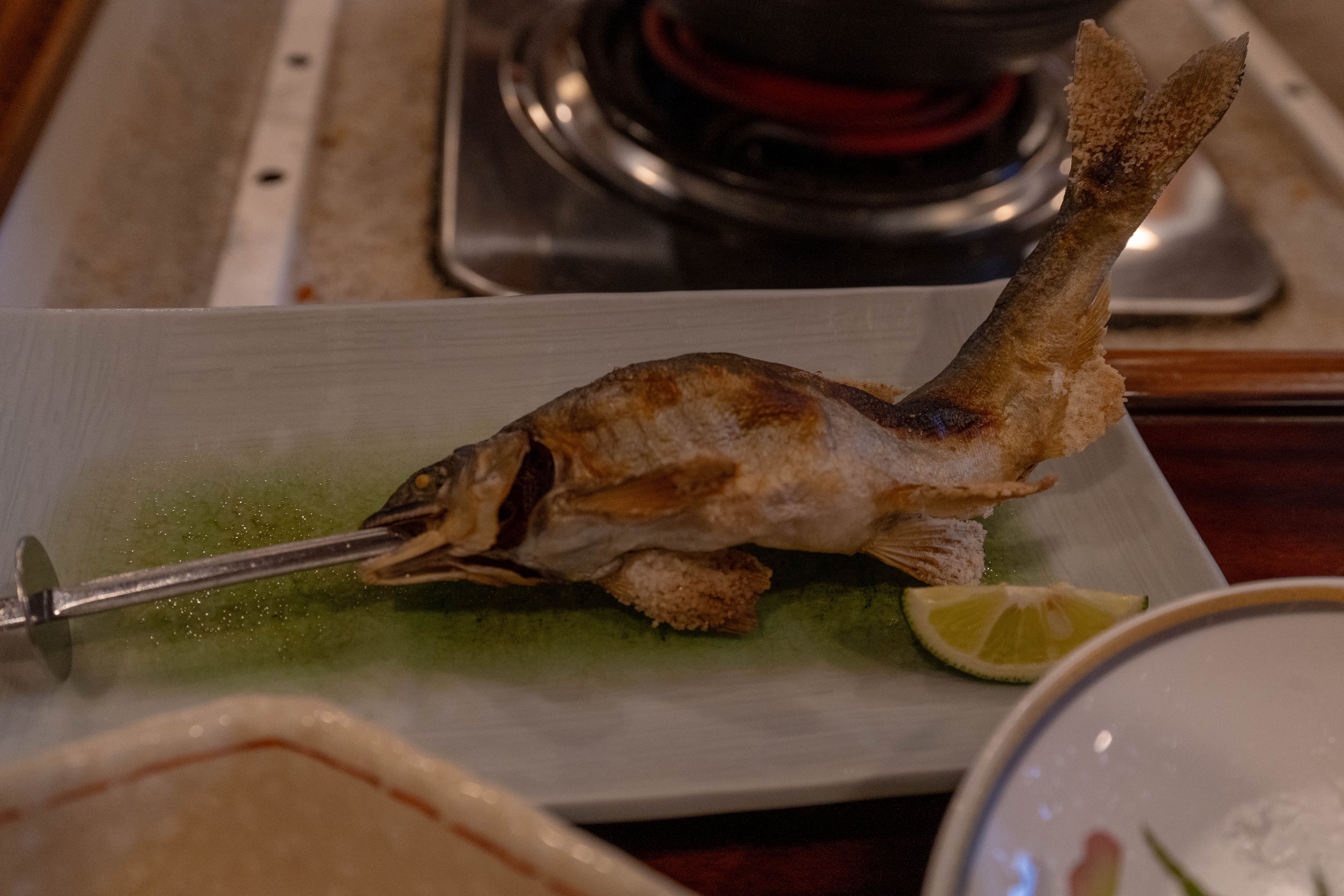
When people think of summer river fish in Japan, ayu may be the most familiar. Ayu is known as a symbol of summer, and because of its distinctive aroma, it is also called kōgyo, meaning “fragrant fish.” It is often eaten grilled with salt. When I see the word ayu at riverside restaurants, ryokan inns, roadside stations, or on seasonal menus, I feel that summer is getting closer.
Salt-grilled ayu is a summer dish that is easy to recognize by sight. The fish is skewered and grilled, and it may be served with salt on the tail and fins. It is a dish that lets you enjoy the aroma of river fish and the lightness of its flesh. Many people may encounter it as part of a meal while traveling.
Other river fish are also enjoyed in cold mountain streams, such as iwana, or char, and yamame, or masu salmon. In some regions, amago, a type of river trout, is also well known. Nijimasu, or rainbow trout, is often seen at fishing areas and aquaculture farms. In areas closely connected with lakes and watersides near rice fields, koi carp, funa crucian carp, and namazu catfish also appear in local food culture.
The Japanese archipelago stretches a long way from north to south, with many mountains and rivers, so the kinds of river fish eaten vary by region. Even when we use the single term “river fish,” the connection to daily life differs between fish eaten in mountain streams, fish eaten near lakes, and fish connected with waterways around rice fields.
Unagi is also popular overseas as part of Japanese cuisine. In Japan, unagi is often treated as a high-end fish, and it is deeply connected with Doyō no Ushi no Hi, the Day of the Ox in the summer doyo period.
Some people may not immediately recognize the word unagi, but they may have heard of dishes such as hitsumabushi or unajū. Both are dishes made with eel.


Unagi is a delicious fish, but Japan has long depended on wild eels, and the pressure on those populations has become a serious issue. Today, research and efforts toward the practical use of fully farm-raised eel are moving forward in Japan. In 2023, the Kindai University Aquaculture Research Institute became the first university in Japan to achieve the complete aquaculture of Japanese eel. Also this year, through efforts by the Japan Fisheries Research and Education Agency, Marino-Forum 21, Yamada Suisan, and others, kabayaki made with fully farm-raised eel was test-sold to the general public in limited quantities.
Unagi is also considered a food that gives stamina, and it is something many people want to eat in summer, when the heat can make the body feel tired. It is a high-end ingredient and not something most people eat every day, but it is one of the dishes I would like visitors to Japan to try.
This time, I followed the change of the season through incense sticks and river fish. As summer gradually approaches, mosquito coils begin to appear in shops, insect repellents are seen at hot springs and in gardens, and river fish dishes slowly begin to catch the eye. We also start seeing the words ayu and unagi more often.
The shop shelves, the dining table, and the scenery outside are all moving little by little toward summer.
In your country, what do you begin to see when summer approaches? It does not have to be a special event. If there is a scent or food in daily life that makes you feel that summer has arrived, I would love to hear about it.
When people think of the pleasures and seasonal sights of summer in Japan, they may think of fireworks, festivals, yukata, rivers and the sea, and summer foods. From here on, I will continue to share the summer scenes of Japan that I see in my own life as directly as I can. I will bring you Japan not as a tourist destination cut into images, but as a summer that continues here and now as everyday life. Please look forward to the Saturday Life in Japan series.
Thank you for reading.
—Written by Sumire
You can also support my work by buying me a coffee through buy me a coffee.
You may also enjoy these stories
Bottling the Season: Japan’s Delicious Umeshigoto Tradition

June has begun. Thank you for opening this week’s article.
What Is the Dragon in Japan?

When people hear the English word “dragon,” many may imagine a giant monster that breathes fire, an enemy slain by a knight, or a fearsome creature guarding treasure.
Lovely story. I found these only a couple of days ago at the Shinjuku Museum of History.
https://www.facebook.com/gianni.simone.71/
Unagi is my favorite cooked fish in Japan! I used to eat smoked eel in the Netherlands but eel there is no longer so readily available.
What represents summer to me in my home country is “Hollandse Nieuwe,” the Dutch new herring that is extra fat after the cold winter and spring. We eat it raw (slightly cured) and it’s delicious.