

How Japan Describes Winter: Traditions and Onomatopoeia
Life in Japan – Issue 007

Thank you for always reading the Spiritual Japan Journal.
December has begun, and in Japan, the traditional lunar calendar included “Japanese-style month names,” known as wafū getsumei(和風月名). In this system, December is called Shiwasu(師走). There are several theories about its origin, and one suggests that it means “a month so busy that even monks must run around.” Even today, the word is widely used to express the bustle of the year’s end.
As Shiwasu arrives, daily life in Japan gradually shifts toward the year’s close.
In regions like Hokkaido, where snowfall is heavy, winter has already begun in earnest.
I have a question for you. Does it snow in the country where you live?
And when it does, what words do you use to describe it? Are there onomatopoeic expressions for snow?
Japanese has countless onomatopoeic words, and even snow alone can be described in many ways.
For lightly drifting snow, there is CHIRACHIRA; for snow that falls quietly and steadily, SHINSHIN; and for snow that accumulates without melting, ZUNZUN.
Snow that continues to fall can be described as KONKON, while heavy, forceful snowfall is expressed as DOKADOKA.
Even those outside Japan who have watched Japanese manga or anime may have heard the onomatopoeia DOKIDOKI, often used when a character is with someone they like.
According to resources from institutions such as the National Institute for Japanese Language and Linguistics, Japanese is said to have approximately 4,000 to 5,000 onomatopoeic expressions. The exact number is not known, but they include not only sound-imitation words, but also words that describe states, movements, and emotions. These categories, especially those expressing states and feelings, are uncommon in English. English has around 150 onomatopoeic expressions, and it is often said that the Japanese concept of onomatopoeia is difficult for English speakers to fully grasp.
In this article, I will share aspects of Japanese life as it changes toward the end of the year, introducing winter onomatopoeia along the way.
If you are reading this and finding something new or interesting, then in Japanese onomatopoeia you might be quietly saying FUMUFUMU in your mind.
If instead you are thinking “I have no idea what this means,” then the fitting onomatopoeia would be POKAAN.
Oseibo Gifts(お歳暮):A Winter Tradition for Expressing Gratitude
First, let me share one of the year-end traditions in Japan.
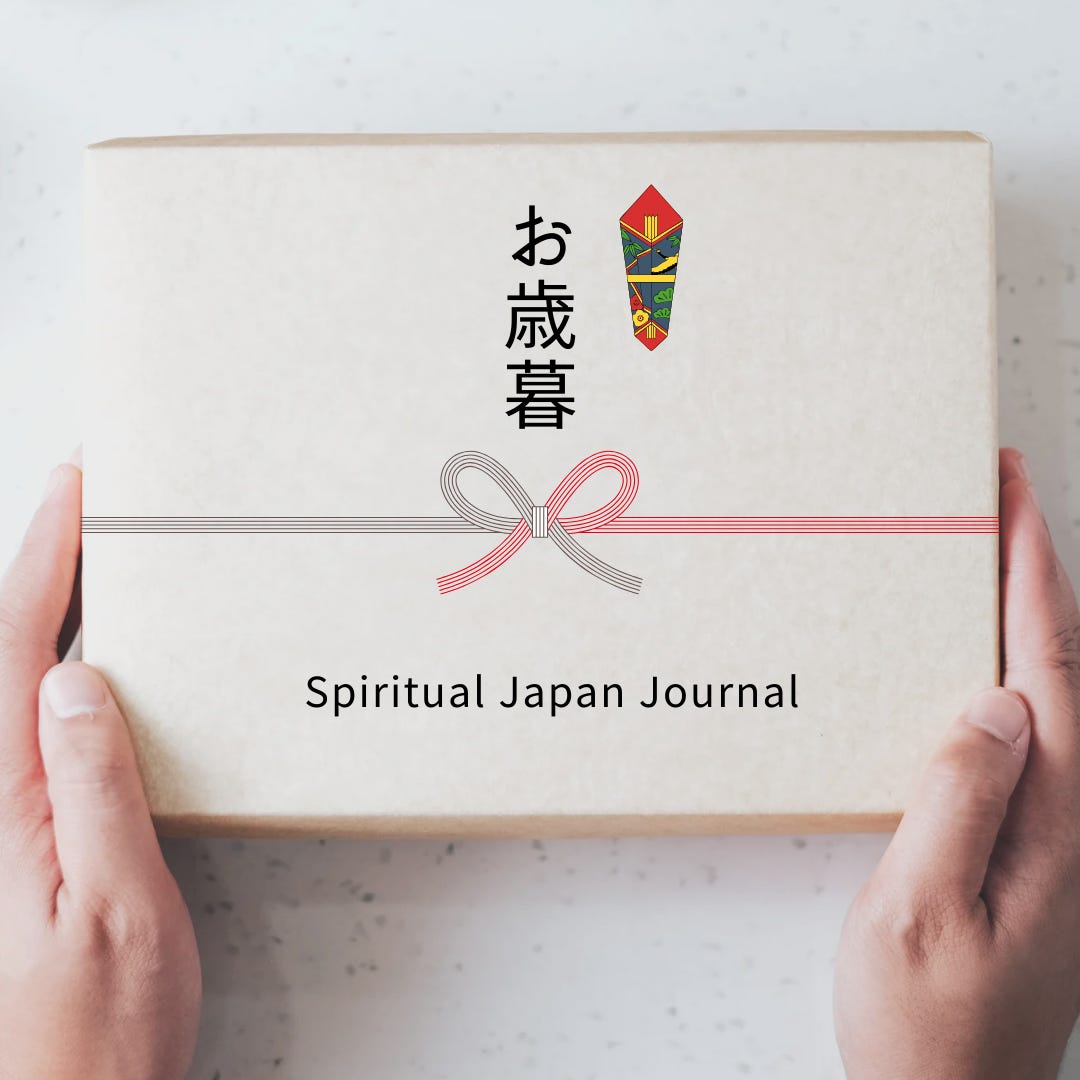
In December, the season of Oseibo gifts begins. These gifts are a way to express gratitude to those who have supported you throughout the year, and they remain an important custom during the Japanese year-end.
The timing varies slightly depending on the region, but generally, Oseibo gifts are sent between early and mid-December. Stores display a wide selection of gift items, and foods that keep well—such as ham, canned goods, coffee, and seasonings—are especially popular. Each gift carries a message of “Thank you for everything this year” and “I look forward to your continued kindness next year.”
Oseibo is not merely an exchange of items; it reflects Japanese values of courtesy and consideration. Choosing a gift while thinking about the recipient—especially in the busy final weeks of the year—is itself an expression of gratitude.
New Year’s Greeting Cards(年賀状):A Winter Tradition for Sending New Year Wishes
In December, stationery shops and post offices begin displaying sections dedicated to New Year’s greeting cards. These postcards are sent so that New Year’s wishes arrive on January 1, and they are a long-standing seasonal custom in Japan.
New Year’s greeting cards have a distinctive system in Japan. Although the acceptance period begins around December 15, postcards placed in the mailbox are not delivered immediately. Instead, they are collected at post offices across the country, sorted by address, and stored as mail designated for delivery on New Year’s Day. Then, in the early morning of January 1, postal workers begin distributing them all at once. It is one of the busiest days of the year for the postal service.
The designs of these cards vary widely. Some feature motifs of the zodiac animal for the coming year, others include family photographs, and some are entirely handwritten.
For reference, I also created a New Year’s card for Spiritual Japan Journal.
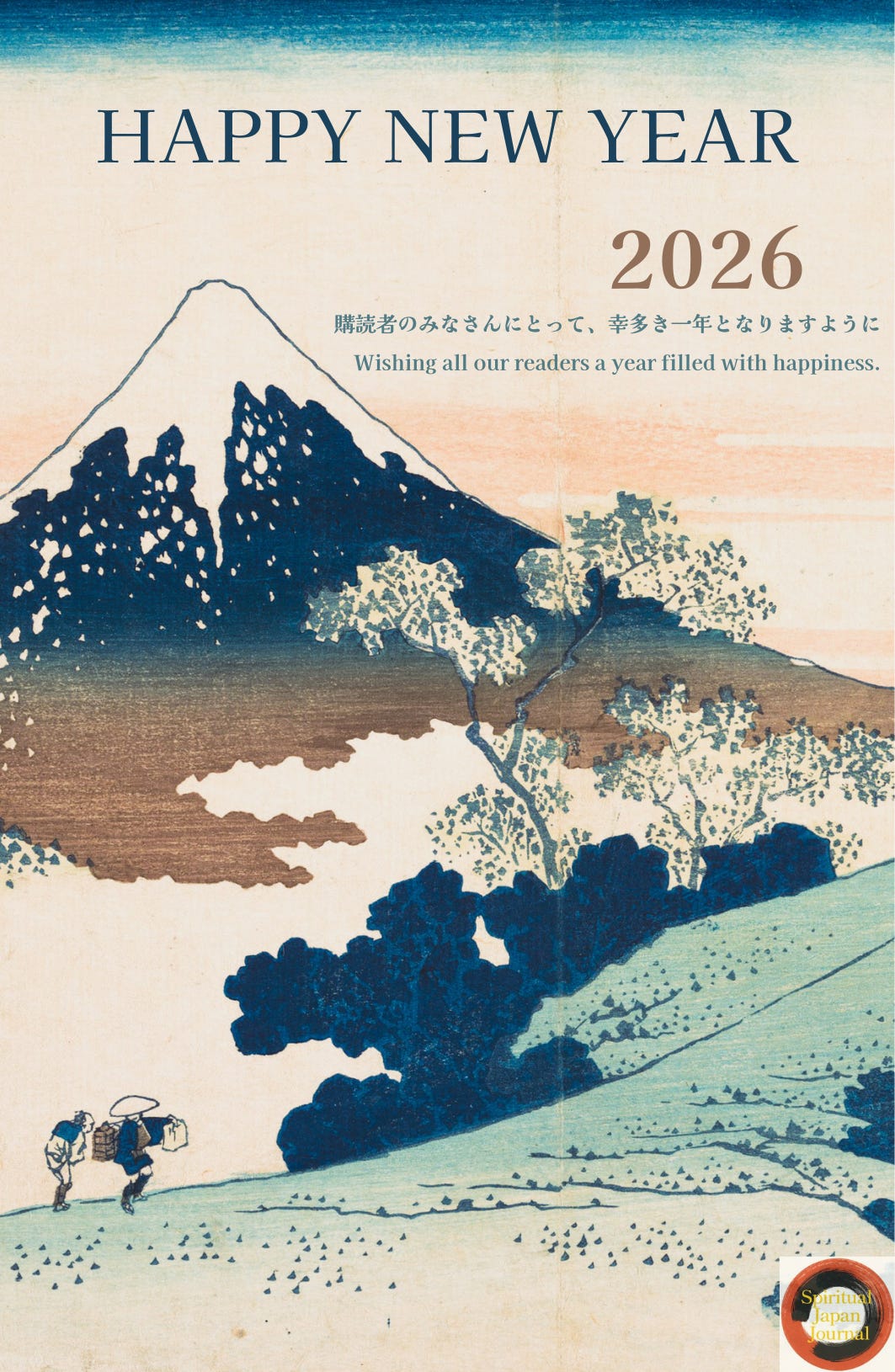
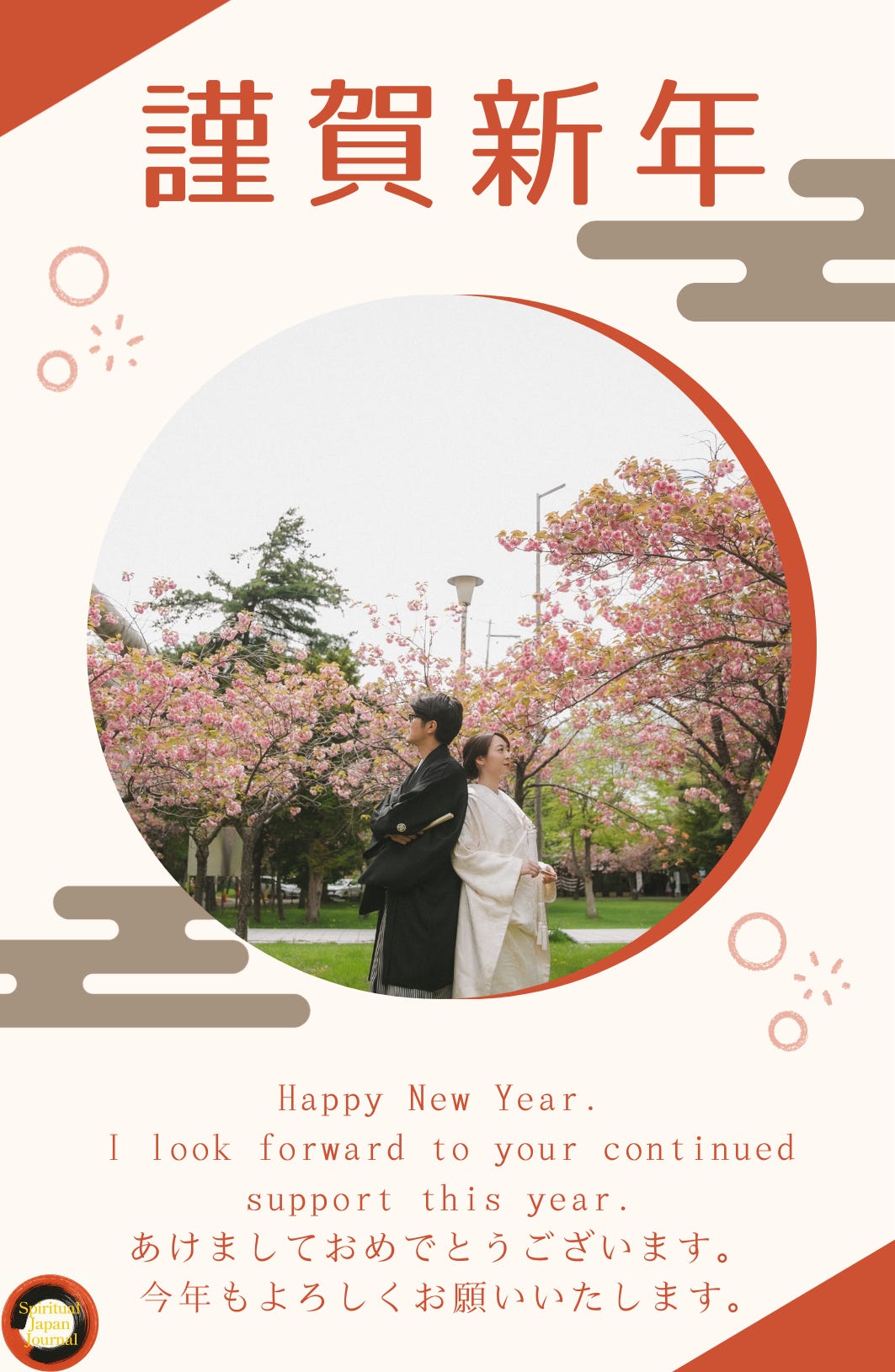
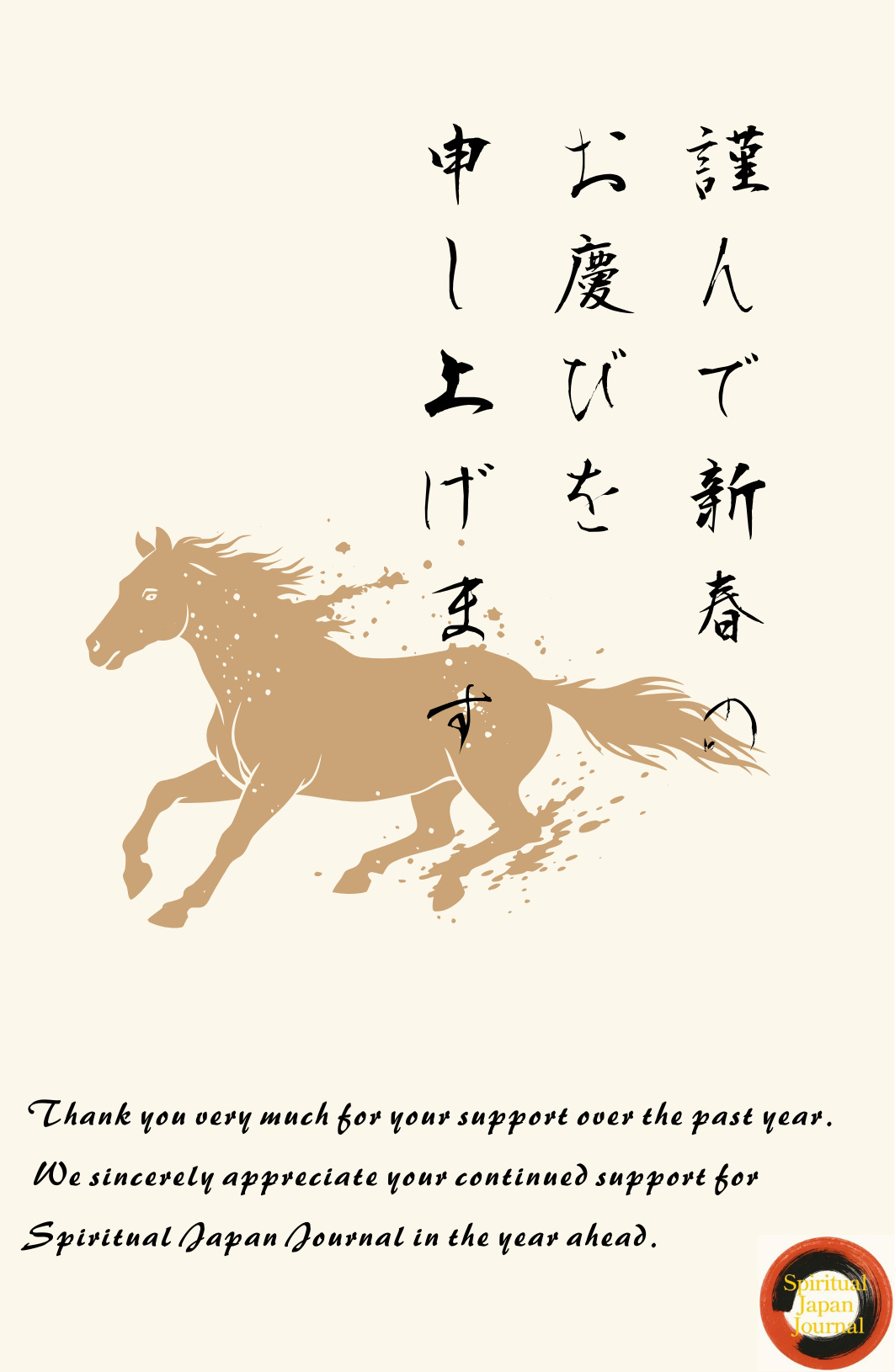
In addition to creating and printing their own New Year’s cards or writing them by hand, as shown in the photo above, many people also choose ready-made cards that are sold with pre-designed illustrations.
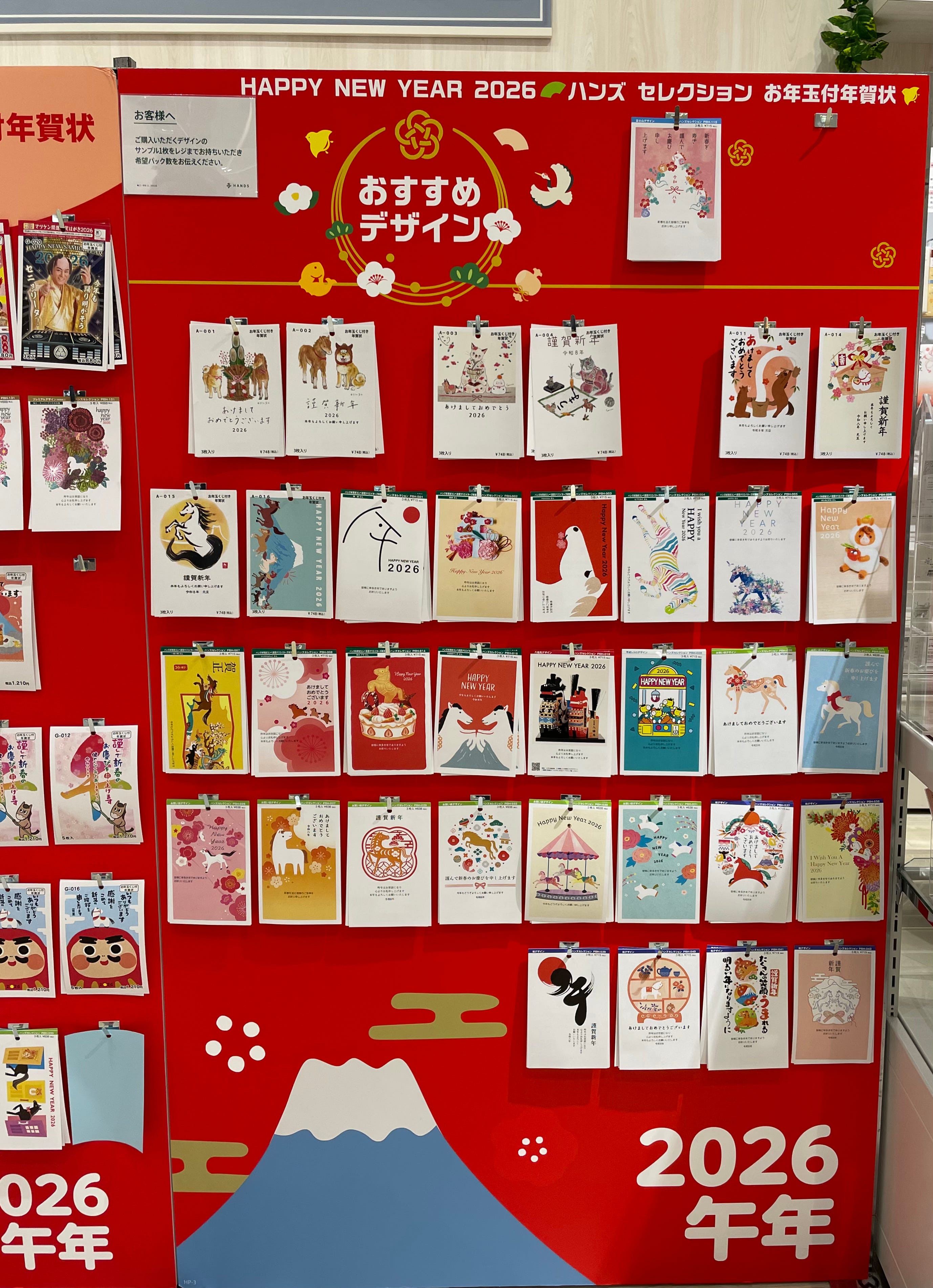
In recent years, the number of New Year’s greeting cards sent has decreased significantly. With the spread of email and social media, more people now choose not to send them. Even so, handwritten cards carry a special warmth. The time spent writing the recipient’s name and adding a personal message conveys care, and receiving such a card can bring a quiet sense of joy.
There is also a lottery feature called Otoshidama-tsuki nengajō, in which recipients have a chance to win prizes such as cash or sheets of commemorative stamps. This adds an extra element of fun to the tradition.
Winter Flavors That Warm the Body
As the weather grows colder, many of us naturally crave warm foods. In Japan, winter brings a variety of seasonal dishes and drinks that gently warm the body.
One example is nabe cuisine(鍋料理), a defining part of winter food culture in Japan. Families and friends often gather around a shared pot at the table, enjoying the rising steam together. The flavors vary by region and household, from yosenabe and sukiyaki to shabu-shabu and miso-based hot pots.
Another familiar winter scene is the sweet aroma of yaki-imo(焼き芋), or roasted sweet potatoes, often drifting through the streets. Holding a warm roasted potato in your hands on a cold day brings a simple comfort, and this has long been a beloved winter tradition in Japan.
You may also encounter amazake(甘酒) at shrines and winter events. Despite having the word “sake” in its name, amazake contains no alcohol and can be enjoyed by children as well. It is made using sakekasu(酒粕, sake lees), but only its gentle sweetness and faint fermented aroma remain. Because it warms the body from within, it is a popular drink during winter gatherings and shrine visits.
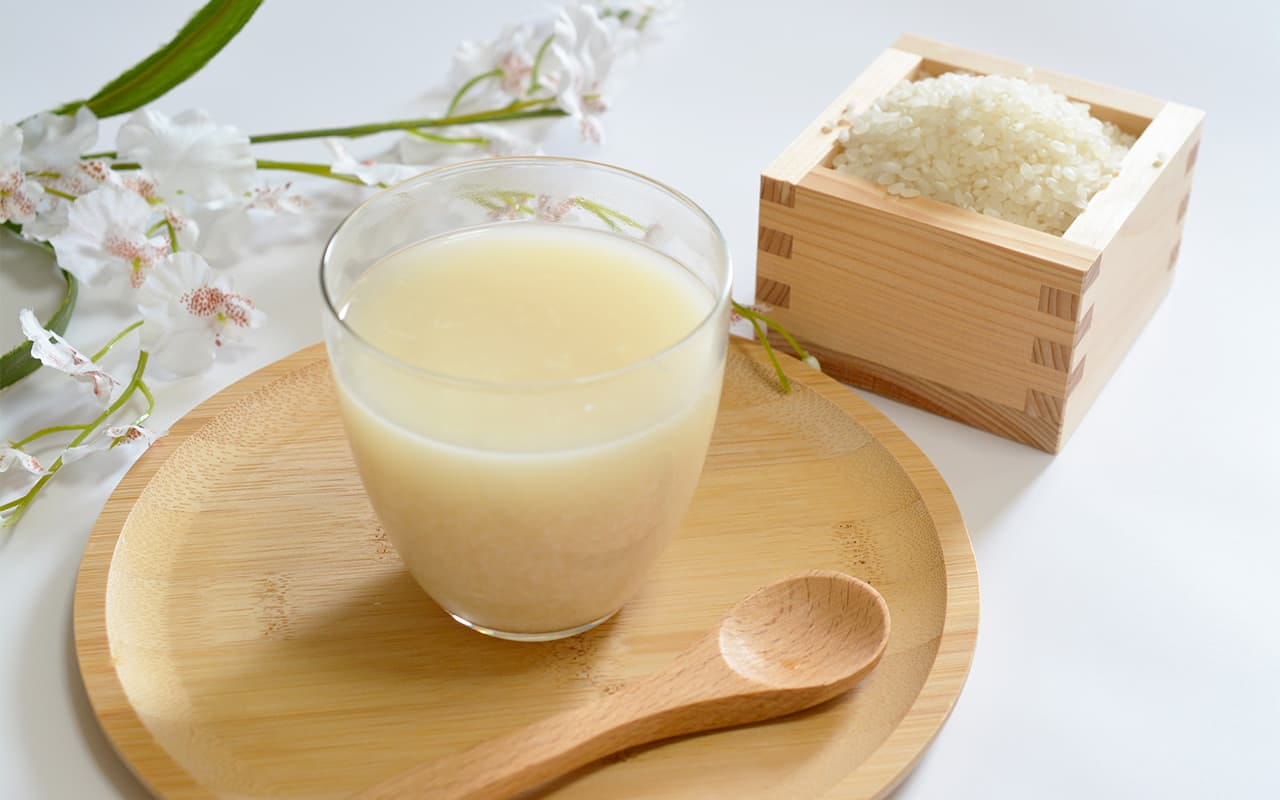
Japan’s winter season offers many foods that provide warmth, and the Japanese language includes numerous onomatopoeic expressions to describe their temperatures, aromas, simmering sounds, and even the sensations when eating them.
From here, I will introduce some onomatopoeia that express the warmth of winter foods and the feeling of warmth in the body.
Onomatopoeia Describing the Warmth of Winter Foods
ATSUATSU
…Describes food that is freshly prepared and very hot. It is often used for soups, hot pots, and similar dishes.
HOKAHOKA
…Expresses warmth accompanied by rising steam, such as the image of steam from freshly baked bread.
HOKUHOKU
…Used when eating roasted sweet potatoes or potatoes, describing their warm and softly crumbling texture.
KOTOKOTO
…Describes the sound and motion of simmering food over low heat, with a quiet and gentle boiling.
KUTSUKUTSU
…Indicates even smaller bubbles simmering quietly, gentler than KOTOKOTO.
GUTSUGUTSU
…Expresses a stronger boiling state in a pot, with more vigorous bubbling.
GURAGURA
…Describes an even more intense boiling state than GUTSUGUTSU, similar to molten lava.
Onomatopoeia for Warmth Felt in the Body or Heart
POKAPOKA
…Describes the comfortable warmth felt from sunlight or heating.
NUKUNUKU
…The gentle, enveloping warmth felt inside a blanket or kotatsu.
JINWARI
…The sensation of warmth spreading from within the body, such as after eating ginger.
HOKKORI
…Expresses the warmth of the heart brought on by a kind or touching moment.
HONWAKA
…Describes a soft, gentle atmosphere where a warm and mild feeling spreads.
Japan’s winter season includes long-standing customs that have been passed down through the years, as well as moments spent sharing warm foods together, even amid the busyness of the year’s end. How did you find today’s look at Japan’s winter traditions?
If your country also has seasonal customs or expressions unique to this time of year, I would love to hear about them.
From here, Japan enters a period filled with year-end and New Year traditions. I look forward to sharing more of these cultural moments with you in future articles, and I hope you enjoy following along at a comfortable pace.
Thank you very much for reading today’s article.
You may also enjoy these stories

The Quiet Art of Kōrakuen

We introduce Kōrakuen and Okayama Castle, two proud historical assets located in Okayama Prefecture. Many tourists who visit Japan specifically seek out Japanese gardens, and Kōrakuen is recognized as one of the Three Great Gardens of Japan.
I remember the children's song ゆきやこんこん. But when I looked it up, it seems to be こんこ rather than こんこん. Strange, though I remember こんこん from my childhood. Speaking of ドキドキ、I remember how my heart went ドキドキ in times of excitement and fear. I'm afraid I am rambling here, but something to connect with the 72 microseason calendar, where the current period mentions bears going into hibernation, it reminds me of the ending of the song I started with here, where the cat curls up under the kotatsu: 猫はこたつで丸くなる。