


Did you know that there is a city in Japan where wild deer have been cherished as messengers of the gods for more than a thousand years?
About an hour south of Kyoto (京都) by train lies Nara (奈良), a city that served as Japan’s capital in the eighth century.
Near Nara Park (奈良公園), wild deer spend their days surprisingly close to people. They walk along the paths, rest on the grass, and pass between visitors. They are not kept in captivity. They are wild sika deer that live in this area.
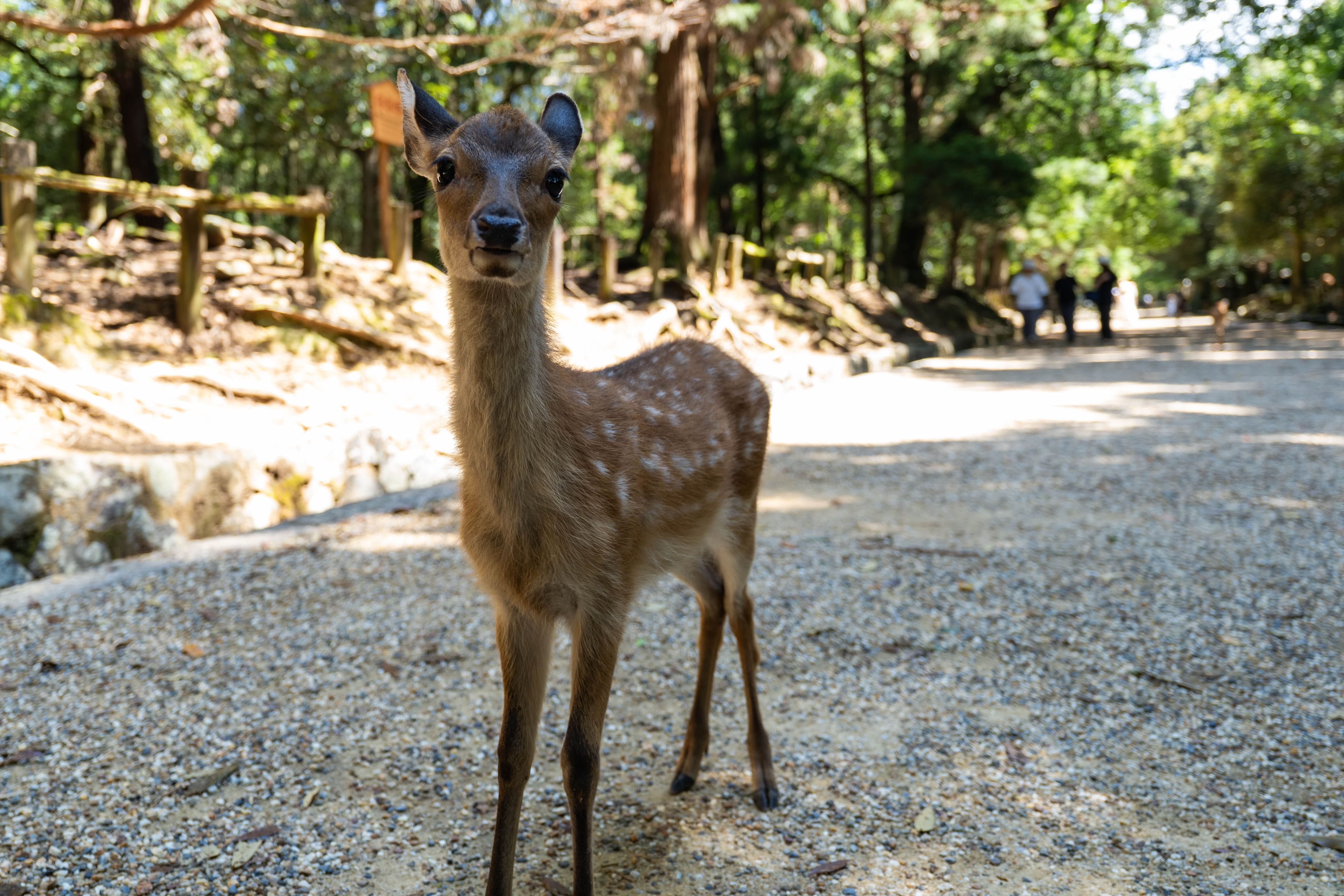
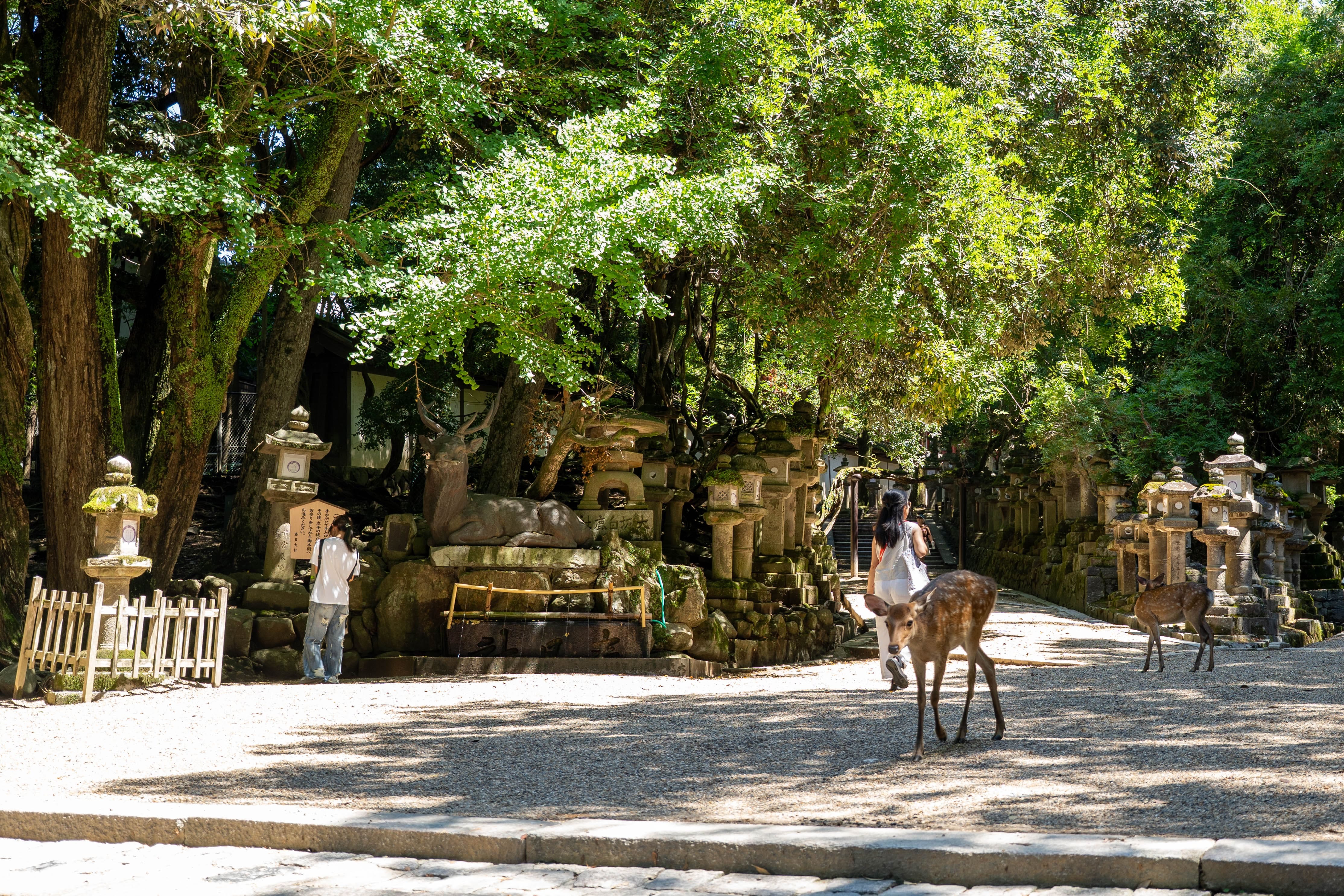
There are also many deer along the approach from Nara Park to Kasuga Taisha (春日大社). Some rest beneath the trees, while others come closer as soon as they notice the shika senbei, or deer crackers, in a visitor’s hand. There are small does and impressive stags with antlers, as well as deer of every size in between.
I visited on a weekday, but I could hear many different languages around me and was surprised by how many people had come from overseas. Happy voices filled the approach as visitors took photographs with the deer and offered them crackers. The deer appeared accustomed to the steady flow of people and walked close beside them.
Why do so many wild deer live alongside people here?
For more than a thousand years, they have been cherished as sacred companions and messengers of the gods.
Kasuga Taisha is central to that history.
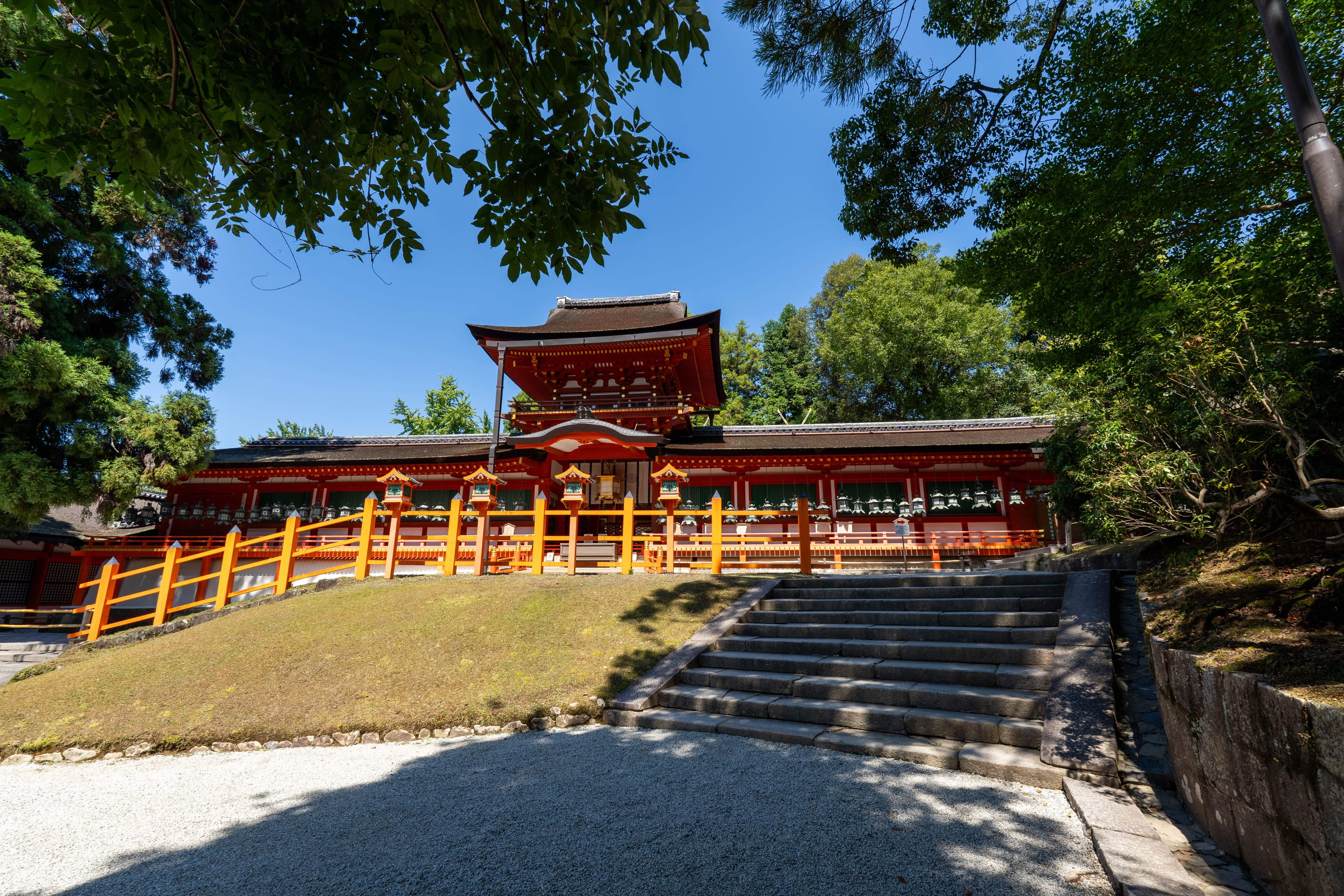
On the way to the shrine, I remembered the first time I visited Nara at the age of eighteen. Japanese schools have a tradition called shūgaku ryokō (修学旅行), or a school trip. Students in the same year travel with their teachers for several days and learn about the history and culture of the places they visit. It is also a school event that many students look forward to because they can travel far from home with their friends.
My high school in Hokkaido (北海道) took us to Kyoto, Osaka (大阪), and Nara. I did not know much about Japanese history then, but I remember feeling overwhelmed by the temples, shrines, and Buddhist statues that had survived for centuries. Ancient places still stood within a modern city where people went about their daily lives.
I have written before about the long and rich history created by the Ainu people (アイヌ民族) in Hokkaido. The present name “Hokkaido,” however, was established in 1869, about 160 years ago. I did not grow up in a place where ancient shrines and temples were part of the everyday landscape. Nara, where nearly 1,300 years of history remain visible, seemed to move on an entirely different timescale. It was a place I longed to visit again.
Many years have passed since that school trip. I have since learned more about Japanese history and mythology, and I was finally able to return. Walking through Nara with an understanding of what I had been unable to grasp as a high school student made me very happy.

The history of Kasuga Taisha takes us back to the period when Nara was Japan’s capital.
In 710, a capital called Heijō-kyō (平城京) was established in what is now the city of Nara. Japan’s political system developed around the emperor, while Buddhism and cultural influences from China and the Korean Peninsula were incorporated into the foundations of the country.
Several decades later, in 768, four main sanctuary buildings were constructed at the foot of Mount Mikasa (御蓋山), which rises east of the former capital. Empress Shōtoku (称徳天皇), the woman who ruled Japan at the time, ordered their construction, establishing the form of Kasuga Taisha that continues today. The First Sanctuary (第一殿) enshrines Takemikazuchi no Mikoto (武甕槌命), the Second Sanctuary (第二殿) enshrines Futsunushi no Mikoto (経津主命), the Third Sanctuary (第三殿) enshrines Amenokoyane no Mikoto (天児屋根命), and the Fourth Sanctuary (第四殿) enshrines Himegami (比売神). Together, these four deities are known as the Kasuga Ōkami (春日大神). Shinto uses the word hashira (柱), meaning “pillar,” to count deities.
The Fujiwara clan (藤原氏) was involved in the construction of the shrine buildings. This aristocratic family supported the emperor and held considerable influence at the imperial court from the Nara period (奈良時代) into the Heian period (平安時代). The Fujiwara revered Amenokoyane no Mikoto, enshrined in the Third Sanctuary, as a deity connected to their ancestry and cherished Kasuga Taisha as the shrine of their ancestral god. Kasuga Taisha later gained the devotion of the imperial court and many other aristocrats, and its rituals and buildings were passed down through the centuries.
For approximately 1,300 years, prayers for the peace and prosperity of the nation and its people have been offered at Kasuga Taisha every day. More than 2,200 rituals are still held there each year, continuing this tradition of prayer.
Among the four deities enshrined at Kasuga Taisha, Takemikazuchi no Mikoto of the First Sanctuary has the closest connection with the deer of Nara.
According to the tradition passed down at Kasuga Taisha, Takemikazuchi no Mikoto was invited from Kashima in Hitachi Province (常陸国) to protect the capital of Nara. He is said to have travelled on the back of a white deer and descended upon Ukigumo Peak (浮雲峰) on Mount Mikasa. Hitachi Province corresponds to present-day Ibaraki Prefecture (茨城県), where Kashima Jingū (鹿島神宮), the shrine dedicated to Takemikazuchi no Mikoto, still stands.
The white deer was the sacred companion that carried Takemikazuchi no Mikoto to Nara. This tradition led people to call Nara’s deer shinroku (神鹿), or sacred deer, and cherish them as messengers of the gods.
A divine messenger in Shinto is a special animal believed to serve a deity and convey its presence or will to the human world. Different animals hold this role at different shrines, depending on the deity worshipped there. The story of the white deer carrying Takemikazuchi no Mikoto to Mount Mikasa created a deep connection between Nara’s deer and the deities of Kasuga.
Later generations also preserved this tradition through art. Kashimadachi Shin’eizu (鹿島立神影図), held by Kasuga Taisha, shows a deity in the form of a nobleman riding a white deer, with Mount Mikasa and the Kasuga mountains behind him. The painting is thought to date from sometime between the Kamakura period (鎌倉時代) and the Nanbokuchō period (南北朝時代).
View Kashimadachi Shin’eizu on the Nara National Museum (奈良国立博物館) website.
Kasuga Deer Mandalas (春日鹿曼荼羅), which portray the relationship between deer and the deities of Kasuga, were also created during the medieval period. A mandala is a devotional image representing the realm of Buddhas or gods. In these paintings, a sacred sakaki tree and mirror carried on the back of a white deer represent the presence of the Kasuga deities.
View Kasuga Deer Mandala on the Nara National Museum website.
The journey of Takemikazuchi no Mikoto from Kashima to Mount Mikasa on a white deer is part of the tradition surrounding the establishment of Kasuga Taisha. It is not recorded in the Kojiki (古事記) or the Nihon Shoki (日本書紀). The story was passed down through the shrine’s tradition and portrayed in medieval texts and paintings, establishing the deer in people’s minds as a sacred companion of the gods. Generations of people inherited this belief and continued to cherish the deer, helping to shape the landscape of Nara that we see today.
Another story offers a different connection between deer and Takemikazuchi no Mikoto. It appears in the Kuniyuzuri (国譲り), or Transfer of the Land, recorded in the Kojiki and discussed in one of my previous articles.


Completed in 712, the Kojiki is Japan’s oldest surviving written work. It recounts the beginning of heaven and earth, the deities who created the Japanese islands, and the lineage of the emperors. The Transfer of the Land tells how the deities of Takamagahara (高天原), the heavenly realm, asked Ōkuninushi no Kami (大国主神), who ruled Ashihara no Nakatsukuni (葦原中国), the earthly realm, to relinquish the land. Takemikazuchi no Mikoto was one of the deities sent to Izumo (出雲) to conduct the negotiations. At Kasuga Taisha, his name is written as 武甕槌命, while the Kojiki primarily uses the characters 建御雷神. Both names refer to the same deity.
Amenokaku no Kami (天迦久神) appears when the gods are deciding whom to send. The deities of Takamagahara first wanted to ask Takemikazuchi’s father, Itsunoohabari no Kami (伊都之尾羽張神), for his answer, but the other gods could not reach him. Amenokaku no Kami was chosen to carry their message. When he visited Itsunoohabari no Kami, the god recommended that his son Takemikazuchi no Mikoto go in his place. Takemikazuchi was then sent to Izumo.
One interpretation connects the sound kaku in the name Amenokaku with a word associated with deer and identifies him as a deer deity. Hirata Atsutane (平田篤胤), a scholar of Japanese classics and Shinto in the late Edo period (江戸時代), also interpreted Amenokaku no Kami as Ame-no-Shika-gami (天鹿神), finding another link between deer and Takemikazuchi no Mikoto.
This account is separate from the Kasuga Taisha tradition in which Takemikazuchi no Mikoto travels to Nara on a white deer. It shows, however, that a later interpretation of the Kojiki also connected deer with this deity.
Mount Mikasa is the setting of the white-deer tradition. The mountain rises approximately 283 metres behind the main sanctuary of Kasuga Taisha, and Ukigumo Peak at its summit is regarded as the sacred place where Takemikazuchi no Mikoto descended. Entry to the mountain remains prohibited. Within the shrine grounds, a place of worship allows visitors to pray toward Ukigumo Peak from a distance.
Kasuga Taisha is within walking distance of Kintetsu Nara Station (近鉄奈良駅) and is not far from the centre of Nara. Despite this proximity to the city, Mount Mikasa and the forests of Mount Kasuga (春日山) have been protected as sacred land. The imperial court prohibited hunting and the felling of trees there in 841, allowing the rich forest to survive for more than a thousand years.
Today, the Kasugayama Primeval Forest (春日山原始林) is designated as a Special Natural Monument of Japan and, together with Kasuga Taisha, forms part of the UNESCO World Heritage Site known as the Historic Monuments of Ancient Nara (古都奈良の文化財).
A July 2026 survey by the Nara Deer Preservation Foundation (奈良の鹿愛護会) counted 1,687 deer in Nara Park. Few places in the world have so many wild deer living this close to people near an urban area. The deer of Nara have long been cherished as shinroku, or sacred deer, in the faith of Kasuga Taisha. They were designated a Natural Monument of Japan in 1957.
Recent genetic research has found that the deer of Nara Park have distinctive genetic characteristics that differ from those of deer elsewhere on the Kii Peninsula (紀伊半島). The population may have remained separated from surrounding deer populations for more than a thousand years. It seems that the special nature of Nara’s deer can be seen even in their genes.
I bought some shika senbei along the approach and offered them to the deer. They are remarkably clever and quickly work out who is holding the crackers. The moment I picked up a bundle, one deer came over, followed by another. Within moments, they had surrounded me.
The smaller does looked simply adorable at first, but several deer approaching at once can be surprisingly powerful. While I was giving a cracker to the deer in front of me, another came up from behind and nudged me in the back. Perhaps it was telling me that it wanted one too.
Nara’s deer have a gentle charm when they are near people, but they are still wild animals. They act on their own and can be strong. Watching their movements, keeping a suitable distance, and giving them the crackers without teasing them are all important for a safe encounter.
Shika senbei are the only food that visitors are permitted to give the deer in Nara Park. They are made mainly from rice bran and wheat flour, unlike snacks made for people, which may contain sugar, salt, spices, and other seasonings. Bread, sweets, vegetables, and leftovers can make the deer ill and may also lead to accidents involving people. Visitors must therefore refrain from giving them anything other than shika senbei.
Many people enjoy spending time with the deer in Nara Park, but there have also been problems involving human food and people kicking, hitting, or chasing the animals. Deer sometimes swallow bags or wrappers that smell of food and become ill.
Regulations introduced by Nara Prefecture (奈良県) in April 2025 prohibit behaviour in Nara Park that could harm the deer. Anyone who injures these animals, which are protected as a Natural Monument, may also be held liable under Japan’s Act on Protection of Cultural Properties (文化財保護法).
I did not see anyone behaving violently toward the deer during my visit. Most people carefully judged how close to stand while taking photographs and offering shika senbei. When a deer moved its head in a gesture resembling a bow, the person watching would happily hold out another cracker.
I did, however, see a man with a child give one of the deer what looked like a dark sandwich cookie filled with cream. Children learn how to behave in a place by watching the adults closest to them. I hope that adults visiting Nara with children will show them how to treat the deer with care.
Nara’s deer are a protected Natural Monument and have long been cherished as messengers of the gods. I hope that everyone who visits will respect both their lives and the history they represent.
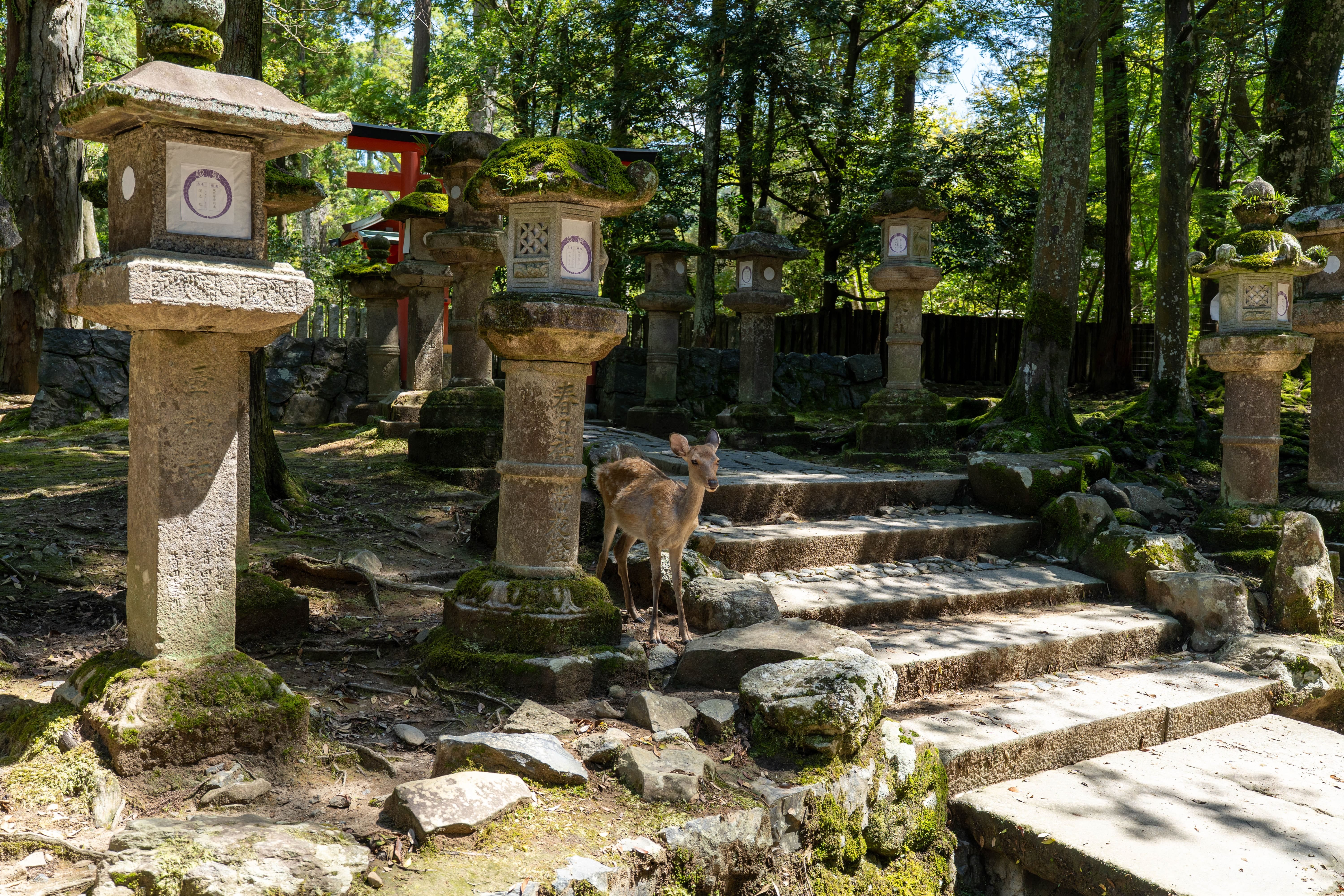
Nara welcomes people from around the world, and many visit hoping to meet its beloved deer. A deer approaching for a cracker is also part of a much longer story: the tradition of Kasuga Taisha, a primeval forest protected from logging, and generations of people who have treated these animals as divine messengers. Learning that history and treating the deer with respect can make a visit to Nara more meaningful. The experience may stay with you long after the journey ends. I hope this article gives you an opportunity to learn about Nara’s deer and the history behind them.
—Written by Sumire
Main Sources and Further Reading
Kasuga Taisha. Official Website.
Nara City. The History of Nara: Before the Meiji Period (奈良のあゆみ―明治以前―). In Japanese.
Agency for Cultural Affairs. Cultural Heritage Online: Kashimadachi Shin’eizu (文化遺産オンライン――鹿島立神影図). In Japanese.
Nara National Museum. Masterpieces of the Museum: Kasuga Deer Mandala (名品紹介――春日鹿曼荼羅). In Japanese.
Kokugakuin University. Classical Culture Project: The Pacification of Ashihara no Nakatsukuni, Part 5 (古典文化学事業――葦原中国平定⑤). In Japanese.
Kokugakuin University. Classical Culture Project: Amenokaku no Kami (古典文化学事業――天迦久神). In Japanese.
Agency for Cultural Affairs. Database of National Cultural Properties: The Nara Deer (国指定文化財等データベース――奈良のシカ). In Japanese.
Nara Prefecture. Nara Park Quick Guide: The Deer of Nara Park (奈良公園クイックガイド――奈良公園の鹿).
Nara Deer Preservation Foundation. Results of the 2026 Nara Park Deer Population Survey (2026年 奈良公園のシカ生息頭数調査結果). In Japanese.
Nara Prefecture. Preventing Acts of Harm Against the Natural Monument “Nara Deer” (天然記念物「奈良のシカ」に対する加害行為の防止について). In Japanese.
Hokkaido Government and Hokkaido Archives. The Origin of the Name “Hokkaido” (北海道の名前について). In Japanese.
What a great and informative read! I went to Nara when I was a kid, it's such a beautiful place. I had one deer follow me around for a while and repeatedly headbutt me for some reason aha