


Are you familiar with thatched roofs?
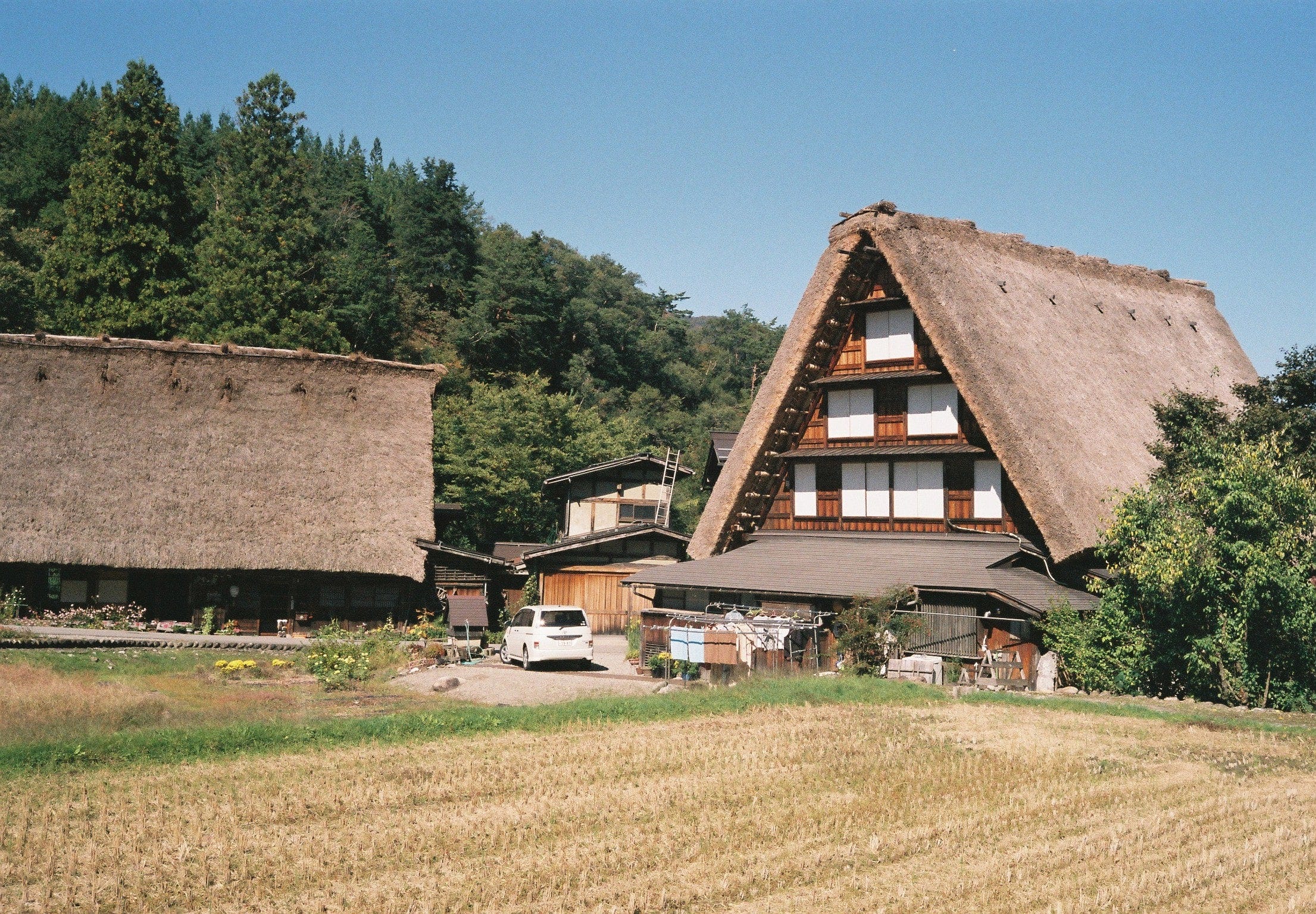
Villages with thatched-roof houses have become popular tourist destinations not only within Japan but also overseas. Among them, Shirakawa-go(白川郷) is especially well known as a place registered as a World Heritage Site. To be honest, as Spiritual Japan Journal, I hesitated at first about featuring such a “very famous tourist destination.” So many photographs and articles have already been published, and I wondered how much new value I could truly offer readers by introducing it again.
What caught my attention, however, were the words Yui(結) and Kōryaku(合力), written on the official website of Shirakawa Village(白川村).
Please take a look at this photograph.
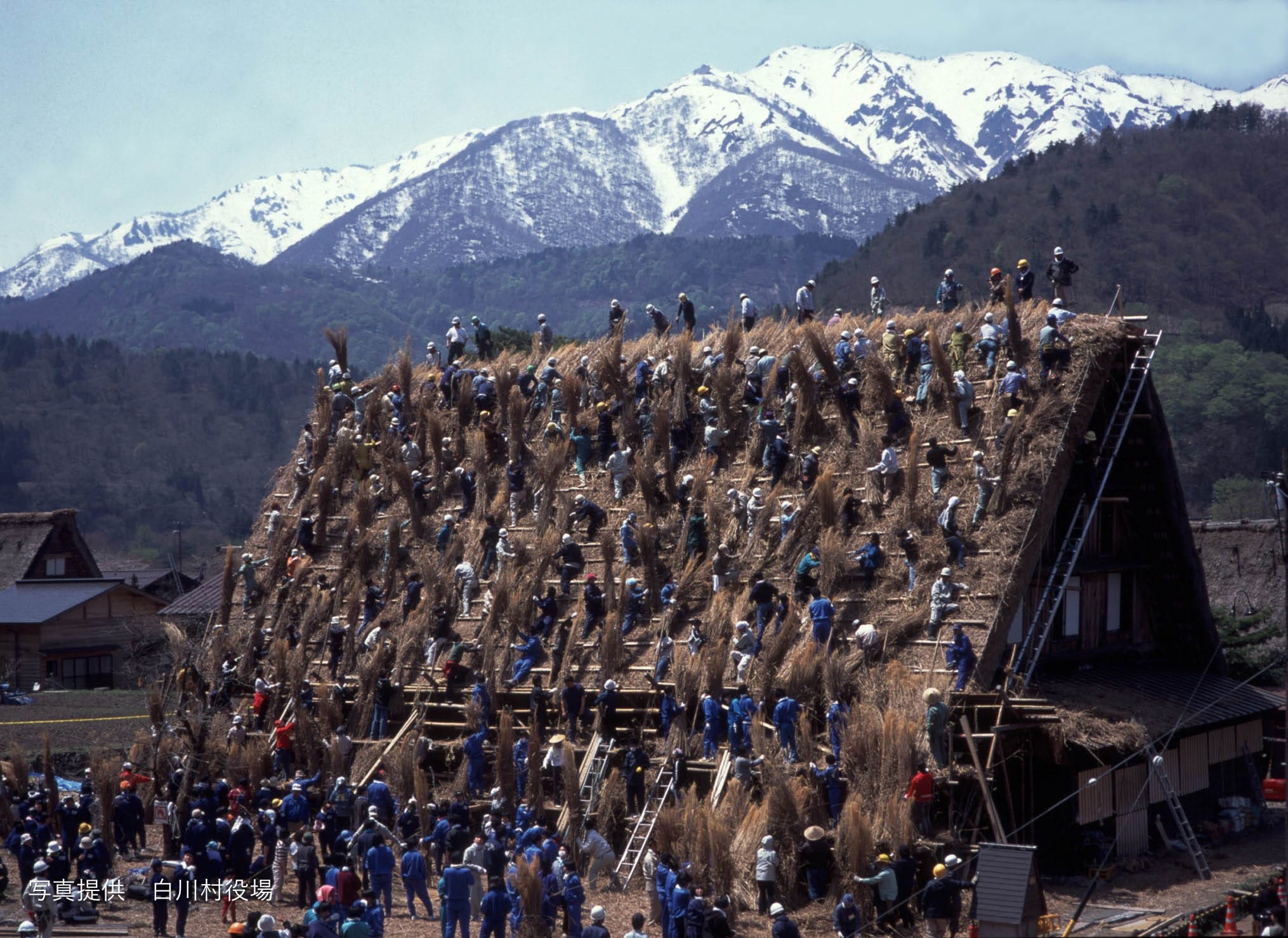
This is a photograph of a thatched-roof rethatching. Villagers gather to replace the roof of a single house. This practice is called Yui, and no wages are paid. Can you believe that?
Yui is described as a form of labor exchange in which the labor provided is returned with an equivalent amount of labor. Thatched roofs are replaced about once every thirty years. Houses are scheduled for rethatching in order, based on the years that have passed. In other words, many of the people shown in this photograph spend thirty years helping with rethatching work without pay, and only after those thirty years do they finally have their own house rethatched. Everyone in the village cooperates with the feeling that it is “otagai-sama,” meaning “we help each other.”
I felt that what I saw there could not be fully explained by the phrase “mutual aid.” It seemed to express a way of thinking that treats the entire village as a single unit.
Why has the local community in Shirakawa Village remained so strong even today? Why have ideas such as Yui and Kōryaku not ended as things of the past, but continue even now? When I began to think that their background might involve a long history and a religious foundation, I started to see Shirakawa-go not simply as a tourist destination, but as a place that offers clues to understanding Japanese faith and the nature of community.
If I could begin to unravel that question, I felt there was value, as Spiritual Japan Journal, in telling the story of Shirakawa-go.
To explore that question, I visited Shirakawa-go.
