


It has been a little while since I last published an article.
Work became busy, and I was also unwell for a while, so there were several days when I could not make as much time for writing as I wanted. It has now been a year since I started Spiritual Japan Journal, and this was the first time my publishing schedule had been disrupted this much.
I am fully recovered now and back at my desk. I want to keep writing carefully, one article at a time, about the places I have actually visited across Japan, the things I notice in everyday life, and the parts of Japanese culture I want to understand more deeply.
Even while I was away from writing, the season in Japan was gradually changing.
September has begun, and we have entered Hakuro (White Dew), one of the 24 solar terms. Hakuro refers to the time of year when morning dew begins to appear on grasses and plants. It is the season when the heat of summer gradually eases and the first signs of autumn begin to appear in the mornings and evenings.
This year, however, the intense heat is still continuing in Japan even in September. Many days are still warm enough for short sleeves, and in some places the temperatures still feel like midsummer.
At the same time, sunset is coming a little earlier, and the food in supermarkets has started to change. Pears and grapes are more common now, and sweet potatoes and chestnuts are beginning to appear as well. It can still feel hot outside, but when I go shopping, I can tell that autumn has arrived.
This summer has also made me think a great deal about the weather.
The heat has continued for a long time, and the atmosphere has often been unstable. Heavy rain has fallen in many parts of Japan, with evacuation orders issued in some areas and warnings about rising rivers and landslides. There were days when every time I opened the news, it seemed that somewhere else was being hit by heavy rain.
Many people are also thinking about the major disaster in Nepal. The scale of what happened was overwhelming, and every time I see the news, my heart aches. I sincerely hope that those affected will be able to live with a greater sense of safety again as soon as possible, and that recovery and rebuilding will continue to move forward.
Lately, I have felt afraid more often when I see news about natural disasters. Waking up in the morning as usual, eating, working, and enjoying seasonal foods are all ordinary parts of daily life, but I have been thinking more about how precious they are.
To everyone in Japan, and to everyone reading this somewhere else in the world, please take care and stay safe.
Even so, there are many things to look forward to in Japan as September continues.
In Japan, we often use expressions that connect autumn with a particular kind of enjoyment. We say “autumn for appetite,” “autumn for reading,” “autumn for sports,” and “autumn for the arts.”
I have heard these expressions since I was a child, but seeing them all together reminds me how many different kinds of enjoyment Japanese people have found in this season.
For me, the most familiar one is definitely “autumn for appetite.” Lately, I have been buying pears and grapes often. I also love sweet potatoes, so I have been adding them more frequently when I steam vegetables in my seiro bamboo steamer.
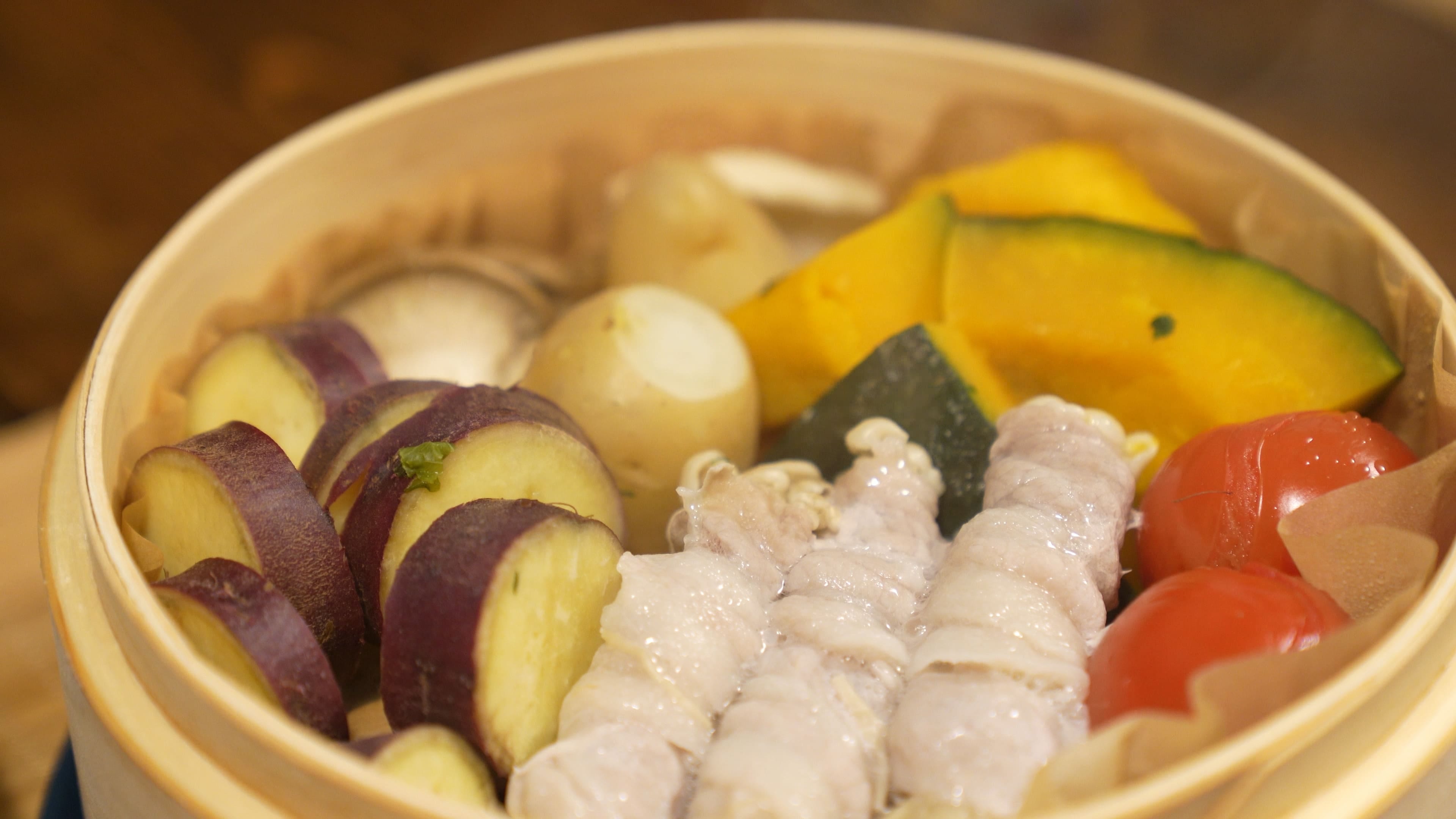
It is still hot enough that I often want something cold, but I also find myself reaching for autumn ingredients at the supermarket. Around this time every year, I begin enjoying the foods of autumn while still living very much in summer weather.
Here in Fukuoka, where I live, the heat is still going strong even in September. Because of that, I have been eating a lot of cold noodles, and the other day I had chilled soba.
I served it on a bamboo tray that I bought in Togakushi, Nagano Prefecture.
When I visited Togakushi Shrine, I also had the chance to see some of the bamboo craft that has long been made in the area. Togakushi bamboo craft traditionally uses a local bamboo known as nemagaridake, which grows in the surrounding mountains. It has been used to make everyday tools such as trays and baskets.
Inside the shop, many different bamboo pieces were on display. They came in different shapes and sizes, and when I picked them up, I could feel how light the bamboo was and see the fine detail of the weaving. They had a simple, practical beauty that made it clear they were made to be used.
I was also able to watch a craftsperson at work.
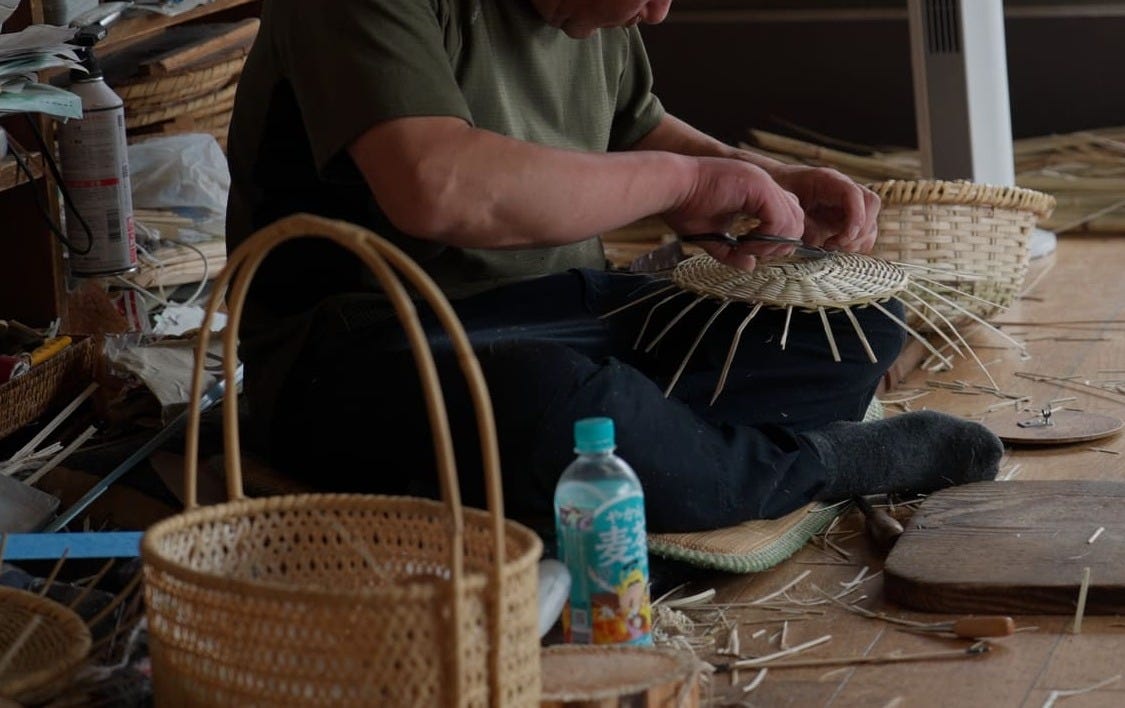
The work of taking thin strips of prepared bamboo and weaving them one by one is slow and careful. Watching the hands at work, I could see that even pieces of bamboo that looked similar had their own differences, and the craftsperson adjusted the shape while paying attention to each one.
The finished pieces in the shop were beautiful on their own, but watching the craftsperson work made me imagine how much time and effort goes into making a single tray. Realizing that the one I had been holding had also passed through someone’s hands in this way made me want to keep looking at it.


Togakushi is also well known for soba. Bamboo trays made locally are often used for serving Togakushi soba.
There is a local soba culture, and the tools used to serve that soba are also made in the same place. I thought that connection felt very characteristic of Togakushi.
I bought one bamboo tray to take home for serving soba.
When I cooked soba at home and served it on the tray, my usual meal felt just a little more special. I drained the noodles, placed them on the bamboo, and carried the tray to the table. That simple act brought back memories of the mountains in Togakushi, the inside of the shop, and the craftsperson working with their hands.


Lately, I have been buying more everyday objects when I travel.
When I choose something I can actually use, it feels as if I can bring a little of the place itself home with me.
The bamboo tray from Togakushi is one of those things. I plan to keep using it whenever I eat soba.
I like being able to use something in my own life that has long been part of everyday life for people in another place.
Eating pears and grapes, buying sweet potatoes, and noticing that the sky grows dark a little earlier in the evening are all small signs that the season is moving forward.
Japan will soon enter autumn in earnest. In a season associated with appetite, reading, sports, and the arts, I am looking forward to seeing what this autumn will bring.
Through Spiritual Japan Journal, I will continue sharing what I find, eat, and experience in Japan, along with the cultural traditions that are still part of life here today.
—Written by Sumire
I also recorded the day I saw the bamboo craft in Togakushi, as well as the day I used the bamboo tray at home.
The videos show a little more of Togakushi and how the tray is actually used, so I hope you will take a look alongside the article.
A work trip to Nagano, including a visit to a bamboo craft workshop
A day I ate soba using my bamboo tray