

Tasting the Season with Chestnut Mochi and Matcha
Life in Japan - Issue 003

Thank you as always for reading Spiritual Japan Journal.
This week, I’m sharing another edition of Life in Japan.
As of yesterday, Japan has entered the seasonal period called Rittō.
Since ancient times, Japan has followed a traditional calendar that divides the year into twenty-four solar terms, known as Nijūshi Sekki(二十四節気).
These divisions are based on the movement of the sun, breaking the year into roughly fifteen-day segments that served as a guide for agricultural life.
Among them, Rittō marks the “beginning of winter.”
According to the calendar, winter has begun, but here in Kyushu the daylight is still gentle,
and the mornings and evenings are just starting to feel cooler.
The change of season can be felt not only in the air but also in daily life.
In supermarkets and department stores, the selection of foods has gradually shifted from autumn to winter.
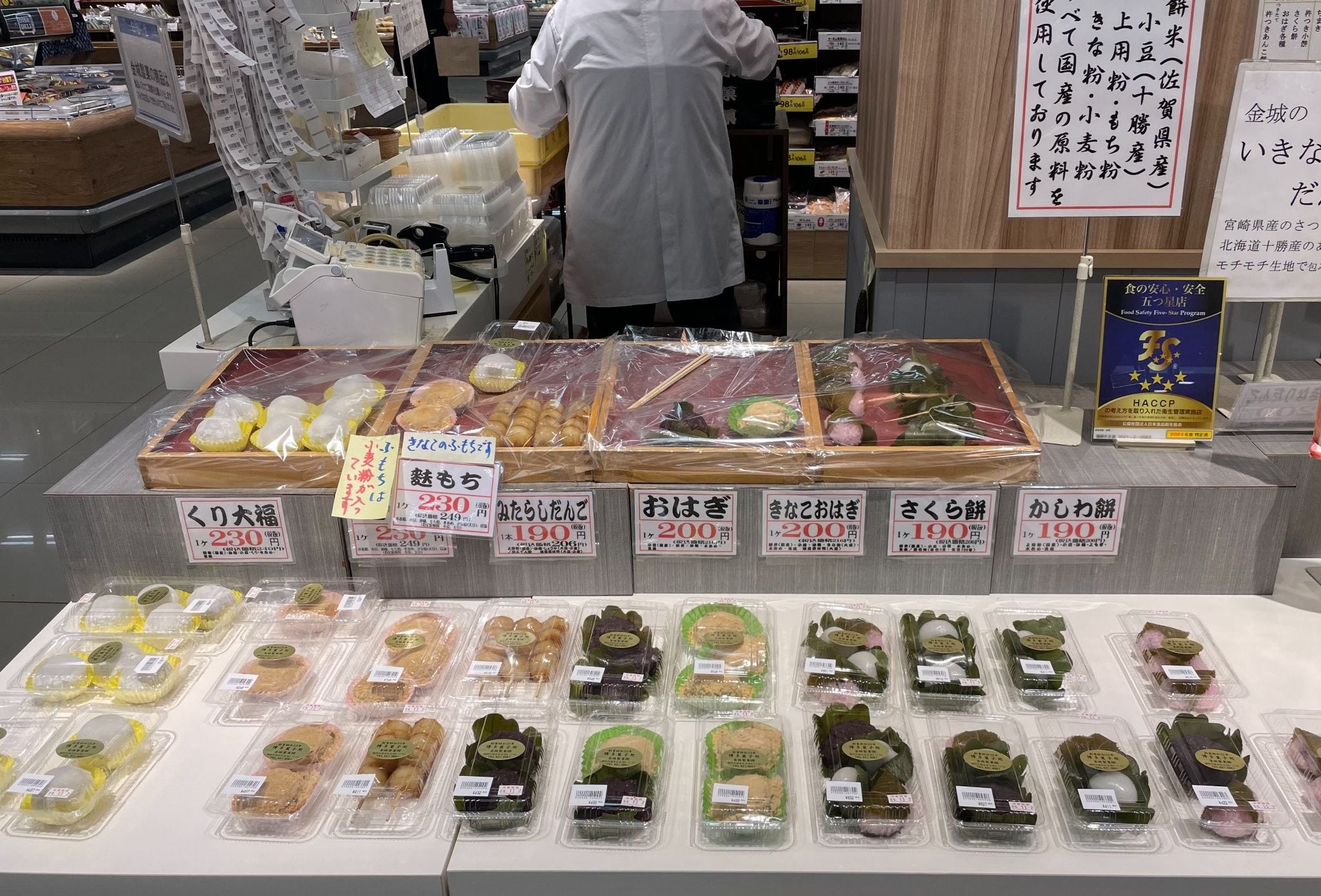
The other day, I saw kuri daifuku—a chestnut-filled mochi—and couldn’t resist picking one up.
Today, I’d like to share a few of Japan’s favorite flavors of autumn.
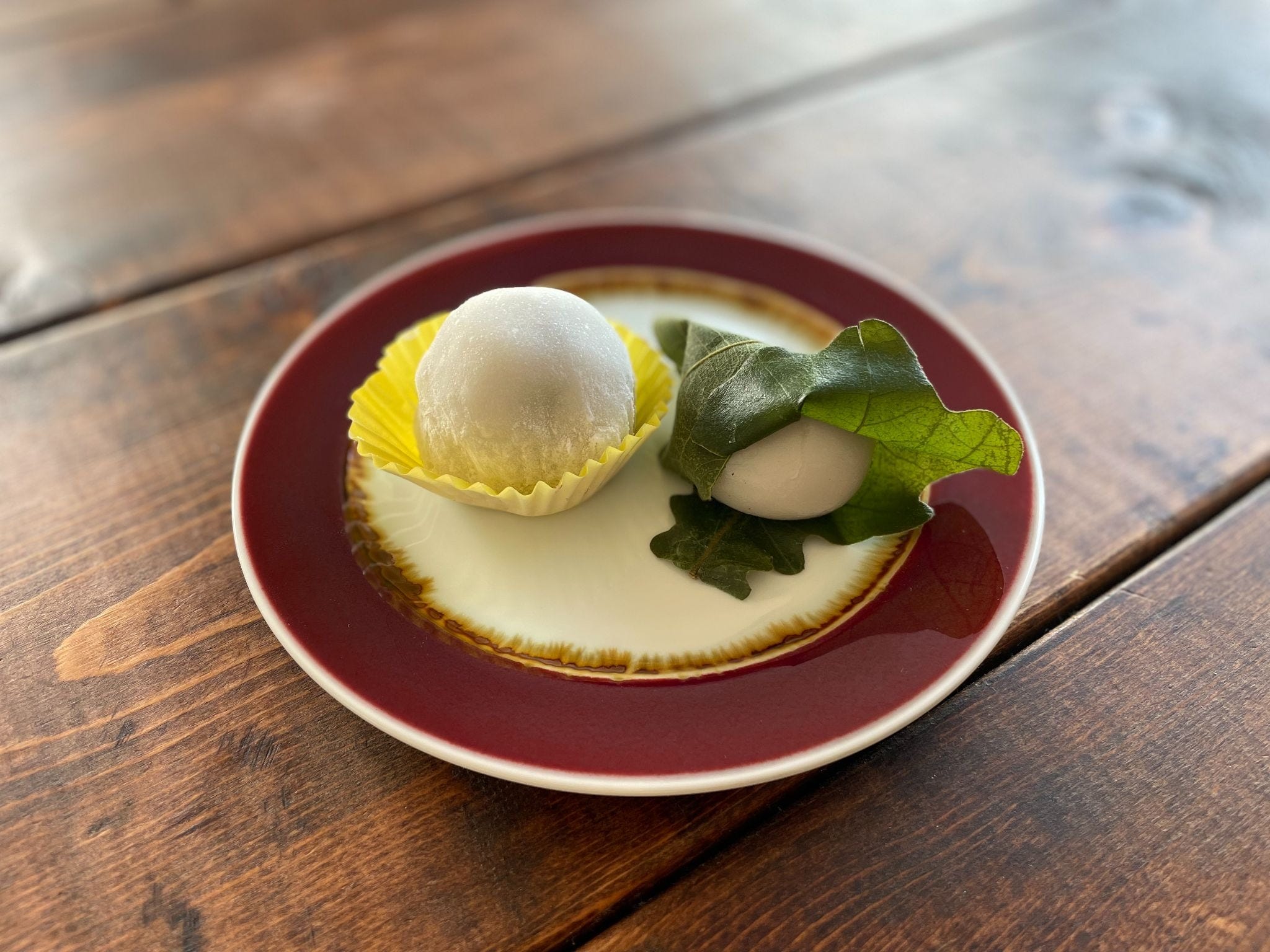
Recently, I stopped by my favorite wagashi (Japanese confectionery) shop and found a seasonal display of kuri daifuku.
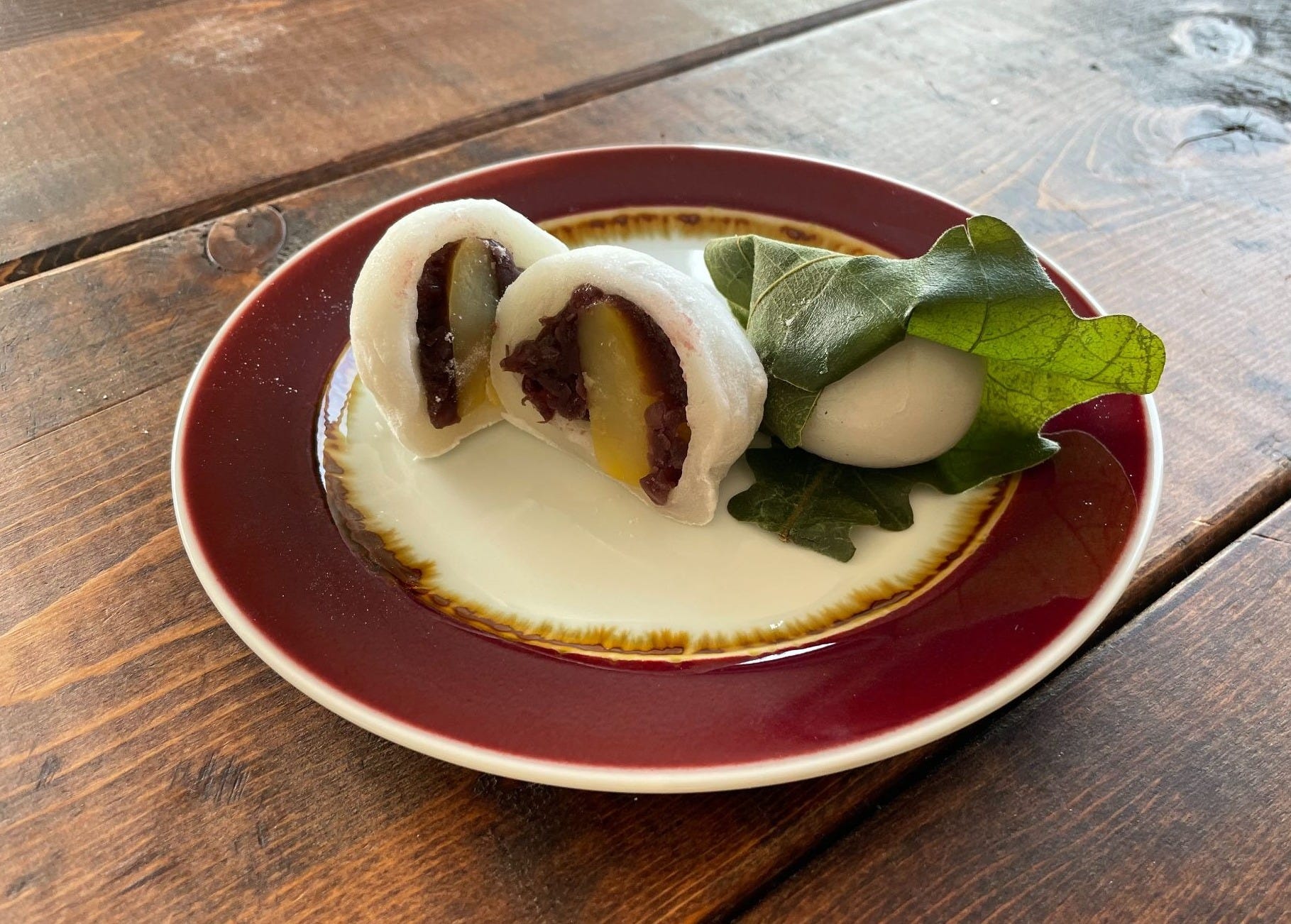
Inside the soft mochi was a whole chestnut, and with each bite, a gentle sweetness spread across my mouth.
Daifuku is a traditional Japanese sweet made by wrapping sweet bean paste in a layer of mochi.
In spring there’s ichigo daifuku (strawberry-filled mochi), and in autumn, kuri daifuku with chestnut—each season brings its own variation.
By the way, there are distinct differences between Japan’s mochi, daifuku, and dango.
Mochi is made by steaming glutinous rice and pounding it into an elastic dough.
Daifuku is that same mochi filled with sweet bean paste.
Dango, on the other hand, is made from non-glutinous rice flour or regular rice flour, shaped into small balls, and boiled or grilled.
Whether glutinous or non-glutinous rice is used makes a big difference in texture.
From New Year’s mochi to cherry-blossom-season dango to the daifuku found year-round,
each has its own texture and form that reflect Japan’s four seasons and its food culture.
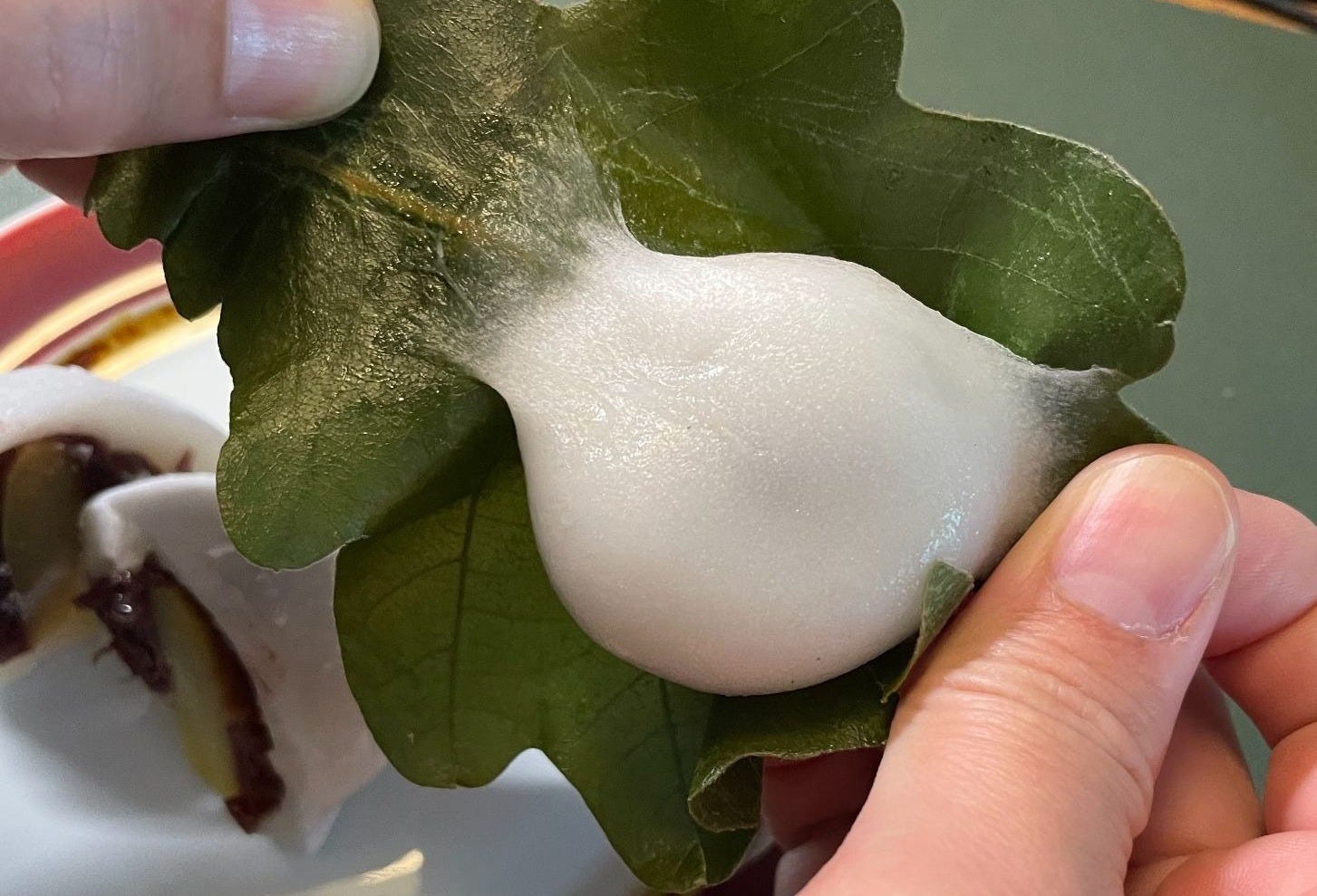
Some types of mochi sweets are wrapped in leaves.
For example, sakura mochi uses cherry leaves, while kashiwa mochi uses oak leaves.
The aroma from the leaves seeps into the mochi, adding a subtle roasted note to the sweetness.
With sakura mochi, some people eat the leaf while others don’t, but with kashiwa mochi, the leaf is not eaten.
These may look unusual to people outside Japan, but here they are deeply tied to the seasons and traditional events—
sakura mochi for spring, kashiwa mochi for Children’s Day in May.
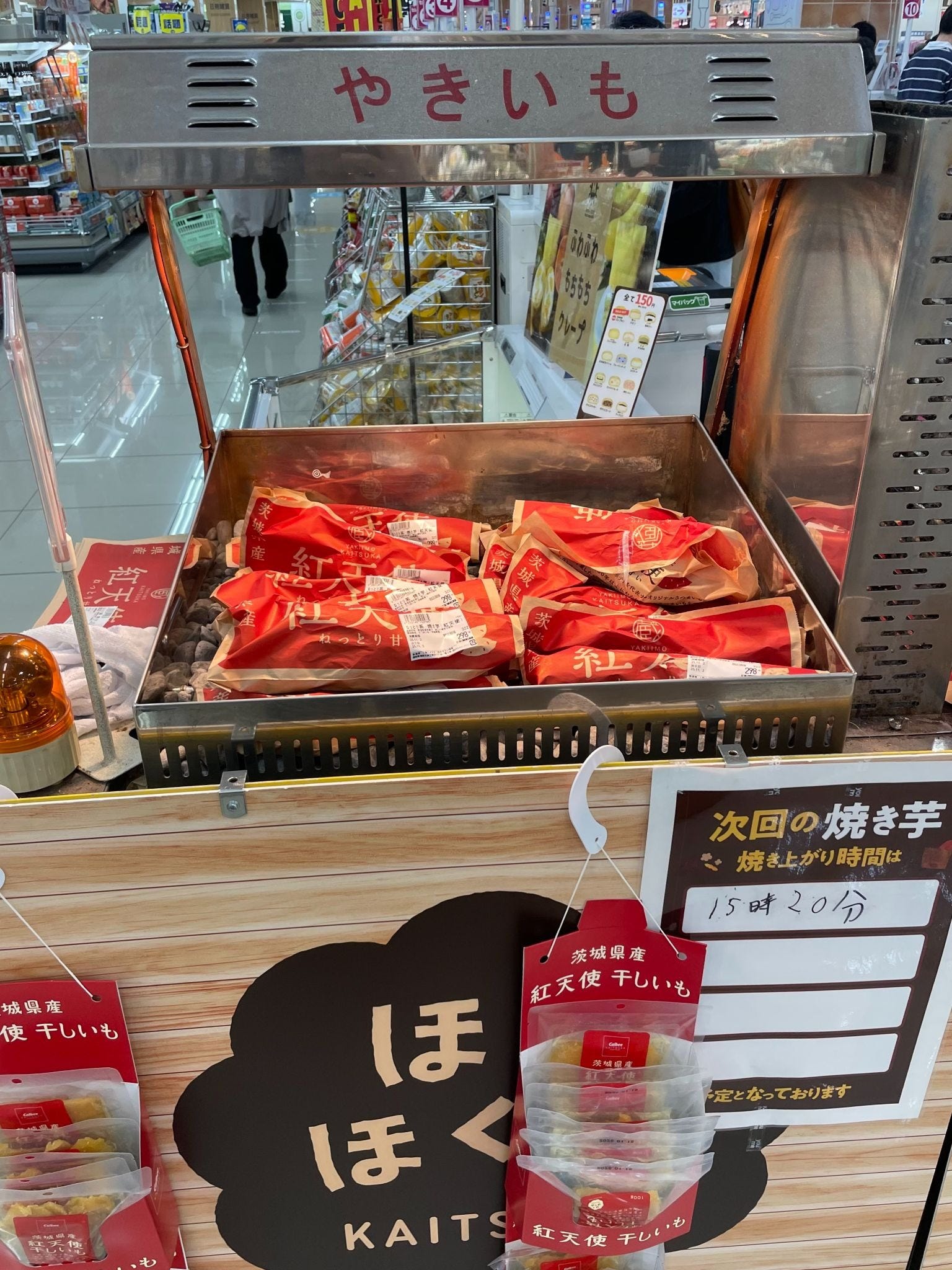
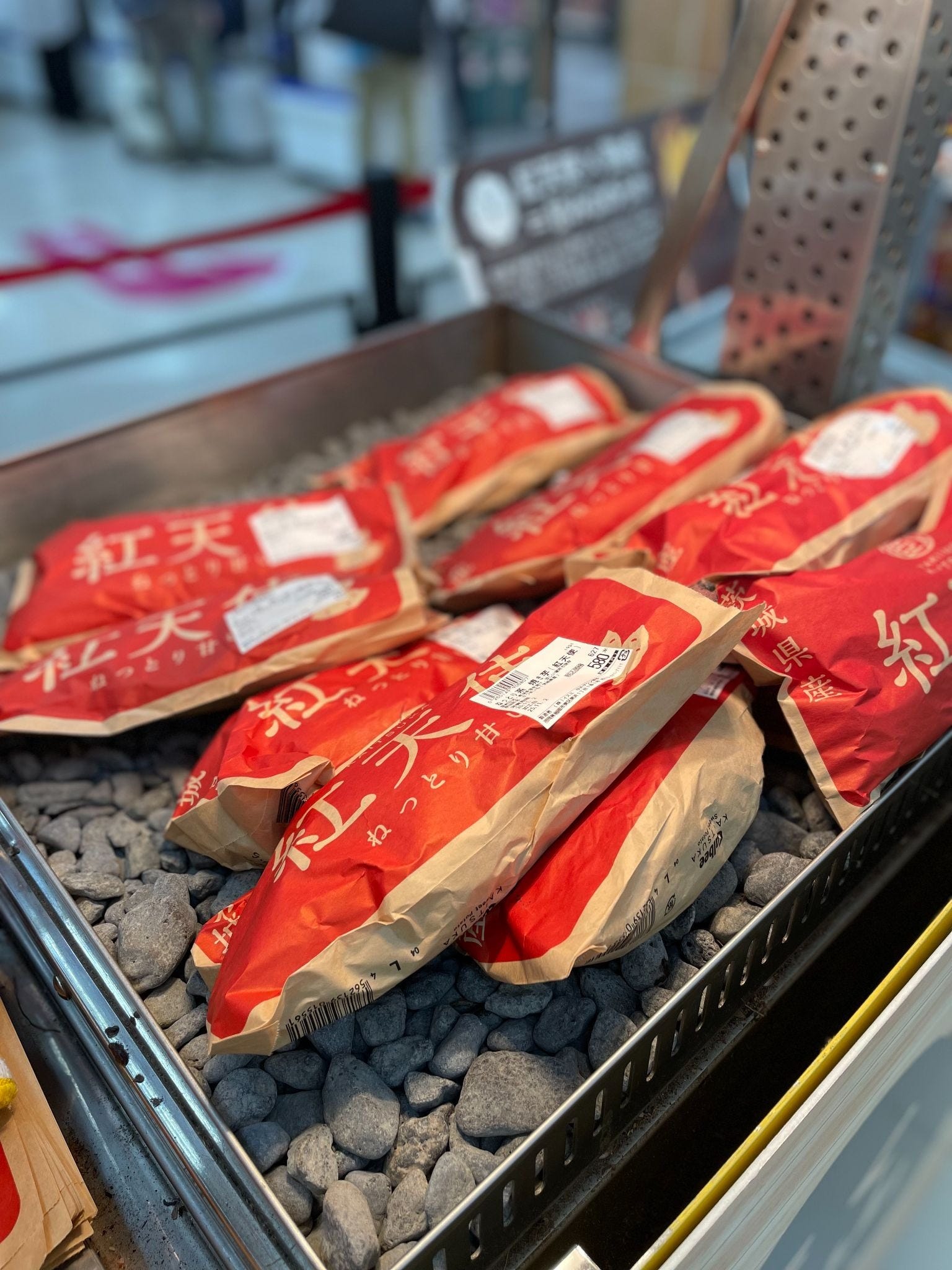
Another favorite of the season is yaki-imo, roasted sweet potatoes.
This is a classic autumn snack in Japan.
The outside is lightly crisp, and the inside is rich with natural sweetness.
Holding a warm yaki-imo on a chilly day brings an instant sense of comfort.
From autumn to winter, mobile trucks selling ishi-yaki-imo (stone-roasted sweet potatoes) drive through neighborhoods across Japan.
They carry roasting stoves on the back of small trucks,
and from a speaker comes a familiar jingle:
“Ishi-yaki-imo~ oimo~!”
When that sound drifts through the evening air, people sometimes step outside to buy one.
For many Japanese, that voice has become a sound that signals the arrival of autumn.
These days, even supermarkets have machines that roast sweet potatoes on site, making them easy to enjoy anytime.
And when enjoying something sweet, matcha pairs perfectly.
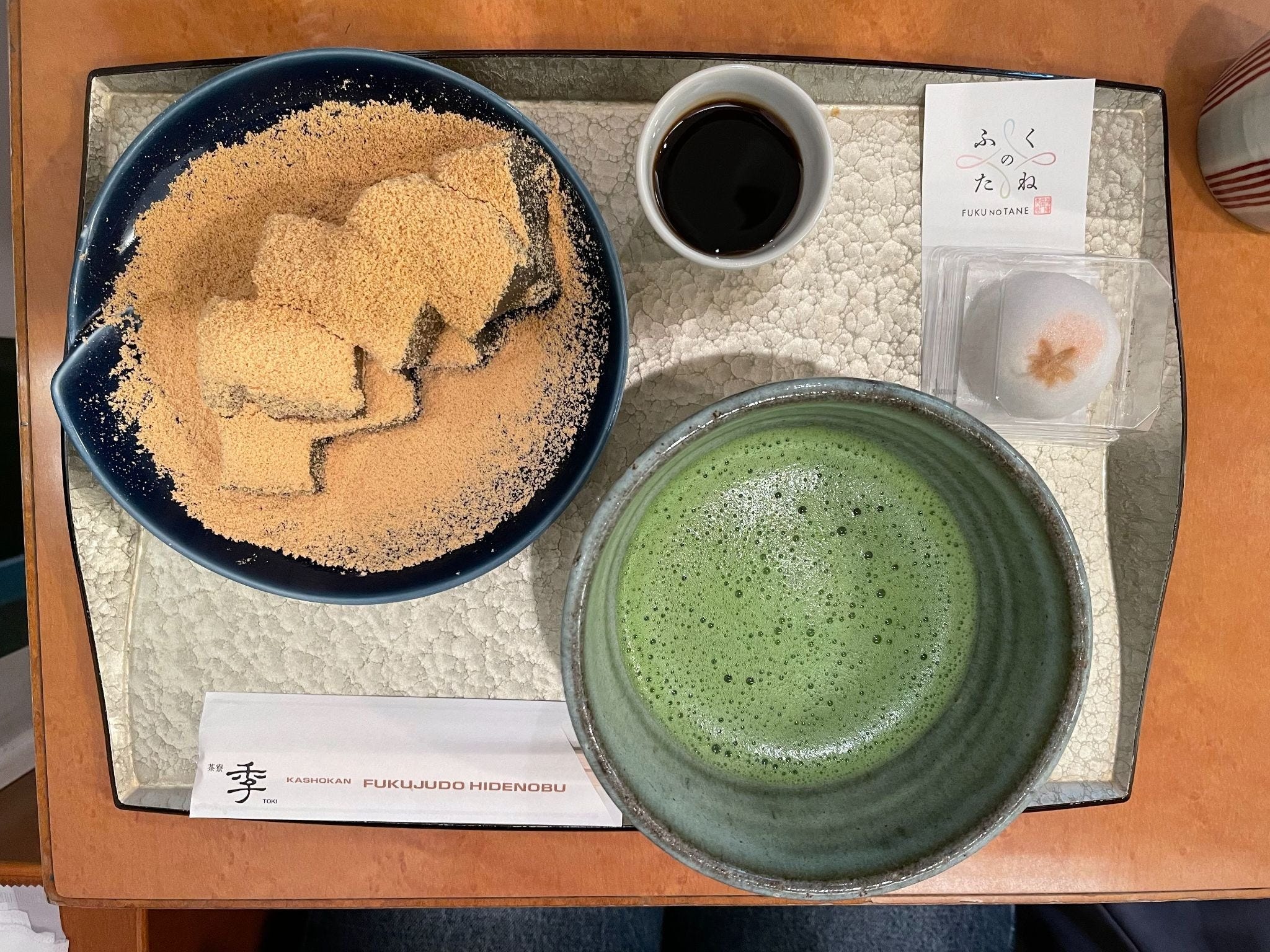
Matcha is made by whisking powdered green tea leaves with hot water using a bamboo whisk called a chasen.
It originally developed within the practice of sadō (the tea ceremony),
but today it can be enjoyed casually in cafés and at home.
Whisking matcha carries a meaning that goes beyond simply drinking tea.
The act of preparing it—the steady motion of the whisk, the even rhythm of breath—
creates a quiet moment to gather one’s thoughts.
I still remember the feeling of holding a chasen for the first time in a university tea ceremony class.
The faint bitterness and mellow aroma of matcha have a calming effect,
a small pause of focus within a busy day.
If you ever visit Japan, I hope you’ll try whisking your own cup of matcha.
It’s a simple experience, but one that stays with you.
—Written by Sumire


Another wonderful article, thank you. It brings back wonderful memories of trip to Japan last year in November and December.
Thank you for this. I miss Japan! I feel so fortunate I can return there (to Kyushu) in March.