
Kurokawa Onsen – A Sanctuary Wrapped in Warmth and Quietude
Nestled in the northern part of Aso’s outer rim at an elevation of 700 meters, Kurokawa Onsen is one of Japan’s most beloved hot spring destinations. Despite its popularity, the atmosphere here remains calm and peaceful, offering a distinct contrast to the usual bustle of tourist towns.
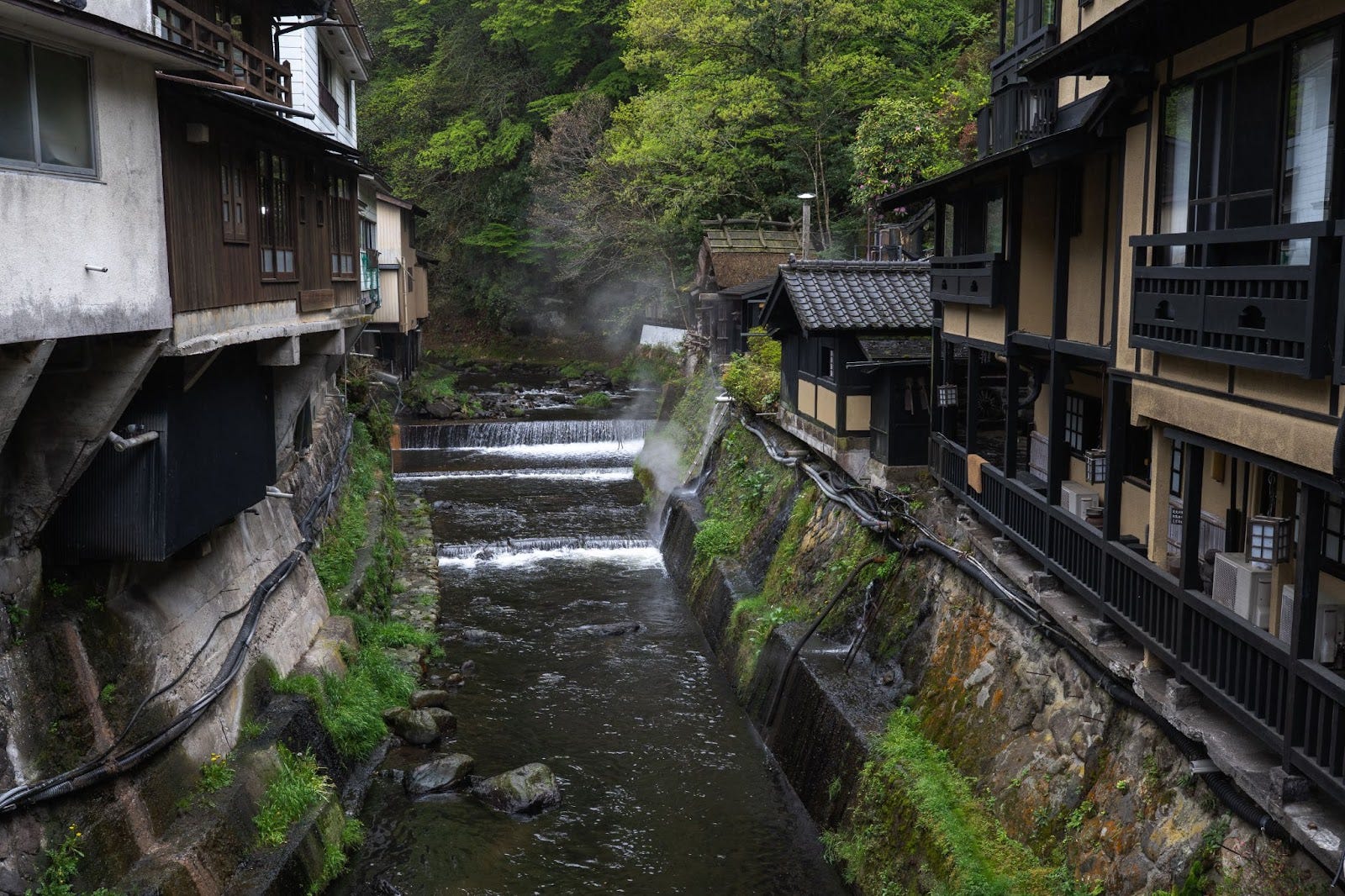
Cobblestone paths that evoke the charm of old Japan, open-air baths where one can soak while listening to the gentle murmur of a stream, and guests leisurely strolling in yukata — all of these elements quietly tell the story of Kurokawa Onsen as a living cultural tapestry.
The Allure of Seven Unique Spring Types and Cultural Preservation
One of Kurokawa’s defining features is its remarkable variety of seven distinct spring types. From sulfur springs and bicarbonate springs to chloride, sulfate, simple, acidic, and radon springs, each ryokan draws its own unique water with different properties and textures. By visiting multiple baths rather than staying at a single inn, visitors can experience the rich diversity that Kurokawa Onsen offers.
The feel of the water changes depending on its mineral composition and temperature. Each soak brings a different sensation, turning bath-hopping into a meaningful part of the journey. This is what makes Kurokawa so unique — moving from one bath to another becomes an essential experience in itself.
Bath-Hopping with the Nyūtō Tegata Pass
For those wishing to explore the many baths of Kurokawa Onsen, the Nyūtō Tegata (bath pass) offers a wonderful opportunity. For 1,500 yen (tax included), guests can choose and enjoy open-air baths at any three participating ryokans. This system allows visitors to explore a variety of springs beyond their accommodation.
Every ryokan has its own unique spring type and ambiance. With a bath pass in hand and a map to guide the way, the gentle stroll from one bath to another becomes a delightful highlight of the trip. Many inns warmly welcome day visitors, and it is common to see both travelers and locals relaxing in the open-air baths throughout the day.
Foot Baths – A Simple Joy
Alongside the bath-hopping culture, Kurokawa Onsen is dotted with foot baths, many of which are free or cost only a small fee. They are marked on tourist maps and offer an ideal place for a brief rest during a walk through town.
It is customary to bring a small towel (or purchase one locally) before enjoying these relaxing spots. Without the need to undress, you can enjoy the soothing heat that rises from your feet to warm your entire body — a sensation that is best understood through experience.
These foot baths are more than mere resting places. They are small windows into daily life, where quiet conversations between locals and travelers unfold naturally. Here, you can sense how hot springs are woven into the rhythm of everyday life.
A Quiet Evening at Oku no Yu
During our stay, we chose Oku no Yu, an inn nestled deeper into the valley, surrounded by forest and accompanied by the constant murmur of a stream. The atmosphere felt timeless, like stepping into a quiet folktale.
In traditional Japanese inns, it is common to sleep on futons laid directly on tatami mats — flooring made from woven rush grass, known for its gentle scent and soft texture. After warming oneself in the bath, guests rest on the futon in a serene room, allowing both body and mind to unwind.
Looking up from the open-air bath, leaves gently sway overhead while the river flows quietly nearby.
Wearing yukata after the bath, we walked along wooden corridors illuminated by soft lanterns. It felt less like staying at a hotel and more like returning to a home tucked away in the forest.
A philosophy cherished in Kurokawa Onsen says, “One town, one ryokan.” Every ryokan is seen as a guest room, every small alley a corridor, and the whole town comes together to form one welcoming inn.
Walking through Kurokawa, it is easy to see that these are not just poetic words. Even the alleyways connecting the inns are carefully maintained, offering quiet elegance and natural beauty at every turn.
A Town Where Culture Lives On
The lasting appeal of Kurokawa Onsen lies not only in the quality of its waters or facilities. It comes from a conscious effort to avoid commercial flashiness, preserving traditional townscapes through the care of the local community. At the heart of it all is omotenashi — hospitality rooted in the rhythm of everyday life.
There is a quiet will to protect this culture and pass it down to future generations. Walking through Kurokawa, one can feel time slow down. For those wishing to step away from the noise and reconnect with themselves, this small hot spring town offers a gentle refuge.
Editor’s Note
Kurokawa Onsen may not be a large hot spring resort, but within this small valley breathes a culture rich in warmth and sincerity. Here, you can feel the essence of Japan.
The gentle sound of the river, the soft glow of lanterns beyond the rising steam, and the quiet footsteps of people strolling in yukata — these are scenes that seem to loosen the grip of time.
There is a way of life in Kurokawa that cannot be explained by tourism alone. It is a place where traditions have been cherished and protected. That is why we hope to share its beauty with the world through Spiritual Japan Journal.
We believe that even without glitter and grandeur, there are places where the heart feels full. Places that represent the quiet, genuine spirit of Japan. It is our wish that Kurokawa and similar towns continue to thrive, and we hope to honor their legacy by telling their stories.
— Sumire


