


In Japan, there has long been a way of thinking known as Yaoyorozu no Kami (八百万の神), in which divine presence is found within nature itself—mountains, forests, rocks, and waterfalls. Long before any structures were built, people sensed a spiritual presence in these places, drew boundaries, and carefully chose how to approach them. Miyajima in Hiroshima Prefecture, formally known as Itsukushima (厳島), is a place where this traditional Japanese form of belief remains clearly preserved. Here, the island itself is the object of faith.
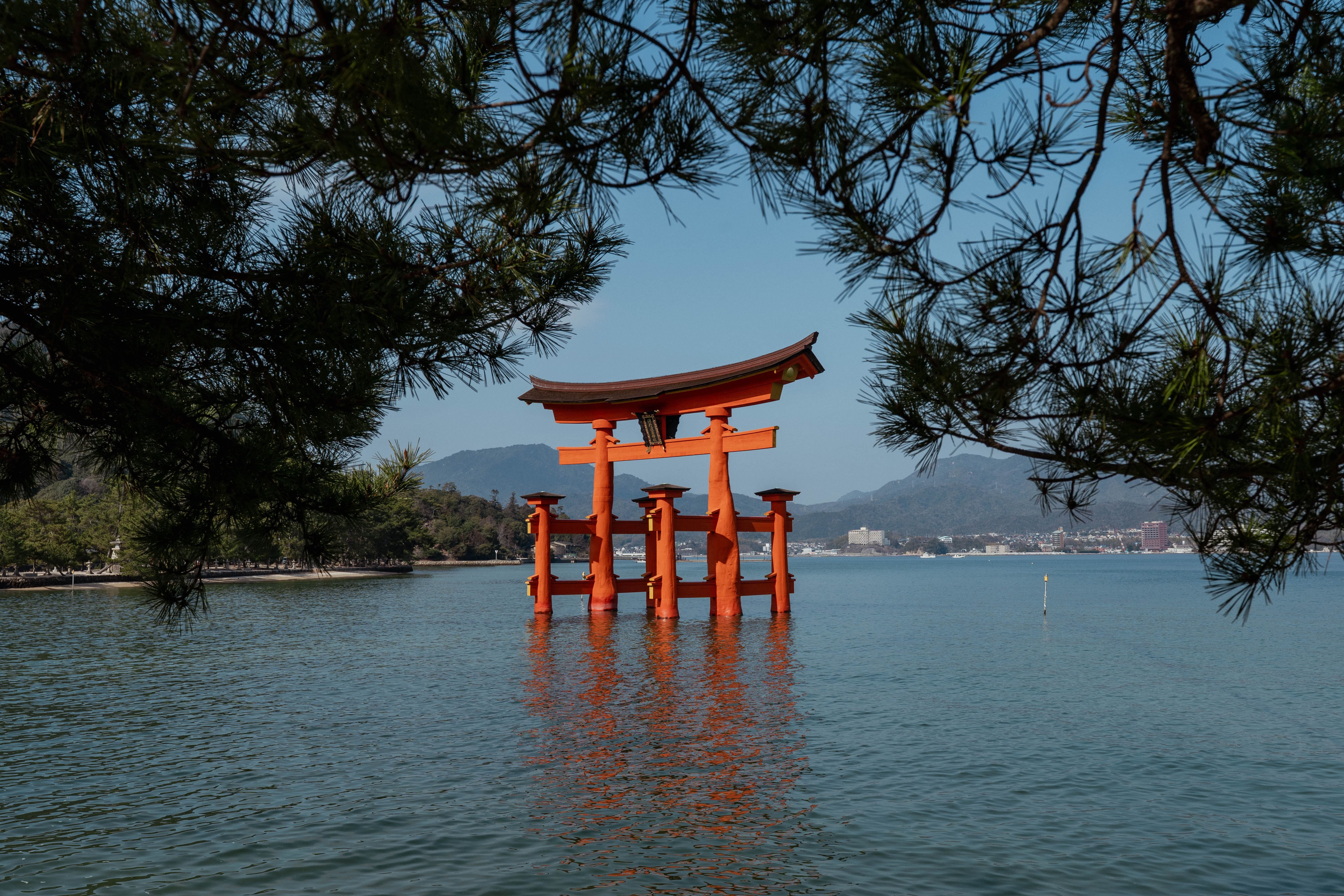
The great torii gate and shrine buildings standing over the sea are now widely recognized as one of Japan’s most iconic landscapes. However, simply viewing this striking scenery without understanding why it exists here, and in this particular form, does not allow one to reach the essence of this place.
This is a place where the idea of “how one approaches a sacred realm” has taken physical form.
The Center of Faith
Itsukushima had already been recognized as a sacred place long before shrine buildings were constructed. The mountains centered around Mount Misen (弥山), the terrain covered in primeval forest, and its isolated form surrounded by the sea—within all of these, a spiritual presence was perceived, and nature itself became the object of worship.
