


When people overseas are asked about their image of Japan, many answer “samurai.”
Anime and films such as Demon Slayer (Kimetsu no Yaiba), Rurouni Kenshin, and The Last Samurai have made the figure of the samurai widely known around the world.
The word samurai originally meant “a person who serves.”
Later, within Japan’s social hierarchy, the term bushi became established to refer to those who served as the backbone of society.
In Japan, samurai and bushi actually lived until about 150 years ago, around the time of the Meiji Restoration (1868).
There are still places where their way of life can be glimpsed today—
one of them is a house once lived in by a samurai.
A Samurai’s House in Service to the Domain
During Japan’s Edo period (1603–1868), the country was divided into roughly 300 regions, each governed by a local domain known as a han.
The lord of the domain, called the daimyō, ruled the land, and samurai served under their domain as retainers.
The city of Hagi in Yamaguchi Prefecture flourished as the castle town of the Hagi Domain (Chōshū Domain).
This domain was known for its strong focus on education, and children of samurai families studied reading, writing, etiquette, and practical knowledge for administrative service.
The Former Yukawa Residence (Kyū Yukawa-ke Yashiki) was the home of a samurai family who served this domain.
According to historical records, the Yukawa family received a stipend of 23 koku of rice, a level considered lower-ranking within the samurai class.
Even so, the family maintained a stable life, fulfilling their official duties and living together in a well-structured household.
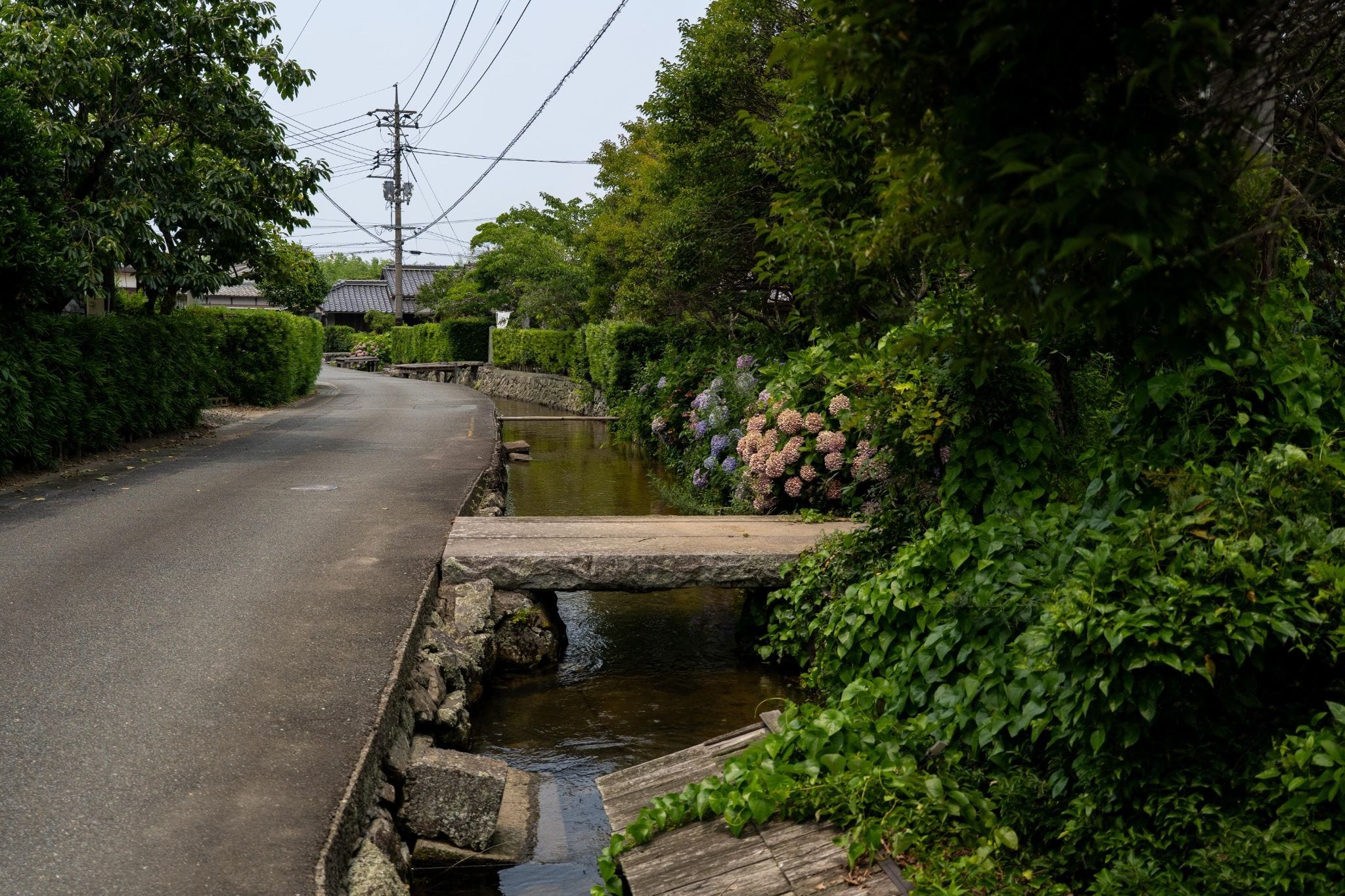
In front of the residence flows the Aibagawa River, an artificial waterway that nourished the entire castle town of Hagi.
The people of Hagi shared its water for daily needs—washing, bathing, and maintaining their gardens.
The Yukawa family was among them, drawing water into their property and returning it to the river through a system of controlled flow.
The exact date when the Yukawa residence was originally built is unknown,
but family documents record that the house was renovated in 1870 (Meiji 3).
This indicates that the original structure dates back to the late Edo period.
The residence incorporates a design known as the hatoba, which utilizes water as both a practical and aesthetic element.
It represents a balance of beauty and functionality—a lasting example of Japanese ingenuity in everyday life.
From here, we will take you inside the residence — sharing scenes of daily life through photographs of the rooms and the hatoba.
