To all my subscribers, I would like to wish you a Happy New Year once again.
Japan’s New Year begins with a certain quiet “great migration.”
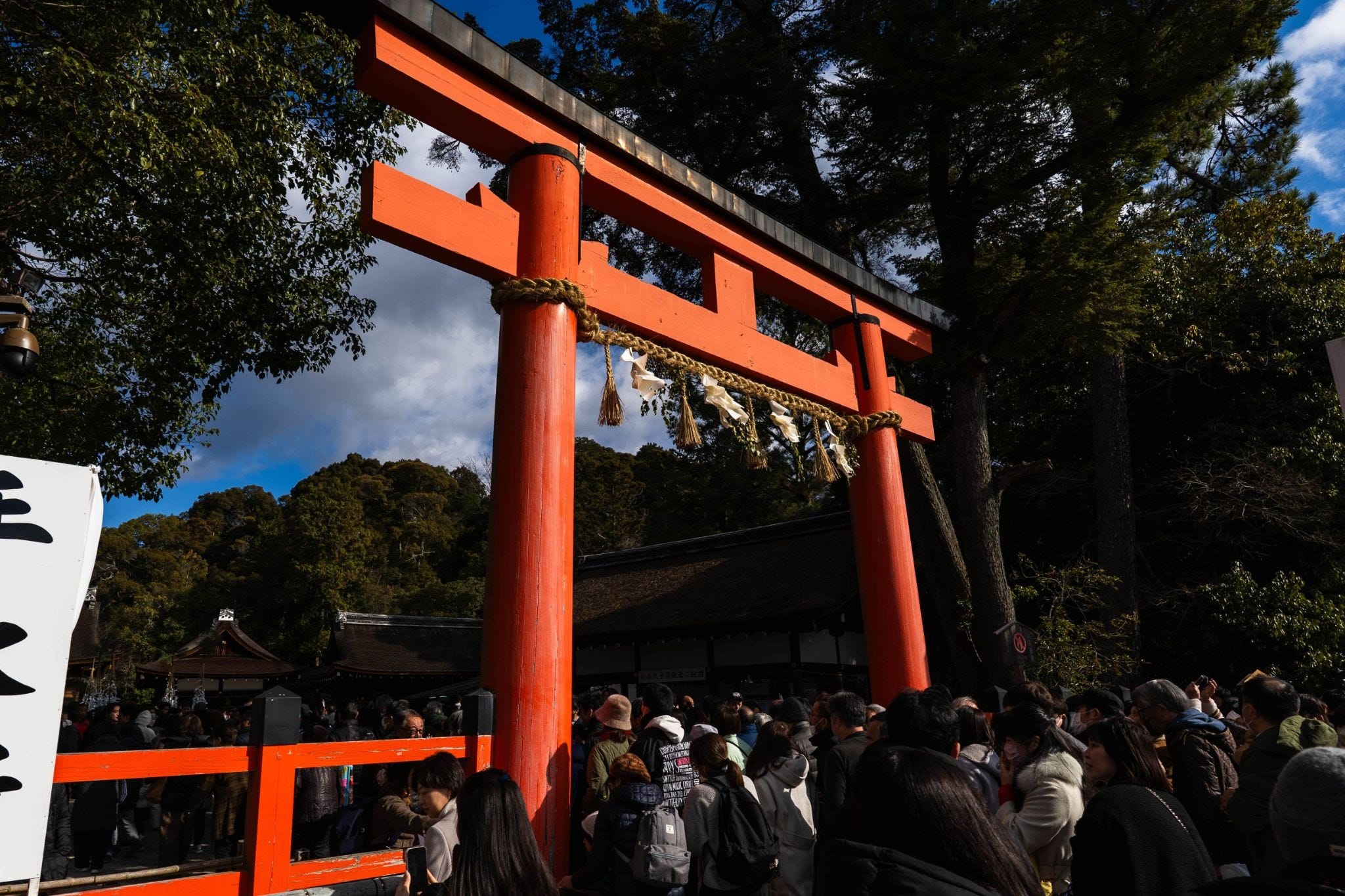
The Japanese New Year appears quiet at first glance, yet it is simultaneously extremely dynamic. During the mere three days known as 三が日 (Sanganichi) from January 1st to the 3rd, about 3 million visitors flock to Tokyo’s 明治神宮 (Meiji Jingu), and about 2.5 million to Kyoto’s 伏見稲荷大社 (Fushimi Inari Taisha). Looking at Japan as a whole, in fact, more than half of the nation makes their way to local shrines or famous temples. This is called 初詣 (Hatsumode). Literally meaning “to visit (Mode) for the first time (Hatsu) in that year,” it is one of Japan’s most important events, where we go to greet the gods at the very beginning of the year. This year too, many Japanese people dressed appropriately for the start of the year and headed for shrines with pure hearts. As one of them, I headed to 上賀茂神社 (Kamigamo Shrine), one of the World Heritage sites boasting the oldest history in Kyoto.
Kyoto’s Oldest Sacred Site: Kamigamo Shrine
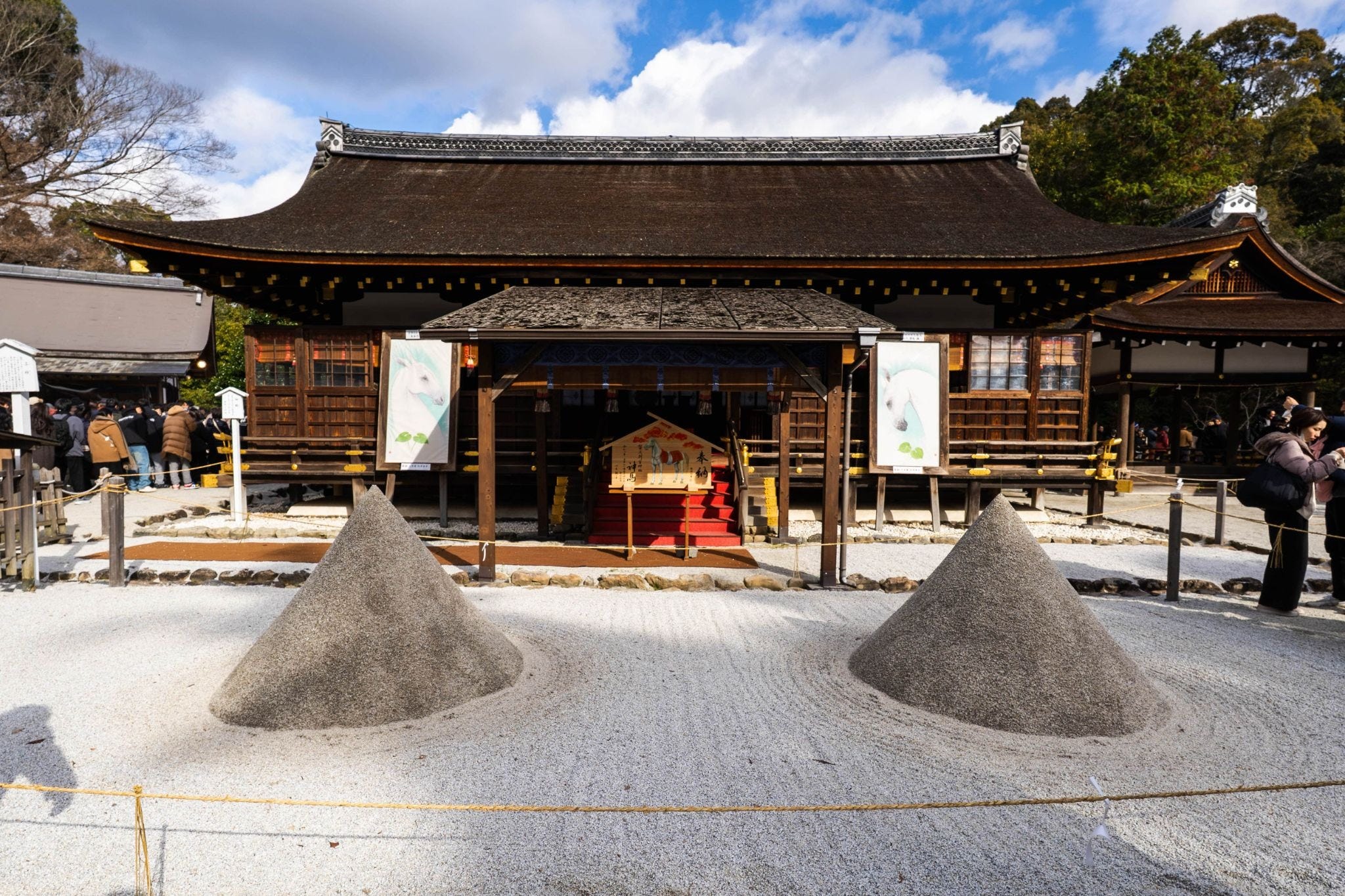
Before getting to the main topic, let me introduce the shrine I visited this time. Kamigamo Shrine is not merely an old shrine. Its history predates Kyoto becoming the capital of Japan (794), with official records stating that the shrine buildings were constructed in 677 (7th century). Registered as a UNESCO World Cultural Heritage site, it is one of Kyoto’s leading sacred sites. Enshrined here is a deity called 賀茂別雷大神 (Kamo Wakeikazuchi-no-Okami). “Ikazuchi” in the name means “Thunder.” Officially considered a god connected to thunder and the power of nature, he is known as a deity of warding off evil who purifies all calamities with his immense power. Upon entering the precincts, the first thing that jumps out at you is two beautiful conical mounds of sand. These are called 立砂 (Tatesuna), made to imitate 神山 (Koyama), the legendary mountain where the deity is said to have descended. Indicating that this is a sacred place, it is an iconic scene of Kamigamo Shrine.