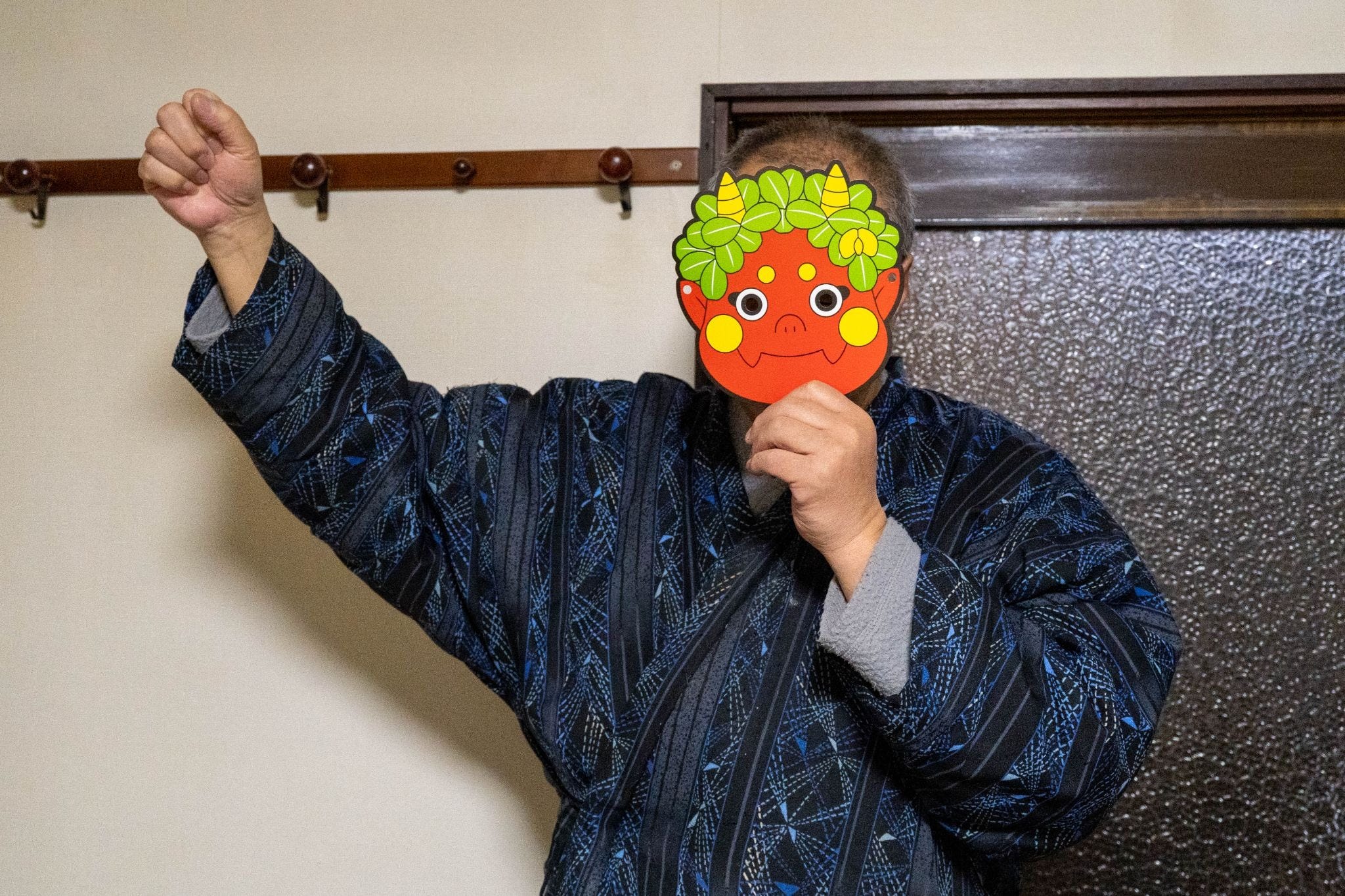
At the end of January, walking into a Japanese supermarket reveals a world overflowing with extraordinary colors. Replacing the quiet lingering of the New Year, the shelves are filled with angry red and blue masks, alongside unnaturally bright yellow permed wigs. Beside them, wooden measuring cups known as 升 (Masu) — square measuring boxes are piled high with roasted soybeans, and in the seafood section, vibrant signs promote pre-orders for lavish sushi rolls called 恵方巻き (Ehō-maki) — lucky direction rolls.


These are all preparations for 節分 (Setsubun) — the ritual of the seasonal divide, held on February 3rd. Setsubun literally means “dividing the seasons” and refers to the day before 立春 (Risshun) — the beginning of spring. In the ancient lunar calendar, this day was the equivalent of New Year’s Eve, a significant spiritual turning point marking the end of the year.
My memories of Setsubun nights are filled with a strange, somewhat self-conscious atmosphere. My entire family would move through the house — from the living room to the bathroom, the entrance, and the garden — throwing beans into the corners of empty rooms. “鬼は外! 福は内! (Oni wa soto! Fuku wa uchi!)“ — Out with the demons! In with fortune! This chant is a form of 言霊 (Kotodama) — the spiritual power residing in words — intended to drive out stagnant, unsettling energies and invite happiness for the new season. Sometimes my father would play the villain, wearing a comical mask and wig, while we children threw beans with all our might to protect the family’s peace.