


For this article, instead of sharing Japan’s beauty or the changing seasons as I usually do, please allow me to tell you about what happened in this country 81 years ago today.
Japan is the only country to have experienced the use of nuclear weapons in war.
At 8:15 a.m. on this day 81 years ago, the uranium-based atomic bomb known as “Little Boy,” dropped from the U.S. B-29 bomber Enola Gay, detonated at an altitude of approximately 600 meters above the area near Shima Hospital in Hiroshima.
Intense thermal radiation and blast waves struck the city, destroying most wooden houses within a radius of approximately two kilometers from the hypocenter. Reinforced-concrete buildings also had their windows and interiors destroyed, and many were engulfed in flames. The damage extended even farther: people directly exposed to the thermal radiation suffered burns as far as approximately 3.5 kilometers from the hypocenter.
Massive amounts of radiation penetrated people’s bodies, affecting not only those who died at the scene but also those who survived the explosion for many years afterward. Three days later, on August 9, another atomic bomb was dropped on Nagasaki.
This spring, I visited Hiroshima.
Hiroshima today is a beautiful city with rivers flowing through it. There are paved roads, bridges spanning the water, and tall buildings rising beyond them. Trees grow throughout 広島平和記念公園(Hiroshima Heiwa Kinen Kōen / Hiroshima Peace Memorial Park), and people walk across its broad lawns.
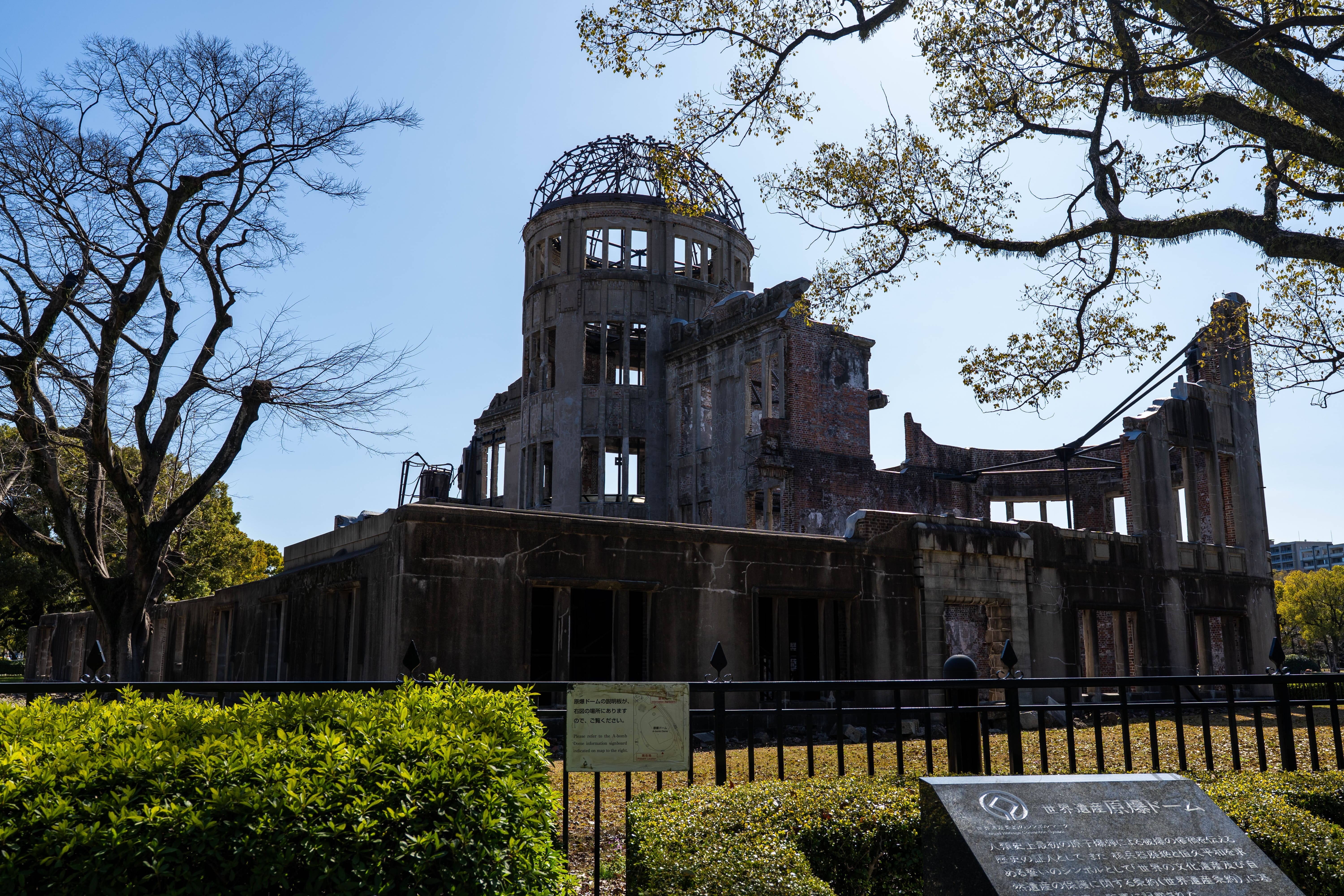
Within that landscape, the 原爆ドーム(Genbaku Dōmu / Atomic Bomb Dome)alone had a presence that set it apart from everything around it.
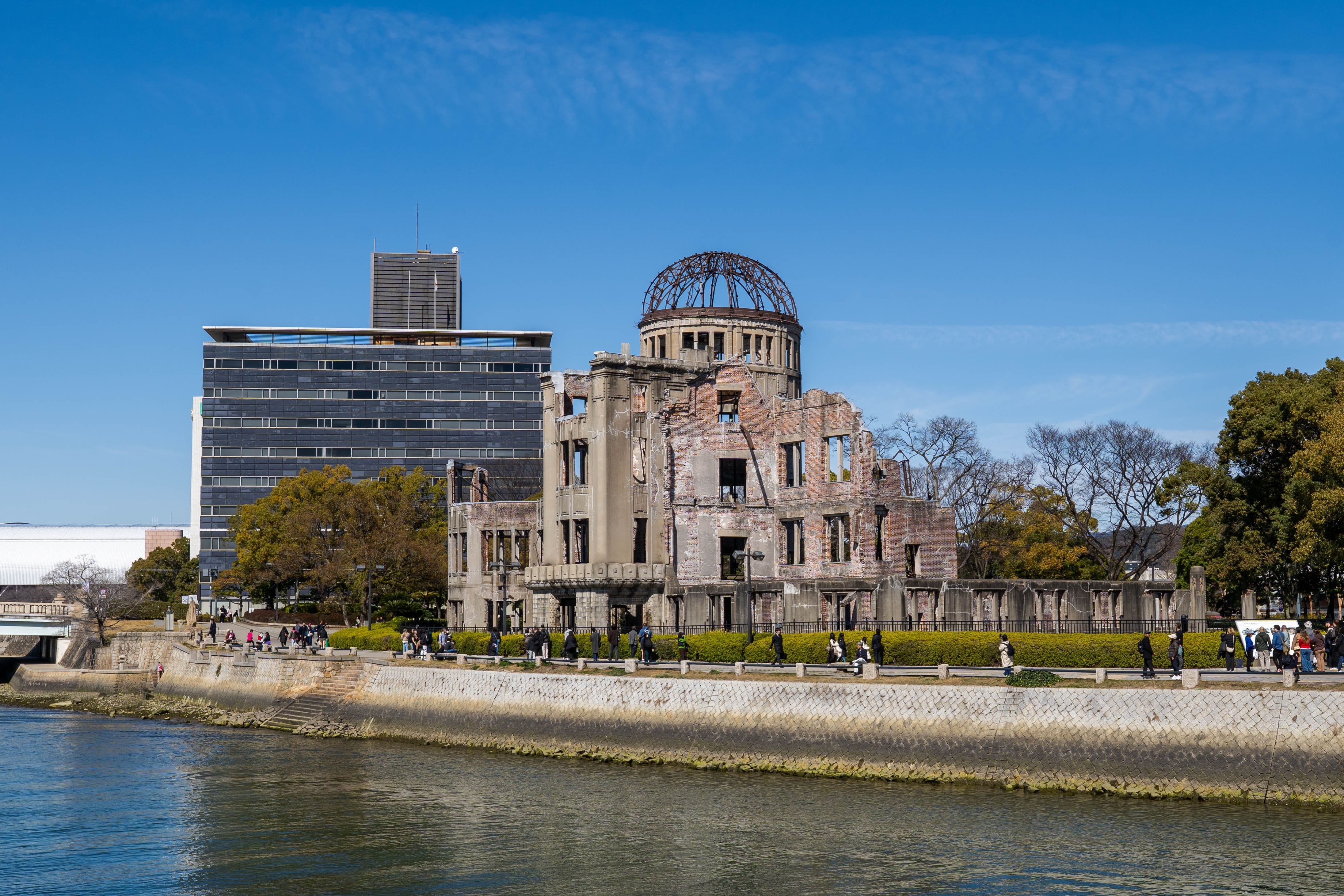
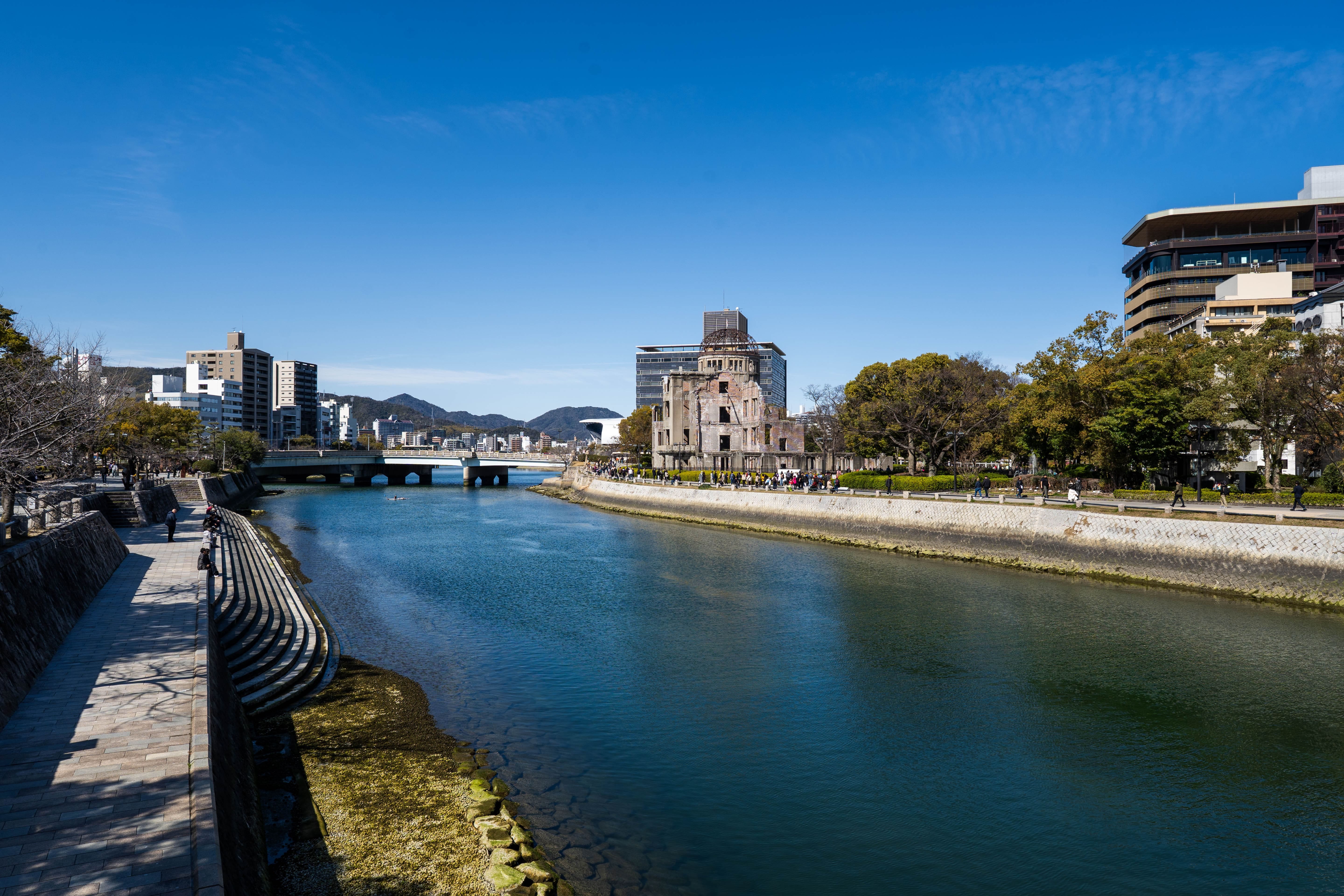
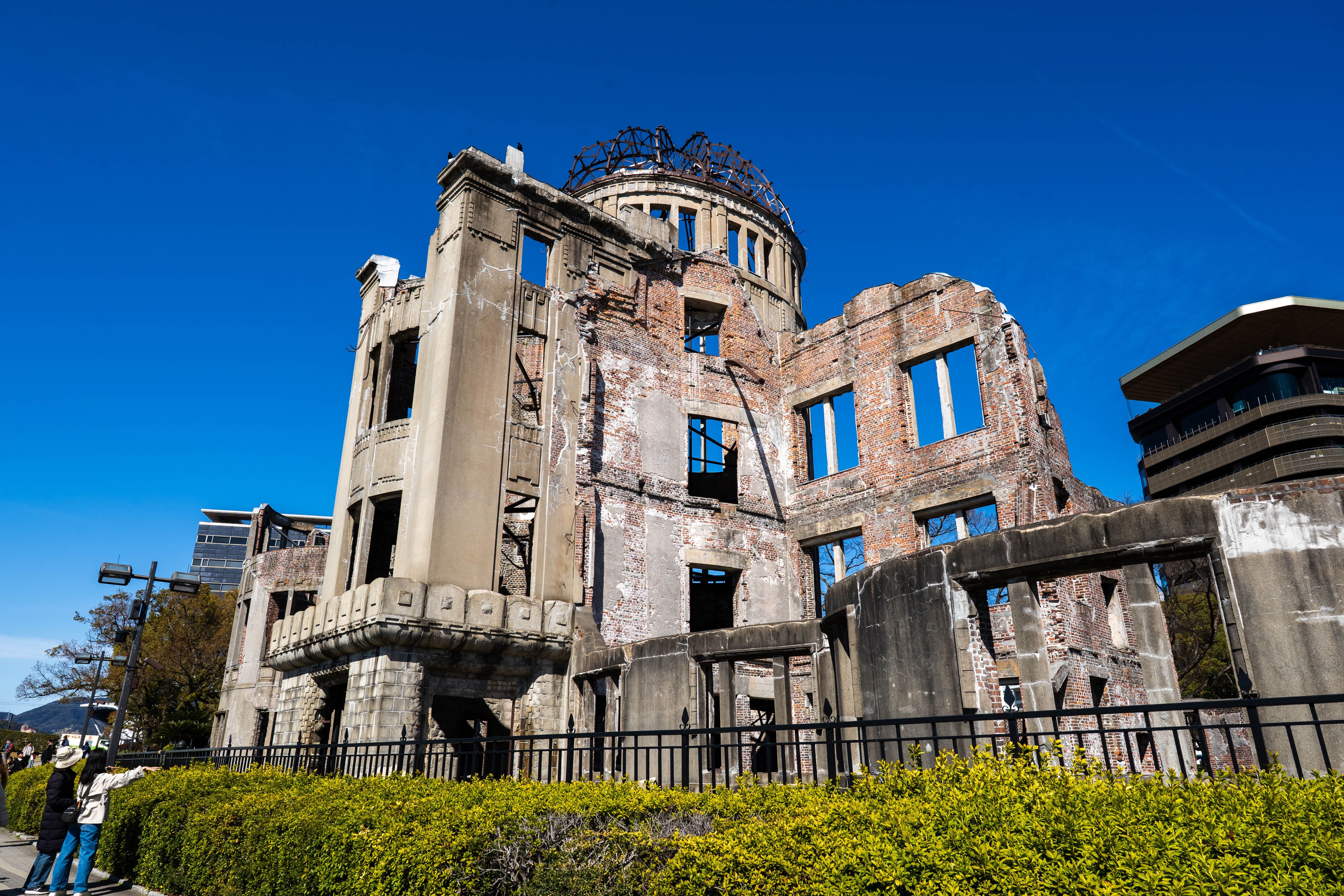
Collapsed outer walls, exposed steel beams, and windows that are no longer there. Although the city has been rebuilt and time has moved forward, this building alone retains the form it had on August 6, 1945. As I walked around the Atomic Bomb Dome, I had the strange feeling that time had stopped in this one place.
Many people were gathered around it. There were Japanese visitors, as well as many people from overseas. Some took photographs, some read the information panels, and others stopped in front of the Dome and looked up at it for a while. Each person seemed to be turning their thoughts toward what had happened 81 years ago through what remained before them.
Hiroshima Peace Memorial Park is visited by many people. Even so, I do not think it is an easy place to approach with the same frame of mind as an ordinary tourist destination. Visiting requires a certain degree of resolve about what you may see there.
I could not know what each person in the park was thinking. Yet as I watched people press their palms together before the Cenotaph, I felt that, beyond race and nationality, they were praying for the souls of those who had died and for peace in the future.
The People Who Were Here 81 Years Ago
The land now occupied by Hiroshima Peace Memorial Park was once a neighborhood known as 中島地区(Nakajima district).
It had developed as a center of transportation and commerce since the Edo period. By the early years of the Shōwa era, the area was lined with houses, shops, inns, movie theaters, temples, and hospitals. Although it is difficult to imagine from the park we see today, this was once a place where many people worked, shopped, and lived with their families.
On the very day the atomic bomb was dropped—August 6, 1945—an estimated 350,000 people were in Hiroshima.
No complete record of the number of people in the city that day survives. The estimated 350,000 included not only residents, but also military personnel, commuters, and people who had come from surrounding areas to work.
At the time, a process known as 建物疎開(tatemono sokai)was underway in Hiroshima. Buildings in the city were demolished to create open spaces intended to prevent fires from spreading during air raids. Unlike the evacuation of people to safer areas, this involved removing the buildings themselves.
On the morning of August 6, members of the 国民義勇隊(Kokumin Giyūtai / national volunteer corps)brought in from nearby municipalities, workplace volunteer groups formed by companies and factories, and mobilized students from middle schools and girls’ schools were working in the city. Many children were outdoors, clearing away roof tiles and timber left behind after buildings had been demolished.
The people in Hiroshima also came from many different national and cultural backgrounds. Among those exposed to the bombing were people from the Korean Peninsula and Taiwan, which were then under Japanese colonial rule; students from China and Southeast Asia; foreign priests; White Russian émigrés; and American prisoners of war.
The exact number of people who died as a result of the atomic bomb remains unknown.
Near the hypocenter, some bodies were so badly burned that they could not be identified. Some people were blown away by the blast, some died after fleeing into the rivers, and some remains could never be returned to their families. In some cases, entire families died, leaving no one to report their deaths. Government institutions were also devastated, and many population and death records were lost.
Many people died after initially surviving the explosion.
In addition to thermal radiation and blast waves, the bomb released massive amounts of radiation. Even people with no visible injuries immediately after the explosion began to experience hair loss, fever, diarrhea, vomiting, bleeding gums, and bleeding beneath the skin several days later. People who entered the city after the bombing to search for family members or take part in relief work were also affected by residual radiation.
It is impossible to draw a clear line between those who died at the scene and those who died days, weeks, or months later. Hiroshima City estimates that approximately 140,000 people had died by the end of December 1945, with a margin of error of about 10,000.
The figure of 140,000 alone is beyond anything I can imagine. I was also deeply shocked that the margin of error itself was as high as 10,000. So many people died under circumstances in which even their deaths could not be accurately recorded.
The objects preserved at the Hiroshima Peace Memorial Museum return that immense number to individual human lives.
What I Saw at the Museum
The Hiroshima Peace Memorial Museum displays clothing worn by people caught in the bombing, letters written to family members, diaries, lunch boxes, school uniforms, watches, photographs, and other belongings.
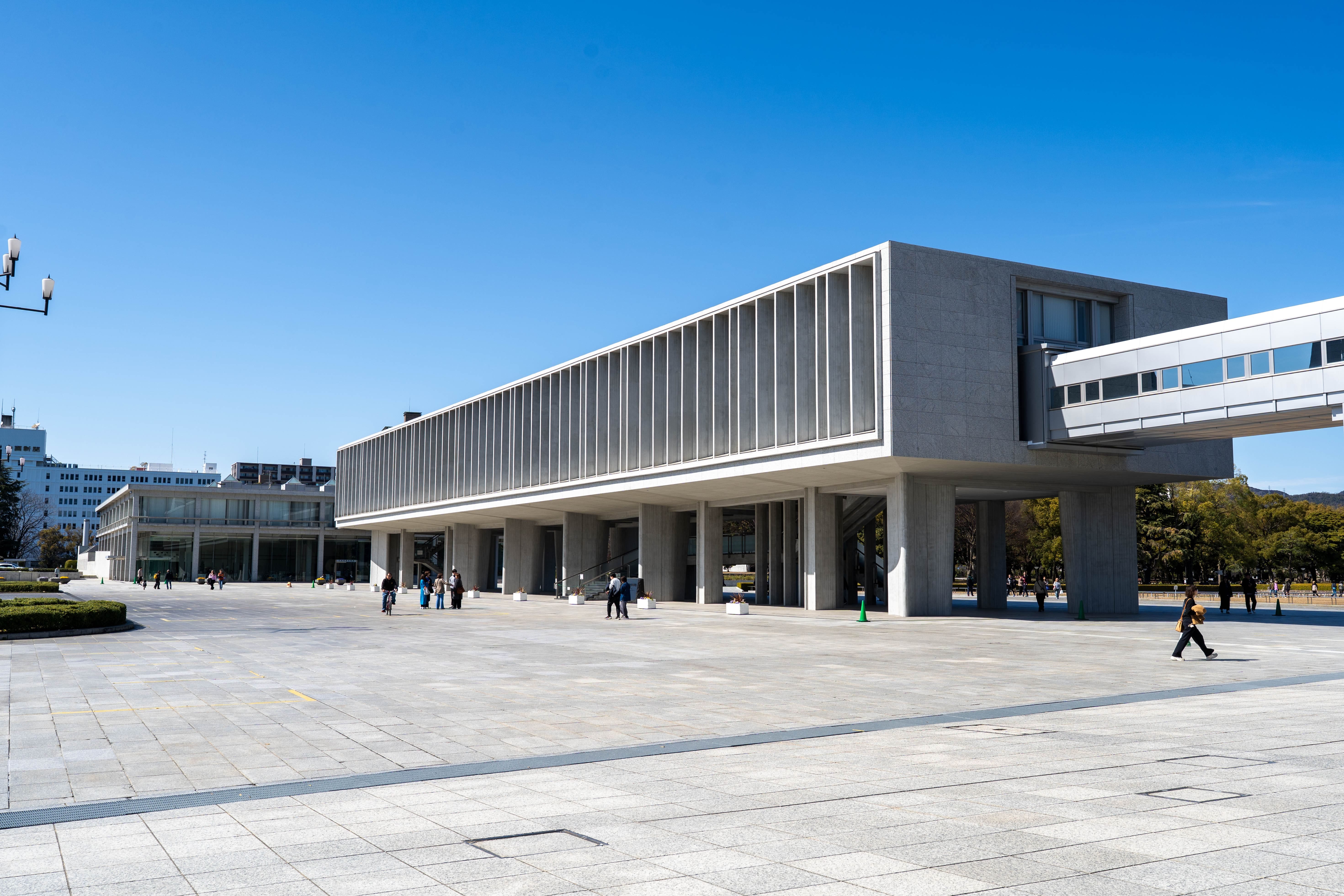
These objects were not created later to explain history. They were actually used, worn, and held by their owners until August 6, 1945.
Inside the museum, I wanted to look away many times.
Photographs of people with burns, damaged clothing, belongings left by children who died, and words preserved by their families. Each object inside the glass cases conveyed something of the life of its owner and the family members who had searched for them.
At times, I found it difficult to continue looking at the exhibits. Yet this was not a story created after the fact. It is what actually happened in this city 81 years ago.
The museum also displays a section of stone steps known as 人影の石(Hitokage no Ishi / Human Shadow Etched in Stone).
The steps once stood at the entrance to the Hiroshima branch of Sumitomo Bank, approximately 260 meters from the hypocenter. When the bomb detonated, a person believed to have been waiting for the bank to open was sitting on the steps.
The surface of the stone directly exposed to the intense thermal radiation turned pale. The area shielded by the person’s body did not undergo the same change and remained in the form of a dark shadow.
This is not the trace of a human body vaporized and burned into the stone. The person sitting there is believed to have suffered severe burns and died at the scene, unable to escape.
The person’s identity has never been conclusively established. Several bereaved families came forward believing that the shadow might have been left by one of their relatives.
As I looked at the stone, I thought about the person who had certainly been there that morning, yet whose name had been lost. That person must also have had a family, a reason for going to the bank, and plans for the day ahead.
The health effects of the atomic bomb did not end on August 6, 1945.
Cases of leukemia began to increase two or three years after the bombing and peaked around six to eight years later. Increases in various types of cancer were also observed beginning approximately ten years after the bombing. The effects extended to people exposed in the womb and those who entered the city to search for their families.
The horror of the atomic bomb lies not only in its ability to take a vast number of lives in a single explosion. It also lies in the lasting effects on the bodies and lives of those who survived. Some 被爆者(hibakusha / atomic bomb survivors)lived with anxiety about their own health and that of their families, as well as prejudice and discrimination surrounding marriage and childbirth.
The Hiroshima Peace Memorial Museum’s Peace Database allows visitors to view belongings held by the museum, photographs taken after the bombing, drawings made by survivors, video testimonies, and other materials.
Some of these materials are difficult to look at. I believe each person should decide for themselves whether to open them.
Hiroshima Peace Memorial Museum Peace Database
“Rest in Peace, for the Error Shall Not Be Repeated”
After leaving the museum, I walked toward the 原爆死没者慰霊碑(Genbaku Shibotsusha Ireihi / Cenotaph for the Victims of the Atomic Bomb). Its formal name is the Hiroshima Peace City Memorial Monument.
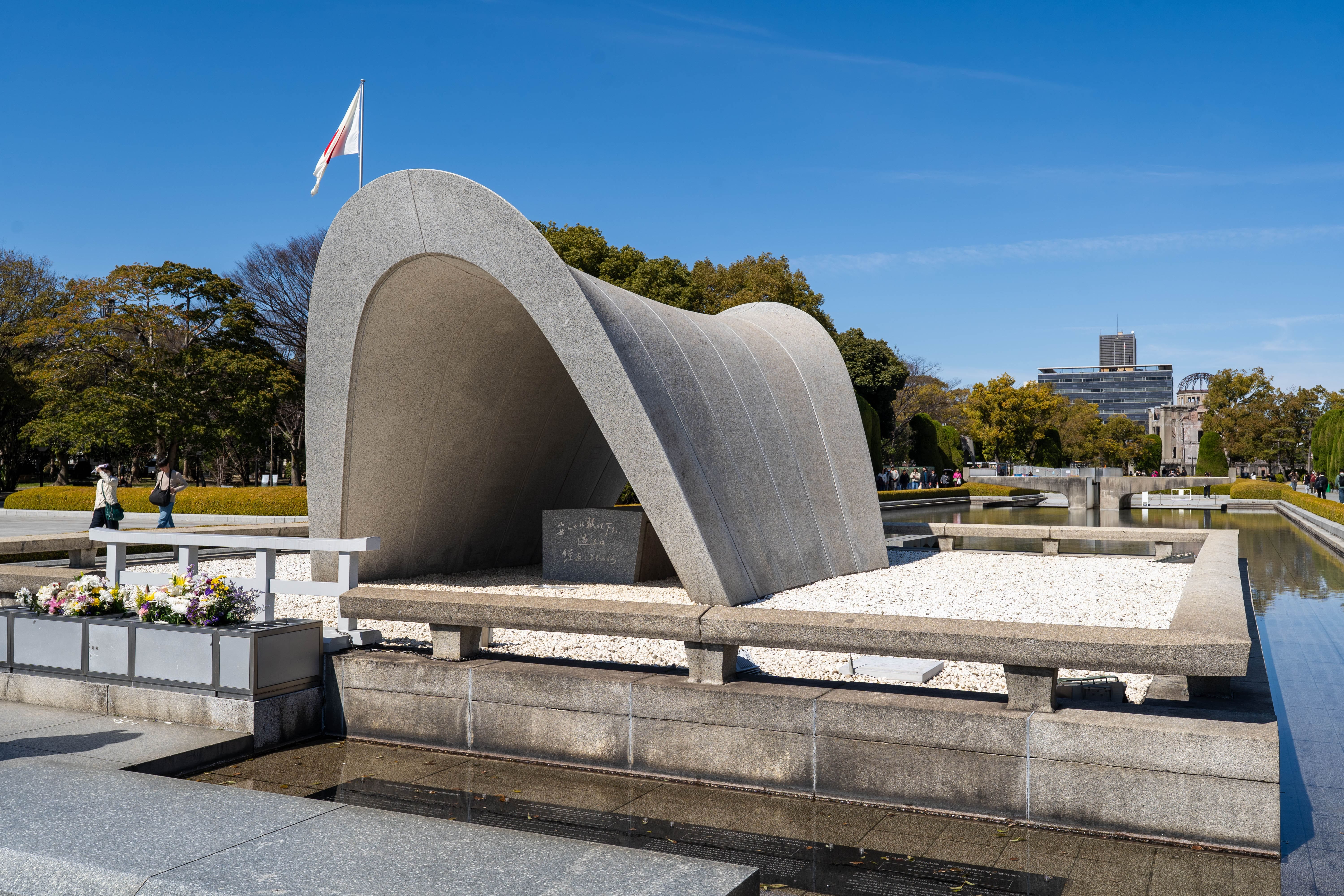
It was built in 1952 and designed by architect Kenzō Tange. Its roof is shaped like a house depicted in ancient Japanese 埴輪(haniwa)clay figures and is intended to shelter the souls of the dead from the rain. A stone chamber inside contains the registry of those who died as a result of the atomic bombing.
The following words are inscribed on the Cenotaph:
Rest in peace,
for the error shall not be repeated.
The inscription was conceived and written in calligraphy by Tadayoshi Saika, a professor at Hiroshima University who was himself a survivor of the atomic bombing.
In Japanese, it is common for a sentence’s subject to remain unstated. This inscription does not specify who is promising not to repeat the error.
In 1952, the year the monument was erected, Indian jurist Radhabinod Pal visited Hiroshima and objected to the subjectless wording. He argued that the Japanese had not dropped the atomic bomb, and that the inscription did not make clear whose error it referred to.
His objection prompted a debate over what the “error” meant and who was making the pledge.
Saika did not limit the subject of the inscription to the people of Hiroshima or to the Japanese people. He explained that the implied “we” referred to all humanity as citizens of the world.
Hiroshima City today also explains that the “error” does not refer only to the actions of a particular person or nation. It is a pledge made by all people not to repeat the errors of war and the use of nuclear weapons—errors committed by humanity as a whole.
This interpretation is not intended to obscure the historical facts that led to the atomic bombing or the decisions made by governments at the time. Knowing and examining what happened can coexist with people living today accepting responsibility for the future beyond the boundaries of nationality.
I did not feel that the inscription was placing guilt on visitors because of their nationality.
Instead, its words seemed to ask, “What will we refuse to repeat from this point forward?”
Japanese visitors and people from overseas stood before the Cenotaph with their palms pressed together. Even when our races and nationalities differ, we can mourn those who died and pray for peace in the future.
That peace is not peace for Japan alone.
The people who preserved the Atomic Bomb Dome, and the people of Hiroshima and Nagasaki who have continued to share their experiences, have never wished only for Japan to be safe. They hope that no one, anywhere in the world, will ever experience the same suffering caused by nuclear weapons.
The Cenotaph is surrounded by 平和の池(Heiwa no Ike / the Pond of Peace). The pond was created in 1957 so that the Cenotaph would appear to float on the water.
Immediately after the bombing, many people with severe burns sought water and made their way to nearby rivers. Testimonies and drawings record that the rivers which carry beautiful waters today were then filled with the bodies of people who had died there.
Since 1974, Hiroshima has continued a water-offering ritual known as 献水(kensui)to mourn those who died while asking for water. Water collected from locations across the city is offered before the Cenotaph and poured into the Pond of Peace after the ceremony.
The pond was originally created for an architectural purpose. The water that continues to be poured into it today also carries the meaning of offering water across time to those who died seeking it 81 years ago.


The park is also home to 平和の灯(Heiwa no Tomoshibi / the Flame of Peace), which has burned continuously since 1964.
A single flame burns above a pedestal shaped like two hands opened toward the sky. It honors those who died in the atomic bombing and carries the pledge that it will continue to burn until nuclear weapons have disappeared from the Earth.
“What Disappears from Sight Also Disappears from the Heart”
Looking beyond the Flame of Peace from the Cenotaph, I could see the Atomic Bomb Dome.
This building was not created to preserve the memory of the atomic bombing. It opened in 1915 as the 広島県物産陳列館(Hiroshima-ken Bussan Chinretsukan / Hiroshima Prefectural Products Exhibition Hall). It was used to display and sell goods produced in the prefecture, provide industrial consultation, and host art exhibitions. It was later renamed the Hiroshima Prefectural Industrial Promotion Hall and became a familiar place for the city’s residents.
The building was designed by Czech architect Jan Letzel. With its Western-style exterior and oval dome, it stood out in Hiroshima even at the time.
The atomic bomb detonated at an altitude of approximately 600 meters, about 160 meters southeast of the building. Everyone inside was killed, and most of the structure collapsed and burned. Because the blast struck almost directly from above, and because some of the outer walls were particularly thick, the walls of the central section and the dome-shaped steel frame remained standing.
After the war, opinions were divided over whether the building should be preserved or demolished.
Some believed that it should remain as a way of conveying the horror of the atomic bomb to future generations. Other survivors wanted it demolished because seeing it brought back memories of the day they lost their families. Some argued that reconstruction should take priority, while others opposed preserving a building that was at risk of collapse.
Today, the Atomic Bomb Dome is a World Heritage Site and is known as a symbol of Hiroshima. Yet its preservation was not something that all citizens agreed upon from the beginning. The decision to keep it involved the conflict felt by people who believed that the building had to be passed on to future generations, even though looking at it caused pain.
The movement to preserve the Dome gained momentum because of a diary left by one girl.
楮山ヒロ子(Kajiyama Hiroko)was one year old when she was exposed to the atomic bombing in Hiroshima. She later developed leukemia and died in 1960 at the age of sixteen.
On August 6, 1959, the year before her death, Hiroko wrote in her diary:
Only that painful Industrial Promotion Hall will continue, for all time, to tell future generations about the terrifying atomic bomb...
Fourteen years had passed since the bombing, and the physical scars of the atomic bomb were gradually disappearing from the rebuilt city. Hiroko feared that if those visible traces vanished, the horror of the bombing might also disappear from people’s memories.
Her diary was given to 河本一郎(Kawamoto Ichirō), a survivor of the bombing and an organizer of the 広島折鶴の会(Hiroshima Orizuru no Kai / Hiroshima Origami Crane Association).
The Hiroshima Origami Crane Association was founded in 1958 as a peace organization centered on middle and high school students. An 折り鶴(orizuru)is a crane folded from a square sheet of paper. In Japan, the crane symbolizes longevity. Large numbers of paper cranes are often folded and strung together to express hopes for recovery from illness or for peace. These are known as 千羽鶴(senbazuru / a thousand paper cranes).
In Hiroshima, paper cranes became a symbol of mourning for the children who died because of the atomic bomb and of the hope for the abolition of nuclear weapons. The Hiroshima Origami Crane Association carried those hopes forward as an organization in which children themselves took action for peace.


Moved by Hiroko’s diary, the middle and high school students in the association read it aloud at a gathering on May 5, 1960. The event was broadcast nationwide, and calls to preserve the Atomic Bomb Dome began to spread.
Kawamoto gave the children these words:
What disappears from sight disappears from the heart.
If the Atomic Bomb Dome disappeared, the visible evidence capable of conveying the horror of the bombing would disappear with it. That was why it had to be preserved. Supported by his words, the children gathered signatures in front of the Children’s Peace Monument and collected donations for the cost of repairs.
Some people responded harshly to the preservation movement. Survivors who were reminded of that day whenever they saw the Dome asked for it to be demolished. Even so, the children continued their work.
In July 1966, the Hiroshima City Council passed a resolution to preserve the Atomic Bomb Dome permanently. The following year, the first preservation work was carried out using donations received from across Japan and overseas.
Citizens also played a major role in securing its designation as a World Heritage Site.
At first, the Atomic Bomb Dome was considered too recent to meet the criteria for designation as a national Historic Site. In 1993, a citizens’ group began a nationwide petition campaign and collected more than 1.65 million signatures. In response, the national criteria were revised. The Dome was designated a Historic Site in 1995 and registered as a UNESCO World Heritage Site in 1996.
UNESCO recognizes the Atomic Bomb Dome as both a symbol of the most destructive force ever created by humankind and an expression of hope for world peace and the abolition of all nuclear weapons.
Preserving the Atomic Bomb Dome alone does not automatically convey its meaning to everyone. In Hiroshima today, many people continue to work so that both the building and the memories it carries will remain.
Alongside survivors who share their own experiences, Hiroshima City trains 被爆体験伝承者(hibaku taiken denshōsha / A-bomb Legacy Successors). These successors learn the experiences and hopes for peace of a specific survivor, then pass that testimony on to the next generation in the survivor’s place. There are also 家族伝承者(kazoku denshōsha / Family Legacy Successors), who inherit and share the experiences of relatives who survived the bombing.
As of the end of March 2026, the average age of people holding an Atomic Bomb Survivor’s Health Handbook in Japan was over 86. The time remaining to hear directly from those who experienced the bombing is limited. For this reason, the work of learning, recording, and passing their testimonies on to others becomes more important each year.
Volunteer guides in Hiroshima Peace Memorial Park also explain its history in English to visitors from overseas.
One of them is 佐々木駿(Sasaki Shun).
Shun first became interested in the Atomic Bomb Dome when he was in the first grade of elementary school. He wondered why such a badly damaged building had been preserved and began researching the bombing and Hiroshima’s reconstruction with his family.
In the second grade, he began volunteering as an English-language guide for international visitors to Hiroshima Peace Memorial Park. Using materials he made himself, he explains the history of the Atomic Bomb Dome and the Cenotaph, as well as his great-grandmother’s experience of the bombing. At the end of each tour, he gives the visitors a paper crane he folded himself.
Shun Sasaki explaining Hiroshima’s history in English(YouTube)
In the 1960s, middle and high school students were at the center of the movement to preserve the Atomic Bomb Dome. Today, in front of that same building, a child of the next generation tells visitors from overseas about the history of the bombing.
The physical building has been preserved, and people have continued to explain its meaning in words. Because both have endured, the memory of 81 years ago continues to be passed on to those who visit Hiroshima.
When I stood before the Atomic Bomb Dome this spring, I became one of the people who received that memory.
The existence of this place may have forced some people to relive painful memories again and again. Even so, because it was preserved, we are able to remember what happened, refuse to abandon the act of thinking, and continue asking what we can do to prevent it from happening again.
Hiroshima has not remained in the destroyed state of 81 years ago. People rebuilt the city. They live, work, and raise children here.
At the same time, Hiroshima did not replace every trace of the past with something new.
The city preserved the Atomic Bomb Dome, protected personal belongings, recorded the names of the dead, shared survivors’ experiences, and continued explaining them to visitors from overseas. This was not done to present Hiroshima as an eternal victim. It was done to prevent the same thing from happening anywhere else in the world.
As a Japanese person, I felt proud of this strong and beautiful city.
That pride is not about comparing the scale of suffering or blaming anyone alive today. It comes from seeing a city that chose not to erase a history that is painful to confront, did not confine its memory within one country, and transformed that memory into words calling for peace throughout the world.
The day the Flame of Peace is extinguished will not be the day Hiroshima’s memory disappears.
It will be the day nuclear weapons have disappeared from the world and there is no longer any reason to keep the flame burning.
I hope that day will come.
—Written by Sumire
Thank you for writing this so that more of us come closer to understanding something of this tremendously tragic turning point in human history. I will re-read it again in 3 days and think of the people of Nagasaki again too. 🙏🏼😔
This is a beautiful, though poignant article, and I really appreciate how thoroughly you have managed this event here.